Matthieu Perrot
Matthieu Perrot is a machine-learning scientist and a coauthor of the 2011 paper that presented scikit-learn, the Python machine-learning library. Trained at EPITA and ENS Cachan, he was a neuroimaging PhD student at NeuroSpin from 2006 to 2009 and published a method for recognizing cortical sulci and normalizing brain images in 2011. After research and engineering roles at DOSIsoft, the ICM Brain & Spine Institute and Philips, he served as head of AI at L'Oréal from 2016 to 2024. At L'Oréal, he coauthored GANs for face aging and makeup transfer and inverse-graphics methods for real-time virtual try-on. He is the founder and president of Evanova, an AI and computer-vision consulting company he started in December 2024.
Timeline
-
2000–2009
From EPITA to a NeuroSpin PhD
He studies advanced computer science and artificial intelligence at EPITA from 2000 to 2004, then takes a master's in computer vision, machine learning and applied mathematics at ENS Cachan from 2004 to 2005. From 2006 to 2009, he is a neuroimaging PhD student at ENS Cachan and a research engineer at CEA Saclay, working in NeuroSpin's computer-assisted neuroimaging laboratory (LNAO). His doctoral research focuses on automatic recognition of cortical sulci and spatial normalization.
-
2009–2014
DOSIsoft and the CATI project
He works as an R&D engineer at DOSIsoft from 2009 to 2011 on machine learning and medical imaging, then manages R&D for the CATI project at the ICM Brain & Spine Institute from 2011 to 2014. In July 2014, he coauthors a NeuroSpin paper on TV-Elastic Net penalties for logistic regression on structural MRI.
-
2011–2012
Cortical sulci recognition and normalization
In 2011, he publishes "Cortical sulci recognition and spatial normalization" in Medical Image Analysis with D. Rivière and J.-F. Mangin. In 2012, he coauthors a NeuroImage study on the effect of handedness on the shape of the central sulcus.
-
2011
Coauthoring the scikit-learn paper
In 2011, he coauthors "Scikit-learn: Machine Learning in Python" in the Journal of Machine Learning Research with Fabian Pedregosa, Gaël Varoquaux, Édouard Duchesnay and others. The paper presents scikit-learn, a Python module of machine-learning algorithms for medium-scale supervised and unsupervised problems, aimed at non-specialists.
-
2014–2017
Research scientist at Philips
After short data-science roles at Dailymotion and Twenga in 2014, he becomes a research scientist at Philips in Suresnes, working on AI, machine learning and deep learning R&D until 2016. In January 2017, he coauthors a Philips Research paper with Hadrien Bertrand, Roberto Ardon and Isabelle Bloch that classifies MRI images with deep networks tuned by random and Gaussian-process search.
-
2016–2024
Head of AI at L'Oréal
He joins L'Oréal in Paris in 2016 as head of its data science and machine learning lab, and he serves as head of AI there until 2024. In 2020, with Julien Despois and Frédéric Flament of L'Oréal Research & Innovation, he coauthors AgingMapGAN, which ages high-resolution face images using ethnicity-specific aging information and weak spatial supervision.
-
2020–2022
Makeup transfer and virtual try-on
In 2020, he coauthors CA-GAN with Robin Kips, Pietro Gori and Isabelle Bloch, a weakly supervised GAN that changes the color of lips or eyes for controllable makeup transfer. With L'Oréal, Modiface and Télécom Paris researchers, he presents an inverse graphics method for makeup synthesis from a reference image at a 2021 CVPR workshop. In 2022, the team maps a single example image into the parameters of a real-time augmented-reality renderer.
-
Since December 2024
Founding Evanova
He founds Evanova in December 2024, after his years as head of AI at L'Oréal. Registered in April 2025, the company offers consulting, services and software development in artificial intelligence and computer vision, and he is its president.
Career
- Since 2024EvanovaPresident
- 2017–2016PhilipsResearch scientist
- 2016–2024L'OréalHead of AI
- 2014DailymotionData scientist
- 2014TwengaData scientist
- 2014–2016Assistance Publique – Hôpitaux de Paris
- 2011–2014Brain and Spine InstituteR&D manager
- 2009–2011DOSIsoftR&D engineer
- 2009–2014Direction de la Recherche Fondamentale
- 2008–2011Inserm
- 2008–2013Université Paris-Saclay
- 2008–2016Commissariat à l'Énergie Atomique et aux Énergies Alternatives
- 2006–2009CEA Paris-SaclayResearch engineer
Education
- 2009École normale supérieure de CachanPhD
- 2005École normale supérieure de CachanMaster's degree
- 2004Graduate School of Computer Science and Advanced Technologies
Most-cited works
- Scikit-learn: Machine Learning in PythonWith Alexandre Passos, Bertrand Thirion, David Cournapeau, Fabian Pedregosa, Matthieu Brucher and Olivier Grisel
- Cortical sulci recognition and spatial normalization
- The effect of handedness on the shape of the central sulcus
- Anatomical correlations of the international 10–20 sensor placement system in infants
- Diffeomorphic Brain Registration Under Exhaustive Sulcal Constraints
Colleagues
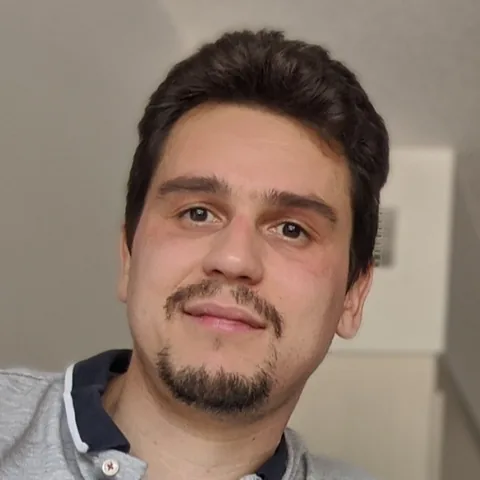 Fabian PedregosaCommissariat à l'Énergie Atomique et aux Énergies Alternatives, 2011–2016
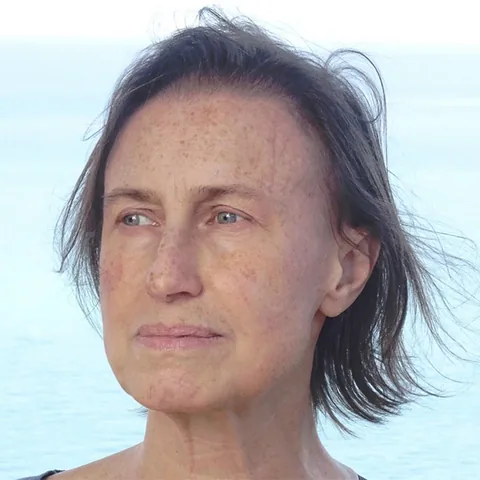 Isabelle BlochNamed in this biography
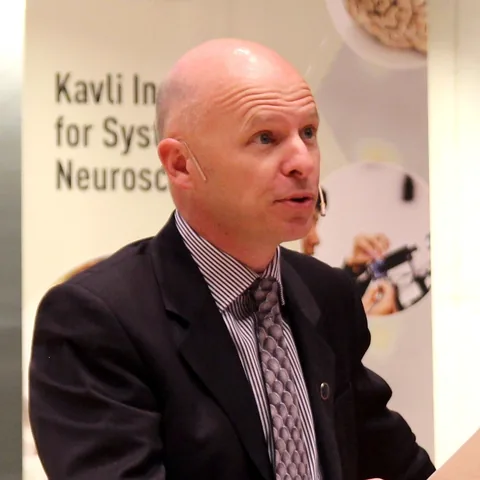 Stanislas DehaeneCommissariat à l'Énergie Atomique et aux Énergies Alternatives, 2008–2016
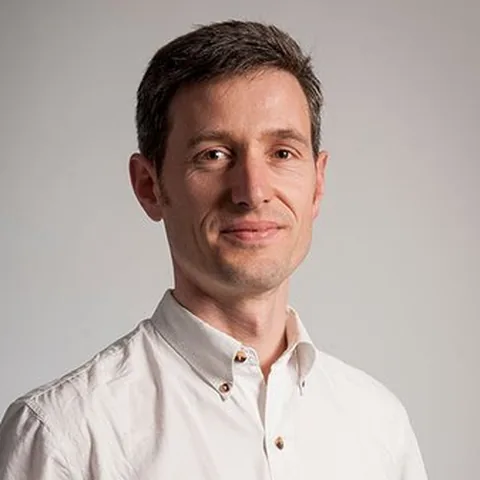 Bertrand ThirionCommissariat à l'Énergie Atomique et aux Énergies Alternatives, 2008–2016
- Sheer El-ShowkDirection de la Recherche Fondamentale, 2011–2014
- Gregory GrefenstetteCEA Paris-Saclay, 2006–2008
Sources and credits
Photo: We have no published photo of Matthieu Perrot yet. Send us a free-licensed photo.
- Matthieu PERROT (L'Oréal à PARIS) - Viadeo
- Matthieu Perrot | alphaXiv
- [1407.5602] Predictive support recovery with TV-Elastic Net penalty and logistic regression: an application to structural MRI
- Matthieu Perrot - Google Scholar
- Scikit-learn: Machine Learning in Python
- Classification of MRI data using Deep Learning and Gaussian Process-based Model Selection
- AgingMapGAN (AMGAN): High-Resolution Controllable Face Aging with Spatially-Aware Conditional GANs
- CA-GAN: Weakly Supervised Color Aware GAN for Controllable Makeup Transfer
- Deep graphics encoder for real-time video makeup synthesis from example - Institut Polytechnique de Paris
- [2205.06305] Real-time Virtual-Try-On from a Single Example Image through Deep Inverse Graphics and Learned Differentiable Renderers
- Evanova (91400) : siret, siren, TVA, adresse...