Gregory Grefenstette
Gregory Grefenstette is a computer scientist who works on natural language processing and information retrieval, with research spanning automatic thesaurus building, cross-language search and the use of the Web as a text corpus. After a Stanford bachelor's degree in 1978, he completed a University of Pittsburgh PhD on automatic thesaurus generation in 1993. As a principal scientist at the Xerox Research Centre Europe from 1993 to 2001, he edited the first book on cross-language information retrieval, and in 2003 he and Adam Kilgarriff introduced a Computational Linguistics special issue on the Web as Corpus. Later roles included chief science officer of the search company Exalead from 2009 to 2013 and advanced researcher at Inria, where his taxonomy methods ranked first at SemEval 2015. Since 2017, he is chief scientific officer of Biggerpan and a senior research scientist at the Florida Institute for Human and Machine Cognition.
Timeline
-
1956–1983
Stanford, Belgium and Paris-Sud
He is born in Pittsburgh in 1956, starts at MIT as an undergraduate and earns a bachelor's degree at Stanford in 1978. He goes to Belgium as an ITT International Fellow in 1978 and receives a master's degree from Paris-Sud in 1983.
-
1984–1993
Tours and a Pittsburgh PhD
He is an assistant professor at the University of Tours from 1984 to 1989 and works in information retrieval and natural language processing from 1988. In 1993, he earns a computer science PhD at the University of Pittsburgh with the thesis "Exploring Automatic Thesaurus Generation".
-
1993–2001
Principal scientist at Xerox
He works as a principal scientist at the Xerox Research Centre Europe from 1993 to 2001, and most of his 20 US patents come from his Xerox work. In 1998, he edits Cross-Language Information Retrieval for Kluwer, the first book on the topic.
-
2000–2003
The Web as a corpus
In 2000, he and Julien Nioche present a technique for estimating the size of a language-specific corpus from the frequency of common words, and they use it to measure the growth of European languages on the Web. In September 2003, he and Adam Kilgarriff introduce a special issue of Computational Linguistics on the Web as Corpus.
-
2001–2008
Clairvoyance and the CEA
He leaves Xerox in 2001 for Clairvoyance Corporation and then works as a senior expert at the French Atomic Energy Commission (CEA) until 2008. In 2007, he and his research team win a three-year grant from the Lagardère Foundation for work on semantic maps.
-
2009–2013
Chief science officer at Exalead
From 2009 to 2013, he is chief science officer of the search engine company Exalead, where he manages the OSEO QUAERO CMSE program on multimedia indexing technologies. He receives the most practical system award at the 2009 ACM Multimedia Grand Challenge and a bronze award at the 2010 challenge. In 2013, he gives a keynote at eLex 2013 on generating resources for the lexicography of under-resourced languages.
-
2013–2017
Personal semantics at Inria
In November 2013, he becomes an advanced researcher at Inria, the French national research institute in computer science, where he works on personal semantics and taxonomies of personal interests. In 2015, his simple taxonomy structuring techniques, built on English Wikipedia text, rank first in task 17 of SemEval 2015.
-
Since 2017
Biggerpan and IHMC
He becomes chief scientific officer of Biggerpan, a company developing a predictive contextual engine for the mobile web, in June 2017, and joins the Florida Institute for Human and Machine Cognition (IHMC) as a senior research scientist in 2017. In July 2017, he co-organizes Dagstuhl Seminar 17301 on user-generated content in social media as an IHMC researcher.
Colleagues
Sources and credits
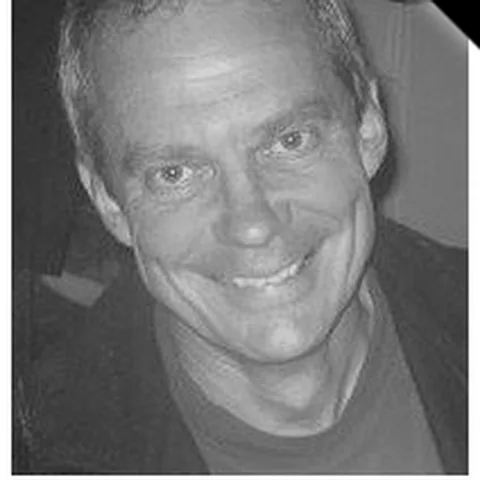
Photo: We have no published photo of Gregory Grefenstette yet. Send us a free-licensed photo.
- Gregory Grefenstette - Wikipedia
- User:Ggrefen - ACL Wiki
- Department of Computer Science, University of Oxford: Use of Semantics in Real Life Applications
- [cs/0006032] Estimation of English and non-English Language Use on the WWW
- Introduction to the Special Issue on the Web as Corpus - ACL Anthology
- Keynote speakers - eLex 2013
- [1502.01271] INRIASAC: Simple Hypernym Extraction Methods
- Gregory Grefenstette | alphaXiv
- Dagstuhl Seminar 17301: User-Generated Content in Social Media