Philip Walther
Also known as Philip John Walther
Philip Walther is an experimental quantum physicist at the University of Vienna whose photonic quantum processors serve as test beds for quantum machine learning. After studying chemistry at Vienna University of Technology, he earned a physics PhD at the University of Vienna in 2005, spent 2005 to 2008 as a postdoctoral researcher at Harvard, and became a tenured professor in Vienna in 2015. In 2021 he led an international collaboration whose reinforcement learning agent learned faster through quantum computing, published in Nature, and he received the Friedrich Wilhelm Bessel Award. His group demonstrated a quantum memristor for single photons in 2022, and in 2025 his team reported a quantum-enhanced kernel learning experiment in Nature Photonics and launched a photonic quantum computer into orbit. He is a professor of experimental quantum physics in Vienna, where he leads the Quantum Information Science and Quantum Computation group.
- Now at
- University of Vienna, Faculty of Physics, University of Vienna and QUBO Technology
- Born
- 1978
Years link to their sources.
Timeline
-
2005–2008
PhD and a Harvard postdoc
He earns an MSc in chemistry at Vienna University of Technology and a PhD in physics at the University of Vienna in 2005. From 2005 to 2008, he works as a postdoctoral researcher in physics at Harvard University.
-
2008–2015
A Vienna group and professorship
He returns to the University of Vienna in 2008, establishes his own research group there in 2011, and is appointed tenured professor in 2015.
-
March 2021
Quantum speed-up for learning agents
In March 2021, an international collaboration led by him shows a hybrid quantum and classical reinforcement learning agent that learns more than 60 percent faster than its non-quantum peers. The result appears in Nature 591 in 2021 and runs on a tunable integrated processor.
-
2021
A Bessel Award from Humboldt
In 2021, he receives the Friedrich Wilhelm Bessel Award of the Alexander von Humboldt Foundation, on a nomination by Ignacio Cirac. His research stay at the Max Planck Institute of Quantum Optics, in Cirac's Theory Division, targets protocols and algorithms for small-scale quantum computers.
-
2022
A quantum memristor for photons
In 2022, a group led by him and Roberto Osellame, together with the CNR and the Politecnico di Milano, demonstrates a quantum memristor on an integrated processor operating on single photons. The device behaves like a memristor while acting on quantum states, a possible link between artificial intelligence and quantum computing.
-
October 2022
The GRAVITES Synergy Grant
In October 2022, the European Research Council awards the ERC Synergy Grant “GRAVITES”, almost 9 million euros, to him, Piotr Chruściel, Nergis Mavalvala of MIT and Georgi Dvali of LMU Munich. He leads the project, which aims to measure the influence of the Earth's gravitational field on entangled states of light.
-
2025
Quantum kernels and a satellite
In 2025, a team he leads publishes a Nature Photonics experiment in which a quantum-enhanced kernel machine learning algorithm, first proposed at Quantinuum, commits fewer errors than its classical counterpart on specific classification tasks. In June 2025, a photonic quantum computer built by his team, filling 3 liters and drawing about 10 watts, launches into orbit on a satellite.
-
As of October 2026
Professor and group leader in Vienna
He is a professor of experimental quantum physics at the University of Vienna and leads the research group “Quantum Information Science and Quantum Computation” in the Faculty of Physics. He is also a co-founder of QUBO Technology, a startup dedicated to commercializing photonic quantum technology.
Career
- Since 2015University of ViennaProfessor of Experimental Quantum Physics
- NowFaculty of Physics, University of ViennaResearch Group Leader
- NowQUBO TechnologyCo-founder
- 2021Max Planck Society
- 2005–2008Harvard UniversityPostdoctoral Researcher
Education
- 2005TU WienMSc in Chemistry
- 2005University of ViennaPhD in Physics
Colleagues
Sources and credits
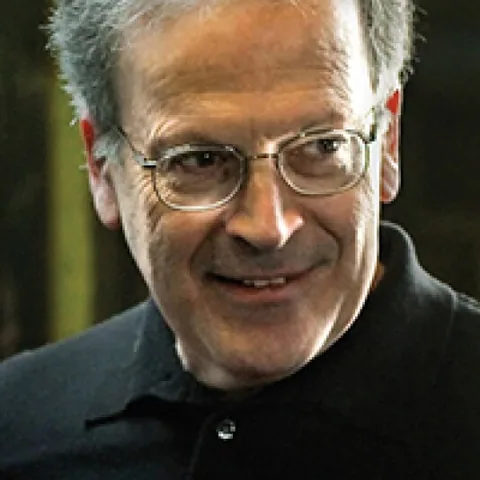
Photo: We have no published photo of Philip Walther yet. Send us a free-licensed photo.
- Philip Walther
- Philip Walther | Falling Walls
- Friedrich Wilhelm Bessel Preis for Philip Walther | Max Planck Institute of Quantum Optics
- Quantum Computing and Reinforcement Learning Are Joining Forces to Make Faster AI
- QRC Seminar Series - Prof. Dr. Philip Walther | Technology Innovation Institute
- Quantum Memristor Design Could Be Brains Behind Quantum AI
- European Research Council Synergy Grant Awarded For Gravitational Research To Nergis Mavalvala And Collaborators - MIT Kavli Institute
- Photonic Quantum Computers Could Boost Machine Learning Algorithms
- Successful launch of the first space-proof quantum Computer
- A quantum computer goes to space
- University assistant predoctoral/PhD Candidate job with University of Vienna | 12865384