Peer Fischer
Peer Fischer is an experimental physicist whose work links micro- and nanorobotics with neural-network hardware for AI. He studied physics at Imperial College London, earned a chemistry PhD at Cambridge, and held research posts at Cornell and Harvard before moving to Fraunhofer and Max Planck. His Stuttgart group developed nanorobots and a shape-changing soft microrobot; he won the World Technology Award in 2016 and an ERC Advanced Grant in 2018. He coauthored a low-power optoelectronic neural-network framework in 2024 and received an ERC Synergy Grant for DNA nanomachines in 2025. As of October 2026, he is a Professor of Experimental Physics at Heidelberg University and heads a lab at the Max Planck Institute for Medical Research.
- Now at
- Heidelberg University and Max Planck Society
- Born
- 1972
- Works
- 286
- Citations
- 15,960
- h-index
- 56
Years link to their sources. Publication numbers from OpenAlex, as of 22 October 2026.
Timeline
-
1992–2009
Degrees and early research
He earns a BSc in physics at Imperial College London in 1995 and a PhD in chemistry at the University of Cambridge in 1999.
-
2000–2009
Cornell and Harvard research
From 2000 to 2004, he is a NATO postdoctoral fellow and postdoctoral associate in Cornell's Department of Chemistry and School of Applied & Engineering Physics. From 2004 to 2009, he directs an independent lab at Harvard's Rowland Institute as a Rowland Junior Fellow.
-
2009–2011
A Fraunhofer photonics lab
He receives a Fraunhofer Attract Award in 2009 and leads its Attract group at the Fraunhofer Institute for Physical Measurement Techniques in Freiburg from 2009 to 2011. The award leads him to set up a photonics lab there.
-
2011–2022
Leading a Max Planck group
In 2011, he moves his lab to the Max Planck Institute for Intelligent Systems in Stuttgart and leads the Micro Nano and Molecular Systems group through 2022. From 2013 to 2022, he is a professor of physical chemistry at the University of Stuttgart.
-
2016
A World Technology Award
He wins the World Technology Award in 2016. His group develops 3D nanofabrication methods and nanorobots, including a reciprocal microswimmer and a soft microrobot that moves by changing its body shape.
-
2018
An ERC Advanced Grant
He receives an ERC Advanced Grant in 2018.
-
2022
Moving the lab to Heidelberg
In 2022, he moves his labs to Heidelberg University and the Max Planck Institute for Medical Research and becomes a professor of experimental physics in Molecular Systems Engineering.
-
2024–2026
Neural networks and DNA machines
In 2024, he coauthors a low-power multilayer optoelectronic neural-network framework that alternates optical and optoelectronic layers to implement matrix-vector multiplications and rectified linear functions. In 2025, he receives an ERC Synergy Grant to build nanomachines with DNA. As of October 2026, he is a Professor of Experimental Physics at Heidelberg University and heads the independent Micro Nano and Molecular Systems Lab at the Max Planck Institute for Medical Research.
Career
- Since 2022Heidelberg UniversityProfessor of Experimental Physics
- Since 2013Max Planck SocietyHead
- 2024–2026Yonsei University
- 2024–2026Institute for Basic Science
- 2017–2018Imperial College London
- 2017–2021ETH Zurich
- 2013–2022University of StuttgartProfessor of physical chemistry
- 2011–2022Max Planck Institute for Intelligent SystemsLeader, Micro Nano and Molecular Systems group
- 2009–2011Fraunhofer-GesellschaftAttract group leader
- 2004–2009Harvard UniversityRowland Junior Fellow and lab director
- 2000–2004Cornell UniversityNATO postdoctoral fellow and postdoctoral associate
Education
- 1999University of CambridgePhD
- 1995Imperial College LondonBSc
Most-cited works
- Controlled Propulsion of Artificial Magnetic Nanostructured Propellers
- The grand challenges of Science RoboticsWith Bradley Nelson, Brian Scassellati, Guang-Zhong Yang, James Bellingham, Luciano Floridi and Manuela Veloso
- Structured light enables biomimetic swimming and versatile locomotion of photoresponsive soft microrobots
- Holograms for acoustics
- Bioinspired microrobots
Colleagues
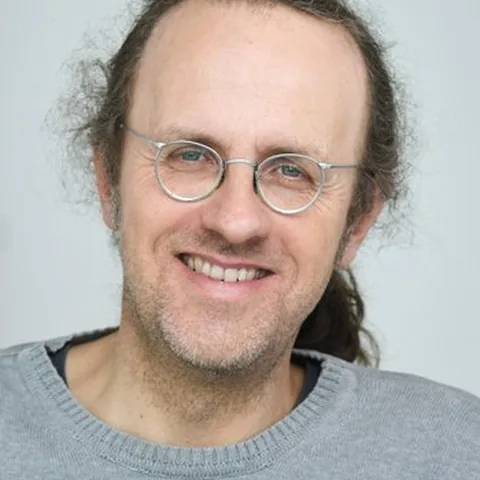 Bernhard SchölkopfMax Planck Institute for Intelligent Systems, 2011–2023
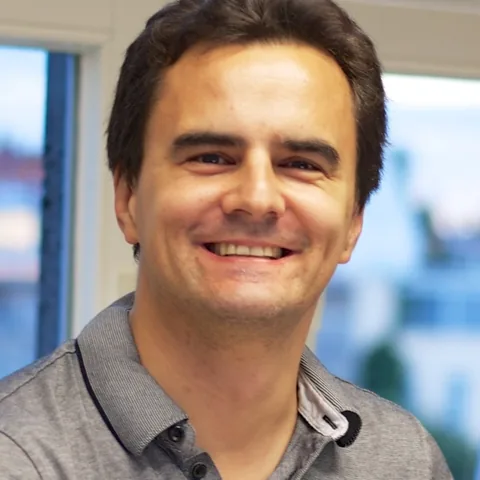 Jan PetersMax Planck Institute for Intelligent Systems, 2011–2023
- Metin SittiMax Planck Society, 2014–2026
- Philipp HennigMax Planck Institute for Intelligent Systems, 2011–2023
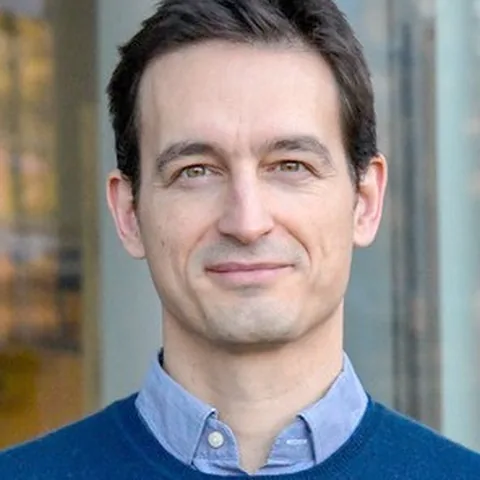 Marc ToussaintUniversity of Stuttgart, 2013–2022
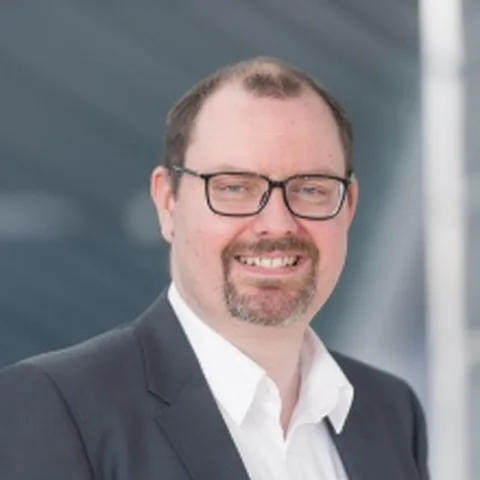 Andrés BruhnUniversity of Stuttgart, 2013–2023
Sources and credits
Photo: We have no published photo of Peer Fischer yet. Send us a free-licensed photo.
- Peer Fischer | Yonsei Institute for Advanced Study
- Prof. Peer Fischer - Institute for Molecular Systems Engineering and Advanced Materials
- World Technology Award 2016
- Low-power scalable multilayer optoelectronic neural networks enabled with incoherent light
- Peer Fischer wins ERC Synergy grant
- Micro Nano and Molecular Systems (AG Fischer)