Jesse Thaler
Also known as Jesse Diaz Thaler
Jesse Thaler is a theoretical particle physicist at MIT who combines quantum field theory with machine learning to study fundamental physics. After a Harvard physics PhD in 2006 and a fellowship at Berkeley's Miller Institute, he joined the MIT faculty in 2010 and introduced N-subjettiness, a jet shape designed to identify boosted top quarks and electroweak bosons. With collaborators, he coauthored machine learning methods for Large Hadron Collider data, among them Energy Flow Networks in 2018 and the OmniFold unfolding method in 2019. In 2020, he became inaugural director of the NSF Institute for Artificial Intelligence and Fundamental Interactions (IAIFI), which the NSF renewed for five more years in 2026. He is director of the MIT Laboratory for Nuclear Science, a post he took up in August 2026.
Timeline
-
By 2006
Exeter, Brown and a Harvard PhD
He grows up in York, Maine, attends Phillips Exeter Academy, and earns a BS in math and physics from Brown University in 2002. In 2006, he completes a physics PhD at Harvard University under the supervision of Nima Arkani-Hamed.
-
2006–2010
Miller fellow at Berkeley
From 2006 to 2009, he is a fellow at the Miller Institute for Basic Research in Science at the University of California, Berkeley, and in 2009 a postdoctoral fellow in the Theoretical Physics Group at Lawrence Berkeley National Laboratory. In January 2010, he joins MIT's Department of Physics as an assistant professor.
-
2010–2017
N-subjettiness and MIT tenure
With Ken Van Tilburg, he introduces N-subjettiness in 2010, a jet shape designed to identify boosted top quarks and electroweak bosons. He receives a Presidential Early Career Award for Scientists and Engineers in 2012 and a Sloan Research Fellowship in 2013, and MIT grants him tenure as an associate professor of physics in 2017.
-
2018–2019
Energy Flow Networks and OmniFold
In 2018, with Patrick Komiske and Eric Metodiev, he introduces Energy Flow Networks, which adapt the Deep Sets machine learning framework to collider events treated as unordered sets of particles. In 2019, the team maps 100,000 public LHC collision events into a network using a measure called the earth mover's distance between jets, so that unusual events stand out at its edges. He also coauthors OmniFold in 2019, a machine learning method that corrects collider data for detector effects across all observables at once.
-
2020–2026
Inaugural director of IAIFI
In August 2020, the NSF announces the Institute for Artificial Intelligence and Fundamental Interactions (IAIFI), a five-year, $20 million institute led by MIT's Laboratory for Nuclear Science with Harvard, Northeastern and Tufts. He serves as its inaugural director, with Mike Williams as deputy director, and IAIFI leadership creates a doctoral program in physics, statistics, and data science with MIT's Institute for Data, Systems, and Society.
-
2021–2022
Full professor and APS Fellow
MIT promotes him to full professor of physics in 2021. In 2022, he becomes a Fellow of the American Physical Society and a Simons Investigator in Physics.
-
2025–2026
Schlumberger Chair at IHES
From 2025 to 2026, he holds the Schlumberger Chair for Mathematical Sciences at the Institut des Hautes Études Scientifiques, and he receives a Humboldt Research Award in 2026. In June 2026, the NSF renews IAIFI for five more years, raising its annual funding from $4 million to $4.98 million.
-
Since August 2026
Leading MIT's Laboratory for Nuclear Science
In August 2026, he becomes director of the MIT Laboratory for Nuclear Science, succeeding Bolek Wyslouch, and Mike Williams is named to succeed him as IAIFI director. A theoretical particle physicist who combines quantum field theory with machine learning, he is the William and Emma Rogers Professor of Physics in MIT's Center for Theoretical Physics — a Leinweber Institute.
Career
- Since 2010Massachusetts Institute of TechnologyAssistant Professor, Director
- 2025–2026Institute of Advanced Scientific StudiesSchlumberger Chair for Mathematical Sciences
- 2020–2026Institute for Artificial Intelligence and Fundamental InteractionsInaugural director
- 2009–2010Office of SciencePostdoctoral fellow
- 2006–2009University of California, BerkeleyMiller fellow
Education
- 2006Harvard UniversityPhD
- 2002Brown UniversityBS
Colleagues
- Mike WilliamsMassachusetts Institute of Technology, 2012–2026
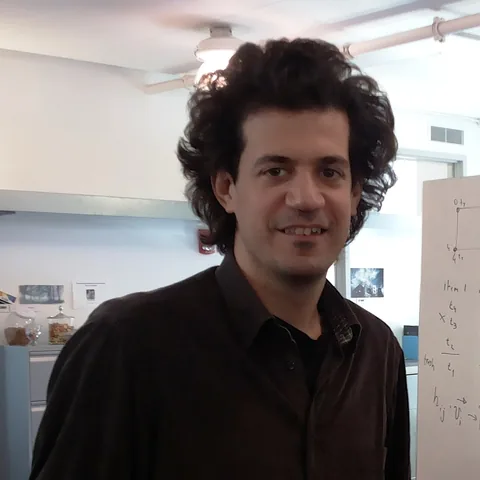 Constantinos DaskalakisMassachusetts Institute of Technology, 2010–2026
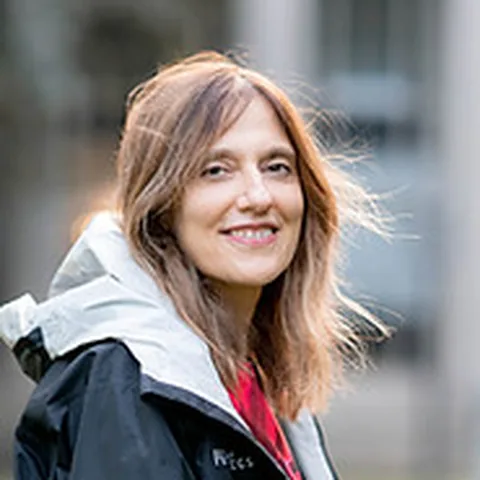 Regina BarzilayMassachusetts Institute of Technology, 2010–2026
- Matthew SchwartzInstitute for Artificial Intelligence and Fundamental Interactions, 2020–2026
- Siddharth Mishra-SharmaInstitute for Artificial Intelligence and Fundamental Interactions, 2020–2021
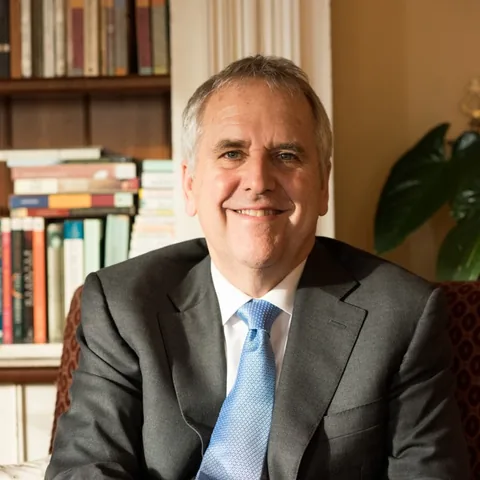 Michael I. JordanUniversity of California, Berkeley, 2006–2009
Sources and credits
Photo: We have no published photo of Jesse Thaler yet. Send us a free-licensed photo.
- Jesse Thaler: Seeking the fundamental nature of matter | MIT News | Massachusetts Institute of Technology
- Jesse Thaler - Wikipedia
- Jesse Thaler named director of the Laboratory for Nuclear Science | MIT News | Massachusetts Institute of Technology
- Curriculum Vitae - Jesse Thaler
- [1011.2268] Identifying Boosted Objects with N-subjettiness
- [1810.05165] Energy Flow Networks: Deep Sets for Particle Jets
- 'Social networks' could tease new particles out of collider data – Physics World
- [1911.09107] OmniFold: A Method to Simultaneously Unfold All Observables
- National Science Foundation announces MIT-led Institute for Artificial Intelligence and Fundamental Interactions | MIT News | Massachusetts Institute of Technology
- Harvard a partner in $20 million AI institute — Harvard Gazette
- NSF renews support for MIT-led AI and physics institute, expanding a new model for discovery | MIT News | Massachusetts Institute of Technology