Siddharth Mishra-Sharma
Siddharth Mishra-Sharma is a physicist and AI researcher who uses machine learning to study problems in cosmology and astrophysics. He studied Natural Sciences and Mathematics at Peterhouse, Cambridge, earned a Physics PhD at Princeton in 2018, and held research posts at NYU and IAIFI. His work includes neural-likelihood searches for dark matter, self-supervised methods for cosmological data, Maven for supernova science, and audits of language models with hidden objectives. As of October 2026, he is a Member of Technical Staff at Anthropic and an Assistant Professor at Boston University, on leave while working on Claude's scientific capabilities.
- Now at
- Anthropic and Boston University
- Works
- 96
- Citations
- 2,569
- h-index
- 23
Publication numbers from OpenAlex, as of 22 October 2026.
Timeline
-
By 2018
Cambridge and Princeton education
At Peterhouse, University of Cambridge, he reads Natural Sciences (Parts I and II) and Mathematics (Part III), then earns a Physics PhD at Princeton in 2018.
-
2018–2021
NYU and IAIFI research posts
From 2018 to 2021, he works as a postdoc at NYU's Center for Cosmology and Particle Physics and as an IAIFI Fellow at the NSF AI Institute for Artificial Intelligence and Fundamental Interactions at MIT and Harvard. His research links AI with fundamental physics.
-
2021
Neural likelihood for dark matter
In 2021, he introduces a neural-likelihood-ratio method using simulation-based inference and neural networks to search astrometric data for gravitational-lensing signatures of dark matter.
-
2022
Machine learning and cosmology
The 2022 Snowmass white paper "Machine Learning and Cosmology," which he coauthors, surveys machine-learning developments in cosmology and recommends ways to increase their scientific impact.
-
2023
Self-supervised cosmology summaries
His 2023 paper introduces a self-supervised method with simulation-based augmentations to compress cosmological simulations into summaries for parameter inference.
-
2024
Maven for supernova science
Maven, which he coauthors in 2024, is a foundation model for supernova science that aligns photometric and spectroscopic observations.
-
2025
Auditing hidden objectives
In 2025, he coauthors an alignment-audit study that trains a language model with a hidden objective and tests whether audit teams can detect it.
-
As of October 2026
Anthropic and BU appointments
As of October 2026, he is a Member of Technical Staff at Anthropic, where he works on Claude's scientific capabilities, and an Assistant Professor of Computing & Data Sciences and Physics at Boston University, currently on leave. In March 2026, he explains how to apply multi-day agentic coding workflows to scientific computing as a researcher on Anthropic's Discovery team.
Career
- Since 2026Boston UniversityAssistant Professor of Computing & Data Sciences and Physics
- Since 2024AnthropicMember of Technical Staff
- 2022–2026Harvard University
- 2022–2026Massachusetts Institute of Technology
- 2018–2021New York UniversityPostdoc
- 2018–2021Institute for Artificial Intelligence and Fundamental InteractionsIAIFI Fellow
Education
Most-cited works
- Low-Mass Dark Matter Search with the DarkSide-50 Experiment
- Searching for long-lived particles beyond the Standard Model at the Large Hadron Collider
- Constraints on Sub-GeV Dark-Matter–Electron Scattering from the DarkSide-50 Experiment
- Modulation effects in dark matter-electron scattering experiments
- LHC searches for dark sector showers
Colleagues
 Eero SimoncelliNew York University, 2018–2021
 Yann LeCunNew York University, 2018–2021
 Richard BonneauNew York University, 2018–2021
- Hugh HerrMassachusetts Institute of Technology, 2022–2026
 John V. GuttagMassachusetts Institute of Technology, 2022–2026
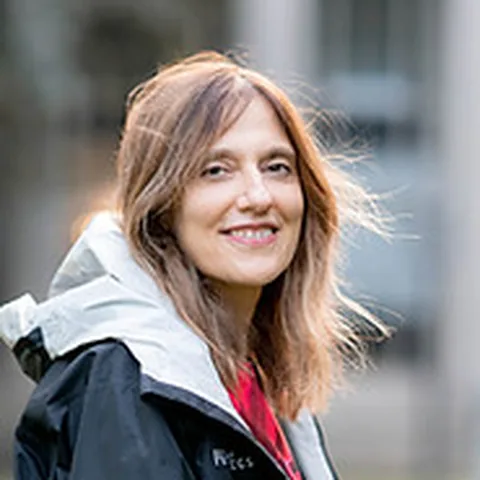 Regina BarzilayMassachusetts Institute of Technology, 2022–2026
Sources and credits
Photo: We have no published photo of Siddharth Mishra-Sharma yet. Send us a free-licensed photo.
- Siddharth Mishra-Sharma | Cosmology
- [2110.01620] Inferring dark matter substructure with astrometric lensing beyond the power spectrum
- [2203.08056] Machine Learning and Cosmology
- [2308.09751] Data Compression and Inference in Cosmology with Self-Supervised Machine Learning
- [2408.16829] Maven: A Multimodal Foundation Model for Supernova Science
- [2503.10965] Auditing language models for hidden objectives
- Siddharth Mishra-Sharma
- Long-running Claude for scientific computing