Jesse Thomason
Jesse Thomason is a computer scientist whose research grounds natural language in robot perception, multimodal observations and physical action. After earning a bachelor's degree at the University of Pittsburgh in 2013 and a computer science PhD at the University of Texas at Austin in 2018, he completed a postdoc with Luke Zettlemoyer at the University of Washington, where he coauthored the 2019 Vision-and-Dialog Navigation dataset. As a visiting academic at Amazon's Alexa AI from August 2020, he coauthored the TEACh dataset of interactive household-task dialogues, released in October 2021 and published at AAAI 2022. From August 2021, he spent five years as an assistant professor at the University of Southern California leading the GLAMOR Lab and coauthoring the ProgPrompt robot task-planning work in 2022 and 2023. Since August 2026, he is an associate professor in Georgia Tech's School of Interactive Computing, where he leads the GLAMOR Lab.
Timeline
-
2013–2018
Pittsburgh degree and Texas PhD
He earns a bachelor's degree in computer science and mathematics at the University of Pittsburgh in 2013. In April 2018, he defends his computer science doctoral dissertation, Continually Improving Grounded Natural Language Understanding through Human-Robot Dialog, at the University of Texas at Austin.
-
2018–2020
Postdoc with Luke Zettlemoyer
From June 2018 to 2020, he works as a postdoctoral researcher with Luke Zettlemoyer at the University of Washington.
-
2019
Vision-and-Dialog Navigation dataset
With Michael Murray, Maya Cakmak and Luke Zettlemoyer, he coauthors Vision-and-Dialog Navigation for the 2019 Conference on Robot Learning. The paper introduces Cooperative Vision-and-Dialog Navigation, a dataset of over 2k embodied, human-human dialogs situated in simulated, photorealistic home environments.
-
2020–2022
Alexa AI and the TEACh dataset
In August 2020, he becomes a visiting academic at Amazon's Alexa AI. He coauthors TEACh: Task-driven Embodied Agents that Chat, a dataset of over 3,000 human-human, interactive dialogues to complete household tasks in simulation, released as a preprint in October 2021 and accepted at AAAI 2022.
-
2021–2026
Assistant professor at USC
In August 2021, he becomes an assistant professor in the Viterbi School's Thomas Lord Department of Computer Science at the University of Southern California, where he leads the Grounding Language in Actions, Multimodal Observations, and Robots (GLAMOR) Lab for five years. The lab builds agents and robots that understand human language through grounded context, jointly training models with language, world perception and physical action.
-
2022–2024
ProgPrompt for robot task planning
His September 2022 ProgPrompt preprint introduces a programmatic large language model prompt structure for situated robot task plans, and the journal paper with Ishika Singh, Dieter Fox, Animesh Garg and others appears in Autonomous Robots in 2023. In February 2024, a Scientific American article titled Scientists Are Putting ChatGPT Brains Inside Robot Bodies highlights his work and PhD student Singh's work to help robots complete real-world tasks.
-
September 2025
A talk on grounded language
At UT Austin in September 2025, he gives the Forum for Artificial Intelligence talk Embracing Language as Grounded Communication. In the talk, he argues that experience in the world grounds language by tying it to objects, actions and concepts.
-
Since August 2026
Associate professor at Georgia Tech
In August 2026, he joins Georgia Tech's School of Interactive Computing as an associate professor and moves the GLAMOR Lab there, drawn by the school's reputation in human-computer interaction research. At Georgia Tech, the lab jointly trains models with language, world perception and physical action, uses visual and embodied context for robotics and language-and-vision tasks, and works on speech and sign recognition.
Career
- Since 2026Georgia Institute of TechnologyAssociate professor
- 2021–2026University of Southern CaliforniaAssistant professor
- From 2020AmazonVisiting academic
- 2018–2020University of WashingtonPostdoctoral researcher
Education
- 2018University of Texas at AustinPhD
- 2013University of PittsburghBachelor's degree
Colleagues
 Dieter FoxUniversity of Washington, 2018–2020
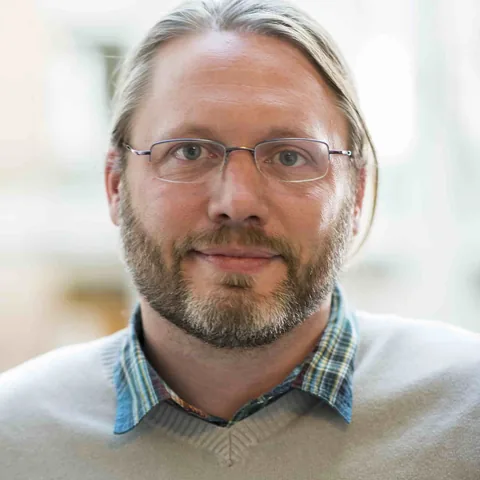 Luke ZettlemoyerUniversity of Washington, 2018–2020
- Maya CakmakUniversity of Washington, 2018–2020
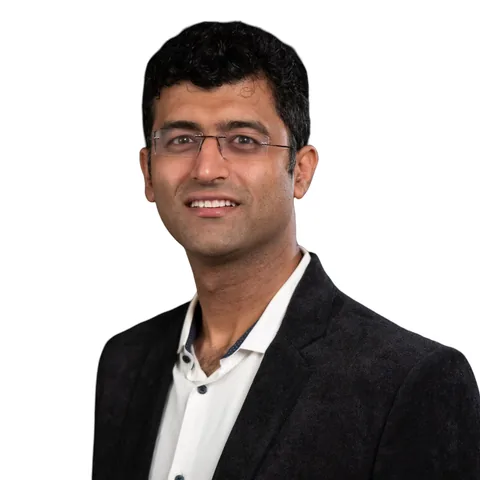 Animesh GargGeorgia Institute of Technology, 2026
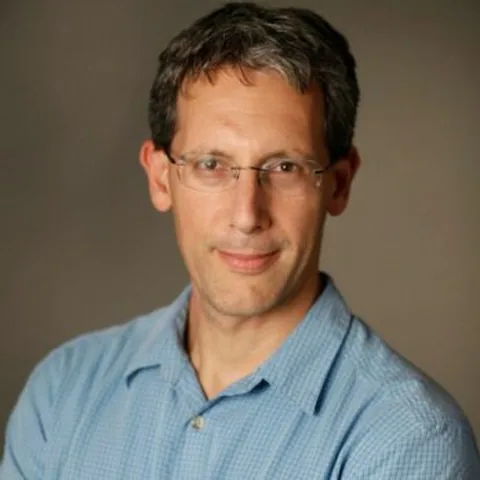 Daniel A. LidarUniversity of Southern California, 2021–2026
- Swabha SwayamdiptaUniversity of Southern California, 2021–2026
Sources and credits
Photo: We have no published photo of Jesse Thomason yet. Send us a free-licensed photo.
- USC - Viterbi School of Engineering - Viterbi Faculty Directory
- Jesse Thomason - GLAMOR
- Luke Zettlemoyer
- [1907.04957] Vision-and-Dialog Navigation
- TEACh: Task-driven embodied agents that chat - Amazon Science
- [2110.00534] TEACh: Task-driven Embodied Agents that Chat
- Embracing Language as Grounded Communication | Texas AI
- New Associate Professor Sees Research Becoming More Human-Centered | College of Computing
- Jesse Thomason | School of Interactive Computing
- [2209.11302] ProgPrompt: Generating Situated Robot Task Plans using Large Language Models
- Scientists Are Putting ChatGPT Brains Inside Robot Bodies - USC Viterbi | School of Engineering