Wanjia Zhao
Also known as 赵万佳
Wanjia Zhao is a computer science researcher whose work spans language-model reasoning, formal theorem proving, and AI for science. They earned an honors mathematics degree at Zhejiang University, researched physics-informed learning at UCLA, and began a computer science PhD at Stanford in 2024. At DeepSeek, they coauthored DeepSeek-V3, DeepSeek-R1, and DeepSeek-Prover-V2; later projects include multi-agent reasoning, geometric diffusion, and protein language models. Since January 2026, they work as a student researcher at Google DeepMind and continue work on physics reasoning with PRISM-Physics.
- Now at
- Google DeepMind
- Badges
Timeline
-
2020–2024
Mathematics at Zhejiang University
From September 2020 to June 2024, they study mathematics and applied mathematics at Zhejiang University and earn an honors BS. Professor Fei Wu advises them.
-
June 2023–October 2023
Research at UCLA
From June to October 2023, they are a visiting research student at UCLA's Scalable Analytics Institute (ScAi), where they work on physics-informed machine learning under Yizhou Sun and Wei Wang.
-
2023–2024
A physics-informed NeurIPS paper
They coauthor Physics-Informed Regularization for Domain-Agnostic Dynamical System Modeling, which wins Best Paper at the NeurIPS 2023 Deep Learning and Differential Equations workshop. The paper appears in the NeurIPS 2024 proceedings.
-
February 2024–December 2024
Microsoft and DeepSeek internships
From February to June 2024, they work in Microsoft Research Lab–Asia's Machine Learning Group on LLMs for decision making. From June to September 2024, they research mathematical reasoning as a DeepSeek AI intern. DeepSeek-V3's December 2024 technical report lists them among its research and engineering contributors.
-
September 2024
A Stanford PhD and award
They begin a computer science PhD at Stanford in September 2024, with affiliations at the Stanford NLP Group and Stanford AI Lab and advisors James Zou and Ludwig Schmidt. Stanford lists them among Zou's doctoral students, and they receive the NeurIPS 2024 Scholar Award.
-
January 2025–April 2025
DeepSeek reasoning and theorem proving
In January 2025, they coauthor DeepSeek-R1, which describes reinforcement-learning training for reasoning models. In April 2025, they coauthor DeepSeek-Prover-V2, an open-source Lean 4 model for formal theorem proving through subgoal decomposition.
-
June 2025–November 2025
Microsoft research and 2025 papers
From June to September 2025, they are an AI Frontiers research intern at Microsoft Research, working on reinforcement learning and tool use for LLM reasoning. Their NeurIPS 2025 papers include SiriuS, a self-improving multi-agent reasoning system, and GeoAda, an equivariant adapter method for geometric diffusion models. In November 2025, they coauthor Protein Large Language Models: A Comprehensive Survey, which covers architectures, training data, evaluation metrics, and applications.
-
Since January 2026
Google DeepMind research
Since January 2026, they work as a student researcher at Google DeepMind while continuing their Stanford computer science PhD. Their ICLR 2026 paper PRISM-Physics develops a process-level benchmark that represents physics solutions as directed acyclic graphs of formulas.
Career
- Since 2026Google DeepMindStudent Researcher
- 2025Microsoft ResearchAI Frontiers Research Intern
- 2024Microsoft Research AsiaResearch Intern
- 2024DeepSeekAI Intern
- 2023University of California, Los AngelesVisiting Research Student
Education
- 2024Zhejiang UniversityHonors BS
- From 2024Stanford UniversityPhD in computer science
Colleagues



Sources and credits
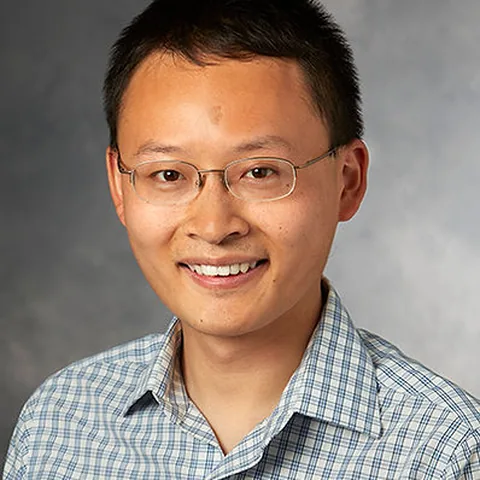
Photo: We have no published photo of Wanjia Zhao yet. Send us a free-licensed photo.
- Wanjia Zhao 赵万佳
- Physics-Informed Regularization for Domain-Agnostic Dynamical System Modeling
- DeepSeek-V3 Technical Report
- James Zou's Profile | Stanford Profiles
- DeepSeek-R1: Incentivizing Reasoning Capability in LLMs via Reinforcement Learning
- DeepSeek-Prover-V2: Advancing Formal Mathematical Reasoning via Reinforcement Learning for Subgoal Decomposition
- Protein Large Language Models: A Comprehensive Survey - ACL Anthology
- PRISM-Physics: Causal DAG-Based Process Evaluation for Physics Reasoning