Philip Agre
Also known as Phil Agre, Philip E. Agre
Philip Agre is an artificial intelligence researcher and former professor of information studies at UCLA, known for introducing critical technical practice. With David Chapman, he published the Pengi video-game program in 1987 and earned his MIT doctorate in 1989, then taught at Chicago, Sussex and UC San Diego. He coedited Computational Theories of Interaction and Agency in 1995, and Cambridge University Press published his Computation and Human Experience, a critical reconstruction of the ideas and methods of AI research, in 1997. At UCLA from 1998, he wrote in 2001 against automatic face recognition in public places. He left UCLA in 2009 and withdrew from public life.
- Works
- 116
- Citations
- 6,491
- h-index
- 27
Publication numbers from OpenAlex, as of 22 October 2026.
Timeline
-
1987–1989
Pengi and an MIT doctorate
In 1987, he and David Chapman publish "Pengi: An implementation of a theory of activity" at the Sixth National Conference on Artificial Intelligence; Pengi plays a video game that calls for flexible actions. He earns his MIT doctorate in 1989, working at the AI Laboratory on computational models of improvised activities, first under Michael Brady and then under Rodney Brooks.
-
1991–1998
Teaching at UC San Diego
After a brief postdoc at the Institute for Research on Learning and time teaching at the University of Chicago and the University of Sussex, he arrives at the University of California, San Diego in 1991. He teaches in its Department of Communication until 1998.
-
1994–1996
The Network Observer
From January 1994 to July 1996, he edits The Network Observer, a free monthly online newsletter about networks and democracy. He also organizes a mailing list, the Red Rock Eater News Service, whose subscribers receive about five messages a week.
-
1995–1996
Editing a volume on agency
In 1995, he and Stanley J. Rosenschein coedit a special double volume of Artificial Intelligence, Computational Theories of Interaction and Agency. His 52-page introduction sets out a framework for such theories and describes Toast, a program that acts as a short-order breakfast cook. MIT Press publishes the volume as a book with seventeen papers in 1996.
-
1997
Computation and Human Experience
In 1997, Cambridge University Press publishes his book Computation and Human Experience, a critical reconstruction of the fundamental ideas and methods in AI research. His concept of critical technical practice calls on technologists to reflect philosophically on the assumptions embedded in their work.
-
1998–2009
Professor at UCLA
He joins UCLA in 1998 as an associate professor of information studies. In 2001, he writes "Your Face Is Not a Bar Code: Arguments Against Automatic Face Recognition in Public Places", an abridged version of which appears in Whole Earth.
-
2009–2010
Leaving UCLA and public life
In 2009, he leaves his position at UCLA and withdraws from public life. After a missing persons report in October 2009, the Los Angeles County Sheriff's Department locates him on January 16, 2010, in good health and self-sufficient.
-
December 2025
A paper on his legacy
In December 2025, Jethro Masis posts "Making AI Philosophical Again: On Philip E. Agre's Legacy" to arXiv. The paper examines Agre's work at the intersection of artificial intelligence, philosophy, and critical theory.
Career
- 1998–2009University of California, Los AngelesAssociate Professor of Information Studies
- 1991University of Sussex
- 1991–1998University of California, San Diego
- 1990–1991University of Chicago
- Institute for Research on LearningPostdoc
Education
- 1989Massachusetts Institute of TechnologyDoctorate
Most-cited works
Colleagues
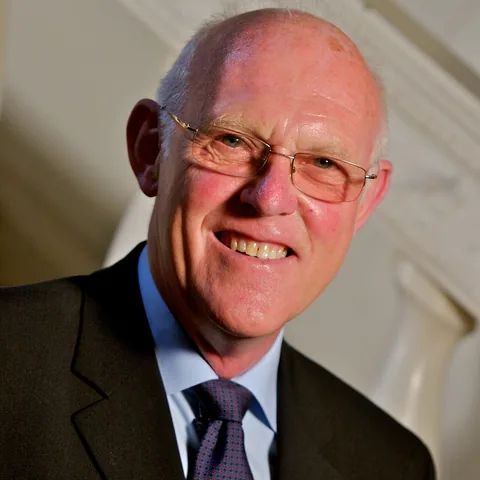 Michael BradyNamed in this biography
- Stanley J. RosenscheinNamed in this biography
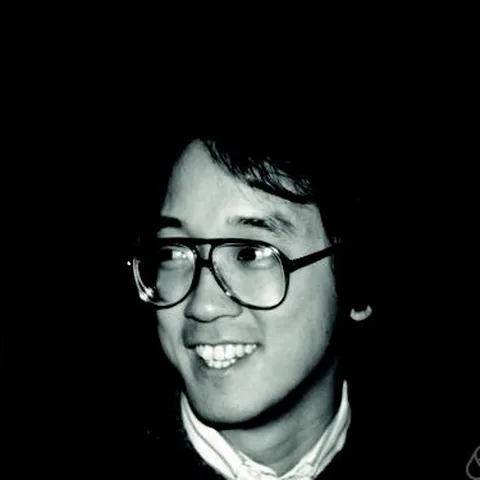 Tony F. ChanUniversity of California, Los Angeles, 1998–2009
 Abeer AlwanUniversity of California, Los Angeles, 1998–2009
 Judea PearlUniversity of California, Los Angeles, 1998–2009
- Charles ElkanUniversity of California, San Diego, 1991–1998
Sources and credits
Photo: We have no published photo of Philip Agre yet. Send us a free-licensed photo.
- Computational Research on Interaction and Agency
- Computation and Human Experience
- Philip Agre - Wikipedia
- Phil Agre - Hertz Foundation
- profiles: Phil Agre
- Computational Theories of Interaction and Agency
- The Network Observer
- Red Rock Eater News Service
- Phil Agre's Home Page
- Your Face Is Not a Bar Code
- Missing Internet Pioneer Phil Agre Is Found Alive : All Tech Considered : NPR
- Phil Agre, missing ex-UCLA professor, found safe - LA Observed
- [2601.11569] Making AI Philosophical Again: On Philip E. Agre's Legacy