Pablo Arbeláez
Also known as Pablo Andrés Arbeláez Escalante, Pablo Andrés Arbeláez
Pablo Arbeláez is a mathematician and computer vision researcher at Universidad de los Andes in Bogotá, where he directs the AI center CinfonIA. After a PhD in applied mathematics at Université Paris-Dauphine in 2005, he worked from 2007 to 2014 in the Computer Vision Group at UC Berkeley with Jitendra Malik, where he coauthored the contour detection and hierarchical segmentation paper that accompanies the BSDS500 benchmark and, in 2014, Multiscale Combinatorial Grouping. He joined the Department of Biomedical Engineering at Los Andes in 2014, received a 2020 AI 2000 Most Influential Scholars Honorable Mention in Computer Vision, and became the first director of CinfonIA in 2020, when the center formed an alliance with DeepMind for scholarships. He gave an invited talk on AI for open science at ICLR 2026 in April 2026, and he remains CinfonIA's director.
Timeline
-
1997–2005
Mathematics in Bogotá and Paris
He earns a bachelor's degree in mathematics at Universidad de los Andes in 1997. In 2005, he completes a PhD in applied mathematics, with honors, at Université Paris-Dauphine.
-
2007–2014
Vision researcher at Berkeley
From 2007 to 2014, he works as a senior research scientist in the Computer Vision Group at the University of California, Berkeley, alongside Jitendra Malik. He is also a member of the Bioimaging Group at Lawrence Berkeley National Laboratory (LBNL).
-
2010–2014
Contour detection and segmentation
In 2010, he coauthors a Berkeley technical report with Michael Maire, Charless Fowlkes and Jitendra Malik that pairs a contour detector based on spectral clustering with a method that turns any detector's output into a hierarchical region tree. The paper appears in IEEE TPAMI in May 2011, and the group's resources for it include BSDS500, a benchmark of 500 natural images with human annotations. In 2014, he coauthors Multiscale Combinatorial Grouping at CVPR with Jordi Pont-Tuset, Jonathan T. Barron, Ferran Marques and Jitendra Malik, a method that combines multiscale regions into object candidates for recognition.
-
2014
Biomedical engineering at Los Andes
In 2014, he joins the faculty of the Department of Biomedical Engineering at Universidad de los Andes. He creates the Biomedical Computer Vision research group, whose projects include automated facial expression analysis, video comprehension, and early diagnosis of brain and lung cancer.
-
2017–2018
Segmenting objects from language
From 2017, he works with Los Andes students on DML, an open-source model that links a command in words to a concept and then to an image, using convolutional and recurrent neural networks. In July 2018, he coauthors the paper "Dynamic Multimodal Instance Segmentation guided by natural language queries" with Edgar Margffoy-Tuay, Juan C. Pérez and Emilio Botero; the method segments an object from a natural language description and surpasses earlier methods in six of eight splits across four datasets.
-
2020
An AI 2000 honorable mention
In 2020, he receives the AI 2000 Most Influential Scholars Honorable Mention in Computer Vision, a ranking that Tsinghua's AMiner system generates from citation counts in major AI publications. The honor places him among the 100 most influential researchers in his discipline over the last decade.
-
2020
Founding director of CinfonIA
In July 2020, Los Andes appoints him director of its new Center for Research and Formation in Artificial Intelligence, CinfonIA, a project of the university's research vice-rectorate with the engineering, sciences and law faculties. By November 2020, CinfonIA has formed an alliance with DeepMind, which makes Los Andes the first Latin American university in a group that offers DeepMind scholarships to students underrepresented in AI.
-
As of October 2026
CinfonIA director and ICLR speaker
In April 2026, he gives the invited talk "Artificial Intelligence for Open Science" at ICLR 2026, presenting CinfonIA projects in robotic surgery, spatial transcriptomics, drug discovery, geology and nature conservation. As of October 2026, he is director of CinfonIA and a panelist at Semana's forum Inteligencias para el futuro.
Career
- Since 2014University of the AndesFaculty member, Founding Director
- 2007–2014University of California, BerkeleySenior Research Scientist
- 2007–2014Office of ScienceMember
Education
- 2005Paris Dauphine UniversityPhD in applied mathematics
- 1997University of the AndesBachelor's degree in mathematics
Colleagues
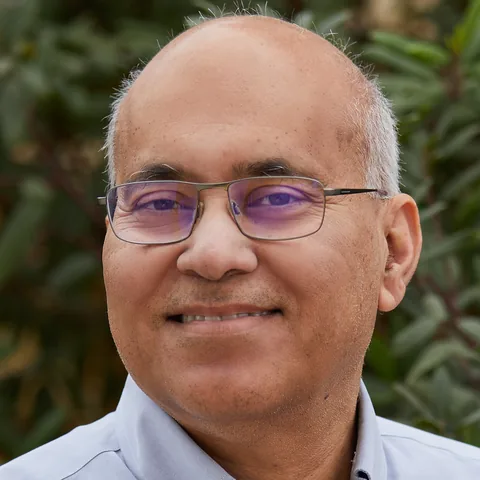 Jitendra MalikUniversity of California, Berkeley, 2007–2014
 Jonathan T. BarronUniversity of California, Berkeley, 2011–2014
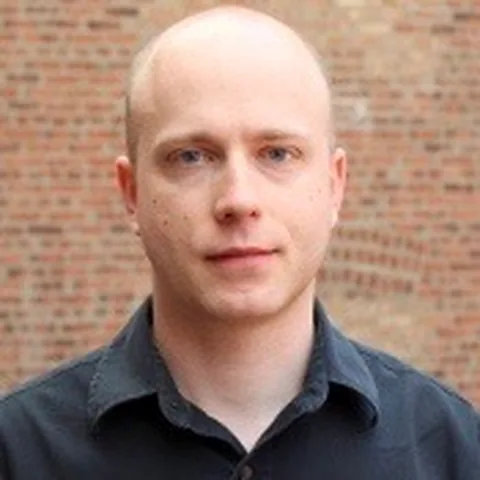 Michael MaireUniversity of California, Berkeley, 2007–2009
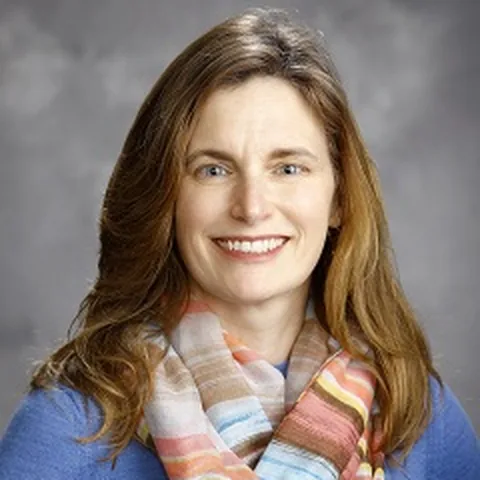 Tamara KoldaOffice of Science, 2007–2010
- Andrey ZhmoginovOffice of Science, 2008–2014
- Marina CortêsOffice of Science, 2008–2011
Sources and credits
Photo: We have no published photo of Pablo Arbeláez yet. Send us a free-licensed photo.
- Pablo Andrés Arbeláez | Uniandes
- Artificial Intelligence for Open Science - Pablo Arbelaez (ICLR 2026 invited talk)
- GPI Seminar Series: Pablo Arbelaez | Image Processing Group
- Contour Detection and Hierarchical Image Segmentation (UCB/EECS-2010-17)
- Contour Detection and Image Segmentation Resources
- Multiscale Combinatorial Grouping (CVPR 2014)
- Cinfonia: el nuevo Centro de Inteligencia Artificial de Uniandes
- Colombia, en la búsqueda de una verdadera interacción con las máquinas | EL ESPECTADOR
- Dynamic Multimodal Instance Segmentation guided by natural language queries (arXiv:1807.02257)
- Pablo Arbeláez awarded with the 2020 AI 2000 Most Influential Scholars Honorable Mention in Computer Vision
- Pablo Arbeláez appointed as Director of the Center for Research and Formation in Artificial Intelligence
- Becas para Latinoamérica en inteligencia artificial: la apuesta de DeepMind y CinfonIA | Uniandes
- Conozca la agenda del foro Inteligencias para el futuro, al que invitan Foros Semana y Syngenta para este 14 de octubre