Noam Chomsky
Also known as Avram Noam Chomsky
Noam Chomsky is a linguist and cognitive scientist whose formal account of grammar fed the theory of formal languages in computer science, and who has long questioned statistical approaches to language. He earned a PhD from the University of Pennsylvania and joined MIT in 1955, then published "Three models for the description of language" in 1956 and Syntactic Structures in 1957; MIT named him Institute Professor in 1976. His work earned the 1988 Kyoto Prize in Basic Sciences and the 1999 Benjamin Franklin Medal in Computer and Cognitive Science, awarded for his contributions to linguistics and their effects on computer science. At MIT's Brains, Minds and Machines symposium in 2011, he derided machine-learning researchers who use purely statistical methods, and in March 2023 he co-wrote "The False Promise of ChatGPT" for The New York Times with Ian Roberts and Jeffrey Watumull. After a stroke in June 2023 he moved to Brazil full-time; he is Institute Professor emeritus at MIT and a laureate professor of linguistics at the University of Arizona, currently on leave.
- Born
- 1928
Years link to their sources.
Timeline
-
1928–1955
Penn, Harvard and a PhD
Born in Philadelphia in 1928, he enters the University of Pennsylvania at 16 in 1945, where Zellig Harris introduces him to theoretical linguistics. He earns an MA from Penn in 1951, develops transformational grammar as a member of Harvard's Society of Fellows from 1951 to 1955, and receives his Penn PhD in linguistics for it in 1955.
-
1955–1976
Professor at MIT
Roman Jakobson secures him an assistant professor post at MIT in 1955, where he spends half his time on a mechanical translation project. With Morris Halle he founds MIT's graduate program in linguistics; he becomes a full professor in 1961 and, from 1963 to 1965, consults on a military-sponsored project to teach computers to understand natural English commands. MIT names him Institute Professor in 1976.
-
1956–1965
Three models and Syntactic Structures
His 1956 paper "Three models for the description of language," published in IRE Transactions on Information Theory, first sets out the general idea of a hierarchy of grammars, now called the Chomsky hierarchy, and proves crucial to the theory of formal languages in computer science. Mouton publishes Syntactic Structures in February 1957, and Donald Knuth reads the book in 1961 and is influenced by it. Aspects of the Theory of Syntax appears in 1965.
-
1972–1988
National Academy and Kyoto Prize
He becomes a member of the National Academy of Sciences in 1972. In 1988, he receives the Kyoto Prize in Basic Sciences for his generative grammar theory, which becomes a basis for automata and mathematical linguistic theories in information science and computer science.
-
1999–2002
Franklin Medal and emeritus status
The Franklin Institute awards him the 1999 Benjamin Franklin Medal in Computer and Cognitive Science for his contributions to linguistics and their effects on computer science. He retires from MIT in 2002 and continues to conduct research and seminars on campus as an emeritus.
-
2011
Brains, Minds and Machines symposium
At the Brains, Minds and Machines symposium during MIT's 150th anniversary celebrations in 2011, he derides machine-learning researchers who use purely statistical methods to mimic behavior and make no attempt to understand its meaning. His remarks answer a question from Steven Pinker about the success of probabilistic models trained with statistical methods.
-
March 2023
The False Promise of ChatGPT
With linguist Ian Roberts and AI researcher Jeffrey Watumull, he publishes "The False Promise of ChatGPT" in The New York Times in March 2023, arguing that programs like ChatGPT cannot replicate human thinking and reasoning because they cannot explain the rules of English syntax. In an April 2023 interview with Monthly Review Online, he says he has seen nothing from large language models that poses even a remote challenge to his work.
-
As of October 2026
Institute Professor emeritus at MIT
The University of Arizona hires him in August 2017 as a laureate professor in its Department of Linguistics and as Agnese Nelms Haury Chair. After a stroke in June 2023, he moves to Brazil full-time and stops speaking in public; he is still convalescing there as of November 2025. He is Institute Professor and Professor of Linguistics emeritus at MIT and a laureate professor at Arizona, currently on leave.
Career
- Since 2017University of ArizonaLaureate Professor and Agnese Nelms Haury Chair
- Since 1955Massachusetts Institute of TechnologyAssistant Professor, Full Professor
Education
- 1955University of PennsylvaniaMA and PhD
Videos
 Professor Noam Chomsky on Wittgenstein's private language argument #linguisticsMachine Learning Street Talk · 6 September 2023 · 1 min
 Prof. Noam Chomsky, the father of modern linguistics, talking about ChatGPT #machinelearningMachine Learning Street Talk · 8 March 2023 · 1 min
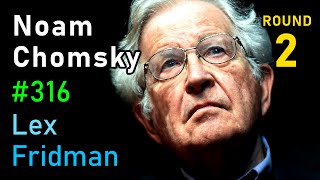 Noam Chomsky: Putin, Ukraine, China, and Nuclear War | Lex Fridman Podcast #316Lex Fridman · 31 August 2022 · 47 min
 The Ghost in the Machine — Noam ChomskyMachine Learning Street Talk · 10 July 2022 · 3 h 37 min
Video data from YouTube API Services. By watching you agree to the YouTube Terms of Service. How we use YouTube data.
Colleagues
- Steven PinkerMassachusetts Institute of Technology, 1982–2002
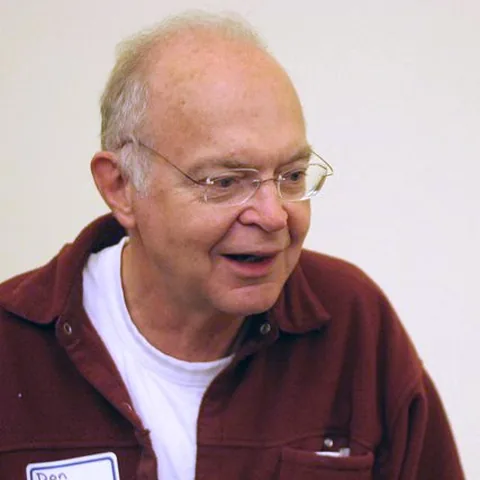 Donald KnuthNamed in this biography
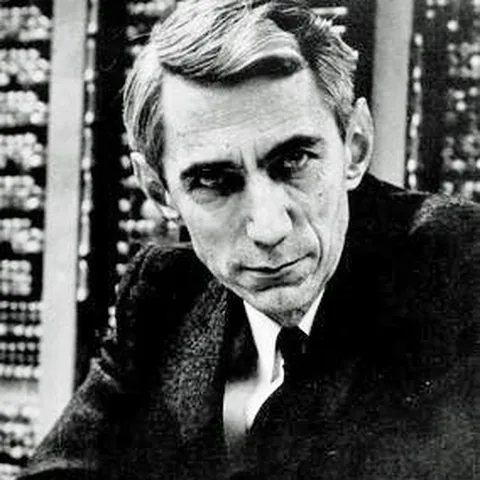 Claude ShannonMassachusetts Institute of Technology, 1976–2002
 Jeffrey H. ShapiroMassachusetts Institute of Technology, 1976–2002
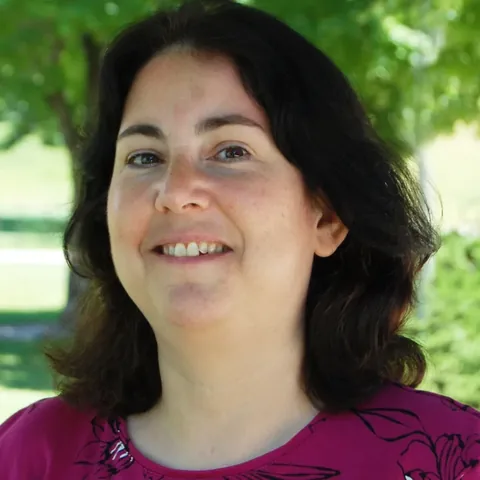 Ellen RiloffUniversity of Arizona, 2023–2026
- Michael HammondUniversity of Arizona, 2017–2026
Sources and credits
Photo: We have no published photo of Noam Chomsky yet. Send us a free-licensed photo.
- Noam Chomsky - Wikipedia
- Avram Noam Chomsky | Kyoto Prize
- Syntactic Structures - Wikipedia
- Chomsky hierarchy - Wikipedia
- Noam Chomsky | The Franklin Institute
- On Chomsky and the Two Cultures of Statistical Learning
- ChatGPT and human intelligence: Noam Chomsky responds to critics
- World-Renowned Linguist Noam Chomsky Joins UA Faculty | University of Arizona News
- Noam Chomsky | Linguistics, University of Arizona
- Noam Chomsky | MIT Linguistics
- What the Noam Chomsky–Jeffrey Epstein E-mails Tell Us | The Nation