Michael Hammond
Also known as Mike Hammond
Michael Hammond is a linguist whose work links phonology with computational methods for language. He earned a BA in linguistics from UCLA in 1979 and a PhD in 1984, taught at Minnesota and Wisconsin–Milwaukee, and headed the University of Arizona's Department of Linguistics from 2001 to 2011. His work included a computational model of English and French syllable parsing in 1995, a probabilistic model of English phonotactics in 2009, neural question-answering research in 2017, Python for Linguists in 2020, low-resource grapheme-to-phoneme mapping in 2021, and PyFoma in 2024. As of October 2026, he is Professor Emeritus in the University of Arizona's Department of Linguistics.
- Now at
- University of Arizona
- Born
- 1957
- Works
- 155
- Citations
- 2,014
- h-index
- 21
- Badges
Years link to their sources. Publication numbers from OpenAlex, as of 22 October 2026.
Timeline
-
1979–1988
UCLA and early faculty roles
He earns a BA in linguistics from UCLA in 1979 and a PhD there in 1984. From 1983 to 1984, he serves as a visiting assistant professor in the University of Minnesota's Department of Linguistics; from 1984 to 1988, he serves as an assistant professor at the University of Wisconsin–Milwaukee.
-
1995
A computational syllable parser
In 1995, he proposes an Optimality Theory account of syllable parsing in English and French, backed by a computational implementation.
-
2001–2011
Arizona department head
He heads the University of Arizona's Department of Linguistics from 2001 to 2011. In a 2009 paper, he models experimental English phonotactic judgments with Probabilistic Optimality Theory.
-
2017
Neural answer justification
In 2017, he coauthors “Tell Me Why,” which uses answer ranking as distant supervision to learn to select informative justifications. A neural network reranks justifications as an interpretable step in answer selection.
-
2020
Python for linguists
He publishes Python for Linguists in 2020, a programming introduction designed for linguists. Its examples use language data that readers can adapt for research.
-
2021
Neural grapheme-to-phoneme mapping
In 2021, he authors a paper that explores neural grapheme-to-phoneme mapping in low-resource languages through data augmentation.
-
2024
Coauthoring PyFoma
With Mans Hulden, Michael Ginn and Miikka Silfverberg, he coauthors PyFoma in 2024, an open-source Python module for finite-state transducers and automata used in linguistics and NLP applications.
-
As of October 2026
Professor emeritus at Arizona
As of October 2026, he is Professor Emeritus in the University of Arizona's Department of Linguistics. His research includes phonology, morphology and computational linguistics.
Career
- Since 2001University of ArizonaDepartment head
- 1984–1988University of Wisconsin–MilwaukeeAssistant professor
- 1983–1984University of MinnesotaVisiting assistant professor
Education
Most-cited works
Colleagues
Sources and credits
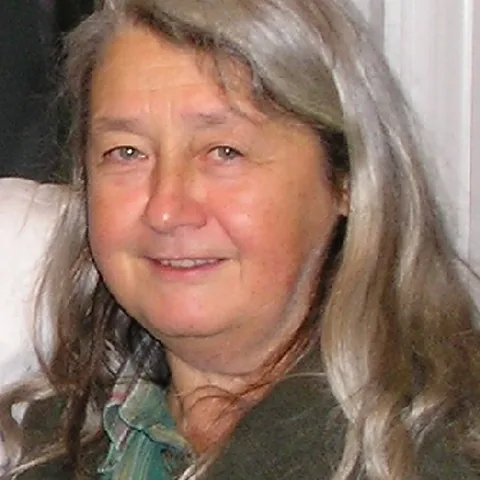
Photo: We have no published photo of Michael Hammond yet. Send us a free-licensed photo.
- Michael Hammond (linguist)
- Linguistic Institute 2011: Faculty Listings
- Syllable parsing in English and French
- GRADIENCE, PHONOTACTICS, AND THE LEXICON IN ENGLISH PHONOLOGY
- Tell Me Why: Using Question Answering as Distant Supervision for Answer Justification
- LINGUIST List 31.2625: Books: Python for Linguists: Hammond
- Data augmentation for low-resource grapheme-to-phoneme mapping
- PyFoma: a Python finite-state compiler module
- Mike Hammond | Mike’s homepage