Steven Pinker
Steven Pinker is a Harvard psychologist who studies language and cognition, and whose research on regular and irregular verbs bears on whether artificial neural networks, including large language models, explain human intelligence. Born in Montreal in 1954, he earned a Harvard PhD in 1979 and taught at MIT from 1982 to 2003, where he co-directed the Center for Cognitive Science. In 1988, he and Alan Prince published a critique of a connectionist model of past-tense acquisition, and his 1999 book Words and Rules set out the strengths and weaknesses of artificial neural networks. His books for general readers include The Language Instinct and Enlightenment Now, and in a 2023 Harvard Gazette interview he called ChatGPT an alien intelligence capable of astonishing feats. Elected to the National Academy of Sciences in 2016, he is the Johnstone Family Professor of Psychology at Harvard.
- Now at
- Harvard University
- Born
- 1954
Years link to their sources.
Timeline
-
1976–1979
A Harvard PhD under Kosslyn
Born in Montreal in 1954, he earns a BA in psychology at McGill University in 1976. He completes a PhD in experimental psychology at Harvard in 1979 under Stephen Kosslyn, with a dissertation on visual cognition.
-
1979–2003
Professor at MIT
Jay Keyser brings him to MIT as a postdoc in 1979, and he joins the MIT faculty in 1982 after one-year teaching posts at Harvard and Stanford. In the Department of Brain and Cognitive Sciences, he co-directs the Center for Cognitive Science from 1985 to 1994 and directs the Center for Cognitive Neuroscience from 1994 to 1999.
-
1988
A critique of connectionism
In 1988, he and Alan Prince publish a critique of a connectionist model of past-tense acquisition, followed by a series of studies on how people use and acquire the past tense. His research on regular verbs like walk-walked and irregular verbs like bring-brought bears on whether artificial neural networks, including large language models, explain human intelligence.
-
1994–1999
The Language Instinct
In 1994, he publishes The Language Instinct, which presents language as a biological adaptation, followed by How the Mind Works in 1997. Words and Rules, published in 1999, uses his verb research to explain how language works and to show the strengths and weaknesses of artificial neural networks.
-
2003–2016
Johnstone professor at Harvard
After 21 years at MIT, he accepts an endowed professorship at Harvard in 2003 and becomes the Johnstone Family Professor of Psychology. Time names him among the 100 most influential people in the world in 2004, and the National Academy of Sciences elects him in 2016.
-
2018
AI in the Age of Reason
Enlightenment Now, published in 2018, argues that reason, science and humanism have improved the human condition. In October 2018, he is a guest on Lex Fridman's podcast for the episode "AI in the Age of Reason."
-
2023
ChatGPT and a Frontiers award
In a February 2023 Harvard Gazette interview, he describes ChatGPT as an alien intelligence capable of astonishing feats and calls artificial general intelligence, OpenAI's stated goal, incoherent. In March 2023, he shares the BBVA Foundation Frontiers of Knowledge Award in Humanities and Social Sciences with Peter Singer for contributions on rationality.
-
As of October 2026
A book on common knowledge
His thirteenth book, When Everyone Knows That Everyone Knows..., appears in September 2025, and his research turns to the psychology of common knowledge. He is the Johnstone Family Professor in Harvard's Department of Psychology.
Career
- Since 2003Harvard UniversityTeaching post
- 1979–2003Massachusetts Institute of TechnologyPostdoctoral researcher, Professor
- Stanford UniversityTeaching post
Education
- 1979Harvard UniversityPhD in experimental psychology
- 1976McGill UniversityBA in psychology
Videos
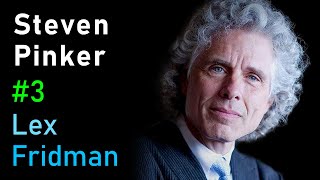
Video data from YouTube API Services. By watching you agree to the YouTube Terms of Service. How we use YouTube data.
Colleagues
 Lex FridmanNamed in this biography
- Peter SingerNamed in this biography
 Jeffrey H. ShapiroMassachusetts Institute of Technology, 1982–2003
- Susan CareyHarvard University, 2003–2026
- George StephanopoulosMassachusetts Institute of Technology, 1984–2003
 John V. GuttagMassachusetts Institute of Technology, 1982–2003
Sources and credits
Photo: We have no published photo of Steven Pinker yet. Send us a free-licensed photo.
- About | Steven Pinker
- Steven Pinker - Wikipedia
- Harvard-bound Pinker looks back fondly over 21 years at MIT | MIT News
- Steven Pinker: AI in the Age of Reason | Lex Fridman Podcast
- Will ChatGPT replace human writers? Pinker weighs in. — Harvard Gazette
- The Frontiers of Knowledge Award goes to Steven Pinker and Peter Singer for innovative academic contributions in the domains of rationality and moral progress that have achieved a widespread impact in the public sphere