Mireille Broucke
Also known as Mireille Esther Broucke
Mireille Broucke is a control theorist at the University of Toronto whose research spans autonomous vehicles, drones and control-theoretic models of the cerebellum. She worked in industry on computer-aided control design, served as program manager at PATH from 1993 to 1996, completed a Berkeley PhD on hybrid systems in 2000, and joined Toronto in 2001. In 2017, her team's work included an adaptive cruise control and a parallel-parking algorithm for autonomous vehicles, and she worked with Angela Schoellig on drones as a testbed for path planning. In 2019, she proposed an oculomotor model built on adaptive internal models, and in 2022 she presented the cerebellum as a system whose primary function is disturbance rejection. She is a professor of electrical and computer engineering there, and in 2026 she published a disturbance-observer model of visuomotor adaptation in PLOS Computational Biology and posted an arXiv paper on continuous-time model identification.
- Now at
- University of Toronto
- Works
- 153
- Citations
- 4,022
- h-index
- 24
- Badges
Publication numbers from OpenAlex, as of 22 October 2026.
Timeline
-
1984–1987
Degrees at Texas and Berkeley
She earns a bachelor's degree in electrical engineering, with highest honors, at the University of Texas at Austin in 1984. In 1987, she earns a master's degree in electrical engineering and computer sciences at the University of California, Berkeley.
-
1993–1996
Program manager at PATH
She works for six years in industry on computer-aided control design, at firms including Texas Instruments, General Dynamics and Lockheed. From 1993 to 1996, she is program manager and researcher at Partners for Advanced Transportation and Highways (PATH), part of the Institute for Transportation Studies at Berkeley.
-
1998–2001
A Berkeley PhD in hybrid systems
In 1998 and 1999, she is a visiting researcher at PARADES in Rome. In 2000, she completes her Berkeley PhD, whose dissertation on qualitative analysis, model checking and controller synthesis of hybrid systems is supervised by Alberto Sangiovanni-Vincentelli. From 2000 to 2001, she is a postdoctoral researcher in the Vehicle Dynamics Laboratory of Berkeley's Department of Mechanical Engineering.
-
2001
Joining the University of Toronto
She joins the University of Toronto as a professor in 2001. Her research interests there include mathematical system theory, hybrid systems, control theory for complex specifications and geometric control.
-
2007–2008
Visiting professor in Bologna
In 2007 and 2008, she is a visiting professor at the Center for Research on Complex Automated Systems (CASY) at the University of Bologna in Italy.
-
2017
Control algorithms for self-driving robots
In 2017, her team's control algorithms for autonomous vehicles include an adaptive cruise control, created with her students, that speeds up or slows down to match the car in front, and a parallel-parking algorithm that parks in two movements. She collaborates with Angela Schoellig of UTIAS on drones that serve as a testbed for path-planning algorithms.
-
2019–2022
Control theory of the cerebellum
In January 2019, she posts an arXiv paper that proposes a new model of the oculomotor system, built on adaptive internal models, that recovers behaviors from more than 15 oculomotor experiments. In November 2022, she gives a talk at GERAD's Informal Systems Seminar proposing that the primary function of the cerebellum is disturbance rejection.
-
As of October 2026
Professor and the DO Model
She is a professor in the Department of Electrical and Computer Engineering at the University of Toronto. In February 2026, she and four coauthors publish a PLOS Computational Biology paper that models visuomotor adaptation around a disturbance observer, called the DO Model. In June 2026, she posts an arXiv paper with Fatima Ghadieh on continuous-time model identification that adheres to the tenets of neuromorphic computation and uses adaptive observers.
Career
- Since 2002University of TorontoProfessor
- 2020–2026Natural Sciences and Engineering Research Council of Canada
- 2007–2008University of BolognaVisiting professor
- 2000–2001University of California, BerkeleyPostdoctoral researcher
- 1998–1999PARADESVisiting researcher
- 1993–1996Institute for Transportation StudiesProgram manager and researcher
Education
- 2000University of California, BerkeleyPhD
- 1987University of California, BerkeleyMaster's degree
- 1984University of Texas at AustinBachelor's degree
Most-cited works
Colleagues
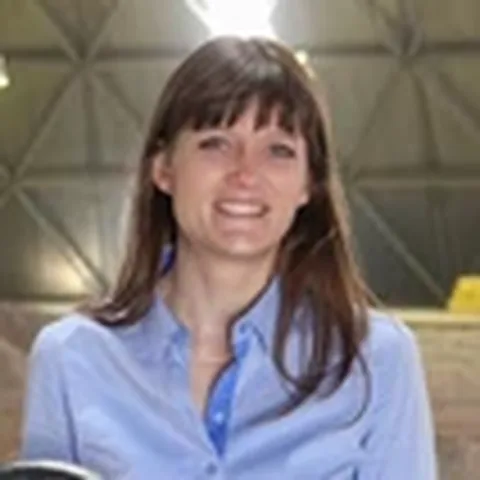 Angela SchoelligUniversity of Toronto, 2013–2026
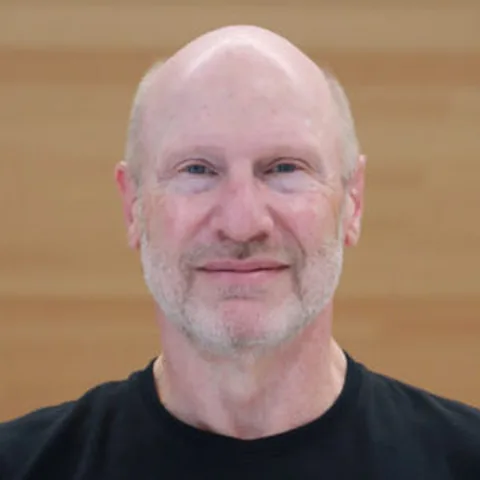 Mark S. FoxUniversity of Toronto, 2002–2026
- Sven J. DickinsonUniversity of Toronto, 2002–2026
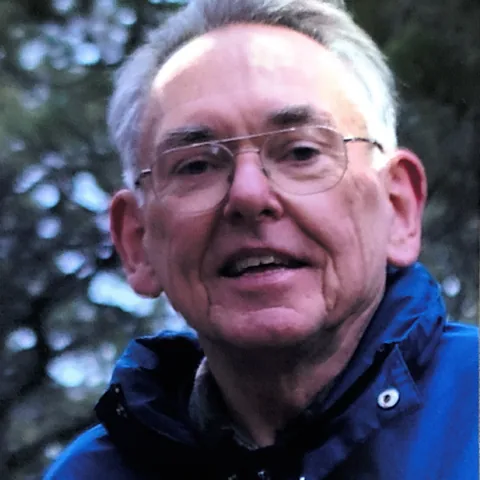 John OhalaUniversity of California, Berkeley, 1996–2005
- Alice AgoginoUniversity of California, Berkeley, 1996–2005
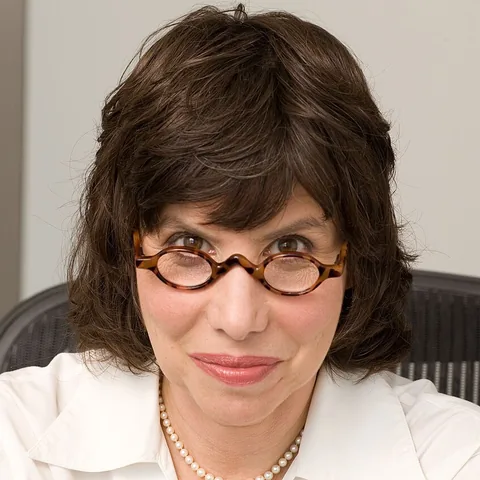 Alison GopnikUniversity of California, Berkeley, 1996–2005
Sources and credits
Photo: We have no published photo of Mireille Broucke yet. Send us a free-licensed photo.
- Mireille Broucke - Wikipedia
- Broucke, Mireille E. Professor - Electrical & Computer Engineering
- Mireille Broucke - The Mathematics Genealogy Project
- Steering through uncertainty: U of T Engineering research creates control algorithms for self-driving robots - U of T Engineering News
- Adaptive Internal Models: Explaining the Oculomotor System and the Cerebellum
- Adaptive Internal Models in Systems Neuroscience : GERAD
- Modeling human visuomotor adaptation with a disturbance observer framework - PMC
- Continuous Time Identification of Linear Systems: Extended Version