Mark S. Hillery
Also known as Mark Hillery
Mark Hillery is a physicist at Hunter College of the City University of New York whose work on quantum information ranges from quantum copying machines to quantum state learning. After studying at Berkeley from 1975 to 1980, he joined Hunter in 1985 and became a professor in 1993. With Vladimír Bužek, he introduced a universal quantum copying machine in 1996, and in 1998 they and André Berthiaume showed how to implement secret sharing with GHZ states. He wrote The Quantum Theory of Nonlinear Optics with Peter Drummond in 2014 and received the International Prize of the Slovak Academy of Sciences in 2019. In 2024 and 2026 he coauthored papers on quantum state learning from pairs of states, and he continues to work at Hunter and the CUNY Graduate Center.
- Now at
- Hunter College and Graduate Center, CUNY
- Badges
Timeline
-
1975–1984
From Berkeley to New Mexico
He studies at the University of California, Berkeley, from 1975 to 1980. He then works briefly at the Optical Science Center of the University of Arizona and, until 1984, at the Institute of Modern Optics of the University of New Mexico.
-
1985–1993
Professor at Hunter College
He joins Hunter College of the City University of New York in 1985 and receives the title of professor in September 1993.
-
1996
A universal quantum copier
With Vladimír Bužek, he posts 'Quantum Copying: Beyond the No-Cloning Theorem' in 1996. The paper describes a universal quantum copying machine that approximately copies states of a two-level system with output quality independent of the input, and a second machine that produces good copies of states near a chosen state.
-
1998
Quantum secret sharing
In 1998, he, Vladimír Bužek and André Berthiaume show how to split a message into several parts using GHZ states, so that only the full set of parts can read it. An eavesdropper introduces errors, which makes the intrusion detectable.
-
2012
A workshop for his 60th birthday
In May 2012, a workshop on quantum information and quantum optics celebrates his 60th birthday, with the rector of the University of Pécs and the president and provost of Hunter College as sponsors. Its topics include programmable quantum processors, quantum copying, secret sharing and quantum walks.
-
2014
The Quantum Theory of Nonlinear Optics
In 2014, Cambridge University Press publishes The Quantum Theory of Nonlinear Optics, written with Peter D. Drummond. Its twelve chapters run from classical nonlinear optics and field quantization to quantum information.
-
2019
A Slovak Academy of Sciences prize
In 2019, the Slovak Academy of Sciences presents him with its International Prize in Bratislava. His collaboration with the SAS Institute of Physics, begun in 1993 through his acquaintance with Vladimír Bužek, has produced more than 50 publications.
-
As of October 2026
Quantum state learning at Hunter
In 2024, he coauthors 'State learning from pairs of states', which shows how the two unknown pure states behind a sequence of qubits can be determined when each qubit arrives with a copy. The experimental follow-up, 'Experimental quantum state learning with pairs of photons', lists him among its authors in 2026. He and Nada Ali post 'Teleportation of a programmable gate' in October 2026, working in the Department of Physics at Hunter College and the Physics Program at the CUNY Graduate Center.
Career
- Since 1985City University of New YorkProfessor
- NowHunter CollegeProfessor
- NowGraduate Center, CUNY
- Until 1984University of New Mexico
Education
Colleagues

Sources and credits
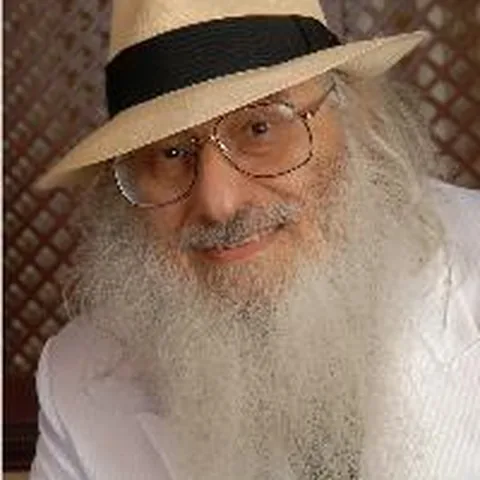
Photo: We have no published photo of Mark S. Hillery yet. Send us a free-licensed photo.
- Mark Hillery and his love of quantum physics, jazz and literature - News - Slovak Academy of Sciences
- [quant-ph/9607018] Quantum Copying: Beyond the No-Cloning Theorem
- [quant-ph/9806063] Quantum Secret Sharing
- Quantum secret sharing - Wikipedia
- Pécs Workshop on Quantum Information and Quantum Optics
- Preface - The Quantum Theory of Nonlinear Optics
- [2409.11120] State learning from pairs of states
- [2606.16932] Experimental quantum state learning with pairs of photons
- Teleportation of a programmable gate