Gábor T. Herman
Also known as Gabor T. Herman, Gabor Herman, Gabor Tamas Herman
Gábor Herman is a computer scientist whose work on computed tomography covers image reconstruction, medical image segmentation and optimization algorithms. He earned a Ph.D. in mathematics from the University of London in 1968, joined SUNY Buffalo in 1969, and coauthored the 1970 paper on algebraic reconstruction techniques (ART). After forming the Medical Image Processing Group in 1976 and moving it to the University of Pennsylvania in 1981, he edited IEEE Transactions on Medical Imaging from 1992 to 1994. He was Distinguished Professor of computer science at the CUNY Graduate Center from 2001 to 2017 and published on superiorization, an optimization heuristic, in 2010. He is Professor Emeritus there and has been an adjunct professor of radiology at NYU Grossman School of Medicine since 2020.
- Now at
- City University of New York and New York University Grossman School of Medicine
- Born
- 1941
Years link to their sources.
Timeline
-
1963–1968
Degrees in London and Berkeley
He studies mathematics at the University of London, earning a B.Sc. in 1963 and an M.Sc. in 1964. In 1966 he takes an M.S. in electrical engineering at the University of California, Berkeley, and in 1968 a Ph.D. in mathematics from the University of London.
-
1969–1970
ART reconstruction at Buffalo
He joins the computer science department at SUNY Buffalo as an assistant professor in 1969. In 1970 he coauthors, with R. Gordon and R. Bender, the Journal of Theoretical Biology paper on algebraic reconstruction techniques (ART) for three-dimensional electron microscopy and x-ray photography. ART is an iterative method that reconstructs an image from a series of angular projections, and Gordon, Bender and Herman first showed its use in image reconstruction.
-
1974–1981
The Medical Image Processing Group
A full professor at Buffalo from 1974, he forms the Medical Image Processing Group in the computer science department in 1976. In 1980 he publishes the first edition of his textbook Reconstruction from Projections and, with Frank Natterer, starts the Oberwolfach conference series on Mathematical Methods in Tomography. He moves the group to the University of Pennsylvania in 1981.
-
1981–2000
Radiology professor at Penn
From 1981 to 2000 he is a professor in the radiology department at the University of Pennsylvania. IEEE Transactions on Medical Imaging publishes its first issue in 1982 with him among its seven first associate editors. Elected an IEEE Fellow in 1991, he serves as the journal's editor-in-chief from 1992 to 1994.
-
1989–2000
Fellowships and honorary doctorates
He receives an honorary doctorate from Linköping University in Sweden in 1989 and becomes a Fellow of the British Computer Society in 1993 and of the American Institute for Medical and Biological Engineering in 1996. Honorary doctorates from József Attila University in Szeged, Hungary, in 1998 and from the University of Haifa in Israel in 2000 follow.
-
2001–2017
Distinguished Professor at CUNY
He joins the Graduate Center of the City University of New York in 2001 as Distinguished Professor in the department of computer science, and holds the post until 2017. With B. M. Carvalho he publishes "Multiseeded segmentation using fuzzy connectedness" in IEEE Transactions on Pattern Analysis and Machine Intelligence in 2001. The second edition of his textbook, retitled Fundamentals of Computerized Tomography, appears in 2009.
-
2010–2012
Superiorization of iterative algorithms
With Y. Censor and R. Davidi, he publishes "Perturbation resilience and superiorization of iterative algorithms" in Inverse Problems in 2010. In 2012 he, E. Garduño, R. Davidi and Y. Censor publish "Superiorization: An optimization heuristic for medical physics" in Medical Physics. The paper describes and mathematically validates superiorization, a heuristic approach to optimization that steers perturbation-resilient iterative algorithms to solutions that are also desirable by a chosen optimization criterion, and illustrates it on simulated CT data of a head cross section.
-
Since 2017
Emeritus professor at CUNY
He retires in 2017 and becomes Professor Emeritus in the Ph.D. Computer Science Program at the Graduate Center, CUNY. In 2020 he becomes an adjunct professor in the Department of Radiology at NYU Grossman School of Medicine.
Career
- Since 2020New York University Grossman School of MedicineAdjunct Professor
- Since 2001City University of New YorkDistinguished Professor, Professor Emeritus
- 1981–2000University of PennsylvaniaProfessor
- 1969–1981University at Buffalo, State University of New YorkAssistant Professor, Full Professor
Education
- 1968University of LondonPh.D. in Mathematics
- 1966University of California, BerkeleyM.S. in Electrical Engineering
- 1964University of LondonM.Sc.
- 1963University of LondonB.Sc.
Colleagues
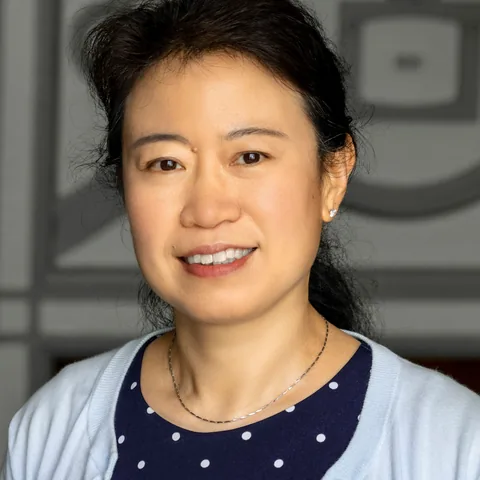 Yingli TianCity University of New York, 2017–2026
 Robert M. HaralickCity University of New York, 2001–2017
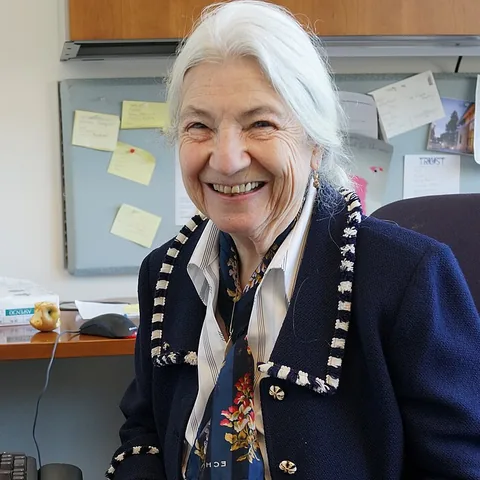 Ruzena BajcsyUniversity of Pennsylvania, 1981–2000
- Mark S. HilleryCity University of New York, 2001–2017
- David G. HaysUniversity at Buffalo, State University of New York, 1974–1980
 Lyle UngarUniversity of Pennsylvania, 1984–2000
Sources and credits
Photo: We have no published photo of Gábor T. Herman yet. Send us a free-licensed photo.
- Gabor T. Herman
- Gabor Herman - Wikipedia
- Algebraic reconstruction technique - Wikipedia
- MIPG Information - Medical Image Processing Group, University of Pennsylvania
- Our History | IEEE TMI
- Past Editorial Board Members | IEEE TMI
- Superiorization: An optimization heuristic for medical physics - University of Haifa