Marine Carpuat
Marine Carpuat is a computer scientist whose research helps people communicate across languages. She earned a computer science Ph.D. at Hong Kong University of Science and Technology in 2008, worked at Columbia and Canada's National Research Council, and joined Maryland's CLIP Lab in 2015. Her work includes research on cross-lingual meaning, machine-translation hallucination detection, and human-centered translation. She is a professor at UMD, a member of UMIACS and director of the CLIP Lab.
- Now at
- University of Maryland
- Works
- 264
- Citations
- 3,949
- h-index
- 31
- Badges
Publication numbers from OpenAlex, as of 22 October 2026.
Timeline
-
2008
A computer science PhD
She earns a Ph.D. in computer science from Hong Kong University of Science and Technology in 2008. Her research focuses on natural language processing and computational models for language-processing applications.
-
By 2015
Research at Columbia and NRC
Before joining Maryland in January 2015, she works as a research scientist at the National Research Council of Canada and a postdoctoral researcher at Columbia University's Center for Computational Learning Systems.
-
January 2015
Joining UMD's CLIP Lab
In January 2015, she joins UMD's Department of Computer Science with a joint appointment in UMIACS and becomes a member of the Computational Linguistics and Information Processing Lab (CLIP).
-
2018
A language-divergence grant
She receives the NSF CAREER Award in 2018 for “Semantic Divergences Across the Language Barrier.” The project develops computational methods to detect and explain nuanced differences between words and sentences across languages.
-
2020
Cross-lingual divergence detection
She coauthors a 2020 paper that introduces a multilingual BERT training strategy to detect fine-grained meaning differences between English and French sentences without supervision.
-
2023
Detecting translation hallucinations
She coauthors a 2023 paper that uses internal model symptoms to build a lightweight detector for hallucinations in neural machine translation.
-
2025
Human-centered machine translation
In a 2025 EMNLP paper, she argues for machine translation systems whose design aligns with users' communicative goals and real-world contexts.
-
As of October 2026
Professor and CLIP director
She is a professor of computer science at the University of Maryland, a member of UMIACS and director of the CLIP Lab. Her research develops AI techniques that help people communicate across languages.
Career
- Since 2015University of MarylandProfessor of Computer Science
- 2025–2026Johns Hopkins University
- 2011–2015National Research Council CanadaResearch Scientist
- 2009–2015Columbia UniversityPostdoctoral Researcher
Education
- 2008Hong Kong University of Science and TechnologyPh.D. in computer science
Most-cited works
- BLOOM: A 176B-Parameter Open-Access Multilingual Language ModelWith Alexander Rush, Anna Rogers, Dragomir Radev, Kyle Lo, Margaret Mitchell and Niklas Muennighoff
- Improving Statistical Machine Translation Using Word Sense DisambiguationWith Dekai Wu
- Word sense disambiguation vs. statistical machine translationWith Dekai Wu
- The Prompt Report: A Systematic Survey of Prompt Engineering TechniquesWith Philip Resnik
- Curriculum Learning for Domain Adaptation in Neural Machine Translation
Colleagues
- P. S. KrishnaprasadUniversity of Maryland, 2015–2026
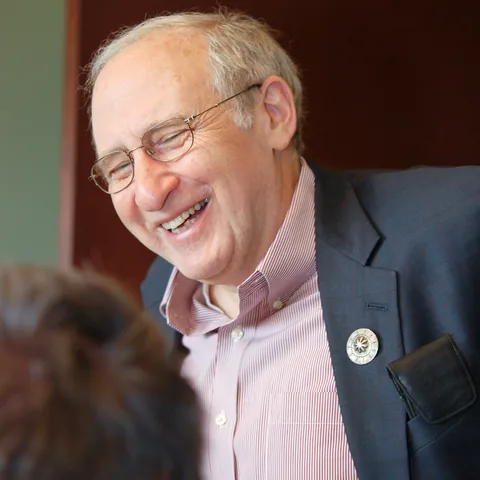 Ben ShneidermanUniversity of Maryland, 2015–2025
- Alexey GorshkovUniversity of Maryland, 2015–2026
- Chi-Keung TangHong Kong University of Science and Technology, 2002–2008
- Oscar AuHong Kong University of Science and Technology, 2002–2008
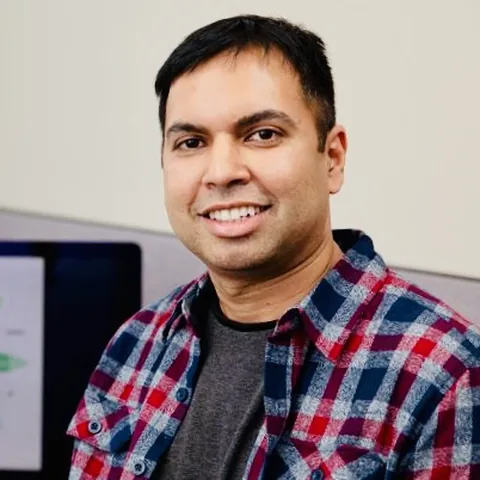 Saif MohammadNational Research Council Canada, 2011–2014
Sources and credits
Photo: We have no published photo of Marine Carpuat yet. Send us a free-licensed photo.
- College Welcomes 10 New Faculty Members
- Marine Carpuat receives NSF Career Award
- Detecting Fine-Grained Cross-Lingual Semantic Divergences without Supervision by Learning to Rank
- Understanding and Detecting Hallucinations in Neural Machine Translation via Model Introspection
- An Interdisciplinary Approach to Human-Centered Machine Translation
- Marine Carpuat · UMD