Dekai Wu
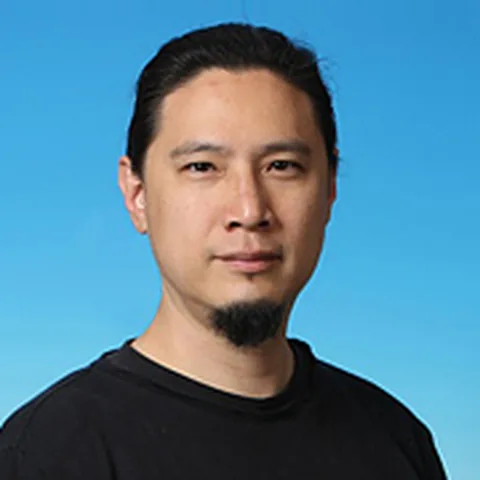
Dekai Wu, also professionally known as De Kai, researches multilingual NLP and machine translation. He earned his Berkeley doctorate in 1992. His work includes inversion transduction grammars, bilingual bracketing and semantic evaluation of translations. He helped organize a translation workshop series from 2007 and became an ACL Fellow in 2011. A 2019 shared paper with Yuchen Yan and Serkan Kumyol examines neural transduction grammar induction. His work connects structured language models with learning across languages.
- Works
- 187
- Citations
- 4,369
- h-index
- 32
Publication numbers from OpenAlex, as of 14 October 2026.
Timeline
-
1992
Doctoral study
Wu, an HKUST faculty member, earned a Berkeley doctorate in computer science in 1992. He is also known professionally as De Kai and publishes as Dekai Wu.
-
1995
Structured bilingual models
Wu developed inversion transduction grammar and bilingual bracketing research in 1995. These models represent structured relationships between two languages. Wu also worked with Xuanyin Xia on English-Chinese lexicon extraction, connecting bilingual data analysis with translation resources.
-
2007–2013
Structure and semantic evaluation
The Syntax and Structure in Statistical Translation workshop series began in 2007. His later work includes MEANT semantic evaluation, which examines the meaning preserved in translation using semantic frames. ACL elected Wu a Fellow in 2011.
-
2019
Neural transduction grammars
With Yuchen Yan and Serkan Kumyol, Wu studied neural transduction grammar induction in 2019. Their method uses explicit bilingual parse structures and compositional constraints to support learning and error analysis.
Sources and credits
Photo: cse.hkust.edu.hk; Dekai Wu profile photograph; creator not stated. License: Not stated by source. Source: cse.hkust.edu.hk. Cropped to a square and resized. Ask us to remove or replace this photo.