Leroy Cronin
Also known as Lee Cronin
Leroy Cronin is a chemist at the University of Glasgow who brings robotics, AI and programming into the way molecules are designed, discovered and made. After a BSc and PhD at the University of York, he joined Glasgow in 2002 and took its Regius Chair of Chemistry in 2013. In 2018, his team reported a machine-learning robot that found previously unknown reactions and unveiled the chemputer, a modular robot that made Nytol, rufinamide and Viagra from digital recipes; the work led to XDL, a programming language for chemistry. With Sara Walker of Arizona State University, he used assembly theory, a measure of molecular complexity he first published in 2017, to propose a general way to identify molecules made by living systems. Today he is founder and CEO of Chemify, a Glasgow spinout founded in 2019 that opened its first automated Chemifarm in 2025, and he remains Regius Professor of Chemistry at Glasgow.
- Now at
- University of Glasgow and Chemify
- Born
- 1973
Years link to their sources.
Timeline
-
1994–2000
A York PhD and fellowships
Fascinated by science from an early age, he gets his first computer and chemistry set at 8. He earns a BSc in 1994 and a PhD in 1997 at the University of York under Paul H. Walton. He then holds a Leverhulme fellowship with Neil Robertson at Edinburgh from 1997 to 1999 and a Humboldt fellowship in Achim Mueller's laboratory at Bielefeld, and becomes a chemistry lecturer at Birmingham in 2000.
-
2002–2013
Regius Chair at Glasgow
He moves to the University of Glasgow in 2002, becomes a reader in 2005 and a professor of chemistry in 2006, and takes the Gardiner Chair in 2009. Along the way, he wins the Philip Leverhulme Prize in 2007 and the Royal Society of Chemistry's Corday–Morgan medal in 2012. In 2013, he is appointed to the Regius Chair of Chemistry and elected a Fellow of the Royal Society of Edinburgh.
-
July 2012
A chemputer that prints drugs
In July 2012, while leading a team of 45 researchers at Glasgow, he shows off a 'chemputer' adapted from a 3D printer, part of a plan to let people print their own pharmaceuticals at home. In a TED talk, he asks whether chemistry can be turned into an app.
-
2017–2021
Assembly theory
He first publishes the concept of assembly theory in 2017, aiming to quantify a molecule's complexity by the minimum number of steps needed to build it. In 2021, a team he leads with Sara Walker of Arizona State University proposes using the theory as a general way to identify molecules made by living systems, even those using unfamiliar chemistries.
-
July 2018
A machine-learning robot chemist
In July 2018, his team reports in Nature a self-driving organic synthesis robot, guided by machine learning, that searches around 1,000 reactions built from 18 starting chemicals. After exploring about 10% of them, it predicts with over 80% accuracy which combinations to try next and finds previously unknown molecules and reactions. He also receives the Royal Society of Chemistry's 2018 Interdisciplinary Prize for developing the field of digital chemistry.
-
November 2018
The chemputer in Science
In November 2018, his team presents the chemputer in Science, a modular desktop robot that runs digital chemical recipes compiled by software called the chempiler. Simply by changing the software and input chemicals, one system makes Nytol, rufinamide and Viagra in yields comparable to manual synthesis. The modular system leads to XDL, a programming language for chemistry that his group uses to convert published synthesis procedures into executable code.
-
2019–2025
Founding Chemify
He founds Chemify as a University of Glasgow spinout in 2019 and, as chief executive, raises £33.6m in a round led by Triatomic Capital in August 2023. Chemify opens its first Chemifarm, a fully automated chemistry facility, in 2025 and raises over $50 million in a Series B co-led by Wing Venture Capital and Insight Partners in October 2025.
-
As of October 2026
Chemify CEO and Regius Professor
He leads Chemify as founder and CEO and holds the Regius Chair of Chemistry at Glasgow, and appears on The Medicine Maker's 2026 Power List for research that combines chemistry, robotics, AI and programming. His group pursues four aims: building an artificial life form, digitizing chemistry, using artificial intelligence in chemistry, and exploring complexity and information in chemistry.
Career
- Since 2019ChemifyFounder and CEO
- Since 2002University of GlasgowRegius Professor of Chemistry
- From 2000University of BirminghamChemistry Lecturer
- 1997–1999University of EdinburghLeverhulme Fellow
- Bielefeld UniversityHumboldt Fellow
Education
- 1997University of YorkPhD
- 1994University of YorkBSc
Videos
 Lee Cronin: Controversial Nature Paper on Evolution of Life and Universe | Lex Fridman Podcast #404Lex Fridman · 9 December 2023 · 3 h 19 min
 Alien Debate: Sara Walker and Lee Cronin | Lex Fridman Podcast #279Lex Fridman · 24 April 2022 · 4 h 5 min
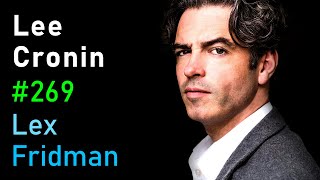 Lee Cronin: Origin of Life, Aliens, Complexity, and Consciousness | Lex Fridman Podcast #269Lex Fridman · 11 March 2022 · 4 h 6 min
Video data from YouTube API Services. By watching you agree to the YouTube Terms of Service. How we use YouTube data.
Colleagues
Sources and credits
Photo: We have no published photo of Leroy Cronin yet. Send us a free-licensed photo.
- Prof. Lee Cronin – Digital Chemistry, University of Glasgow
- Leroy Cronin - Wikipedia
- The 'chemputer' that could print out any drug | The Guardian
- A New Theory for the Assembly of Life in the Universe | Quanta Magazine
- Robot chemist discovers new molecules and reactions - University of Glasgow
- 'Chemputer' promises app-controlled revolution for drug production - University of Glasgow
- Glasgow spinout Chemify raises £33.6m to 'digitise' chemistry - UKTN
- Chemify Raises More Than $50 Million in Oversubscribed Series B to Drive Global Expansion of Digital Chemistry and Discovery | Insight Partners
- The Medicine Maker | Lee Cronin (Power List 2026)
- Leroy (Lee) Cronin - Acceleration Consortium