Florian Schroff
Florian Schroff is a computer vision researcher at Google whose work centers on describing people in images and video. He took a DPhil in Oxford's Visual Geometry Group in 2009, completed a two-year postdoc in the UCSD vision group, and joined Google in 2011. His 2015 paper FaceNet mapped face images into a compact Euclidean space and reached 99.63% accuracy on Labeled Faces in the Wild, and he coauthored DeepLabv3+ in 2018, FEELVOS in 2019 and VideoPrism in 2024. In 2020, he was among the authors of a Nature study that applied deep neural networks to 6 million videos from 144 countries to study facial expressions. He is a Senior Research Engineering Manager at Google, where he develops computer vision approaches for people-centric understanding and biometrics.
Timeline
-
2007–2009
A DPhil at Oxford
At the University of Oxford's Visual Geometry Group, he publishes Harvesting Image Databases from the Web at ICCV 2007 with A. Criminisi and A. Zisserman. He graduates with a DPhil in 2009, with a thesis titled Semantic Image Segmentation and Web-Supervised Visual Learning.
-
2011
Postdoc at UCSD, then Google
He completes a two-year postdoc in the UCSD vision group, researching unconstrained face and object recognition, and joins Google in 2011. His projects there focus on describing people in images and videos.
-
2015
FaceNet face embeddings
He is first author of FaceNet, published in the CVPR 2015 proceedings with Dmitry Kalenichenko and James Philbin. The system learns a mapping from face images to a compact Euclidean space where distances correspond to face similarity, and it reaches 99.63% accuracy on Labeled Faces in the Wild and 95.12% on YouTube Faces DB.
-
2017–2018
Semantic segmentation with DeepLab
He coauthors Rethinking Atrous Convolution for Semantic Image Segmentation in 2017 and DeepLabv3+ in 2018 with Liang-Chieh Chen, George Papandreou and Hartwig Adam. DeepLabv3+ extends DeepLabv3 with a decoder module that refines segmentation results along object boundaries.
-
2019
FEELVOS video segmentation
He is a coauthor of FEELVOS, a CVPR 2019 method for video object segmentation developed with Paul Voigtlaender, Yuning Chai, Hartwig Adam, Bastian Leibe and Liang-Chieh Chen. It segments video without fine-tuning and reaches a J&F measure of 71.5% on the DAVIS 2017 validation set.
-
2020
Facial expressions across cultures
In December 2020, Nature publishes Sixteen facial expressions occur in similar contexts worldwide, which he coauthors with Alan Cowen, Dacher Keltner, Brendan Jou, Hartwig Adam and Gautam Prasad. The study uses deep neural networks to examine 16 types of facial expression in 6 million videos from 144 countries.
-
2024
The VideoPrism video encoder
He is a coauthor of VideoPrism, a general-purpose video encoder accepted to ICML 2024. It reaches state-of-the-art performance on 31 of 33 video understanding benchmarks.
-
As of October 2026
Research engineering manager at Google
He is a Senior Research Engineering Manager at Google, where he develops computer vision approaches for people-centric understanding and biometrics. He leads development from research in metric learning and large vision-language models through to product launches.
Career
- Since 2011GoogleSenior Research Engineering Manager
- Until 2011University of California, San DiegoPostdoctoral Researcher
Education
- 2009University of OxfordDPhil
Colleagues

Sources and credits
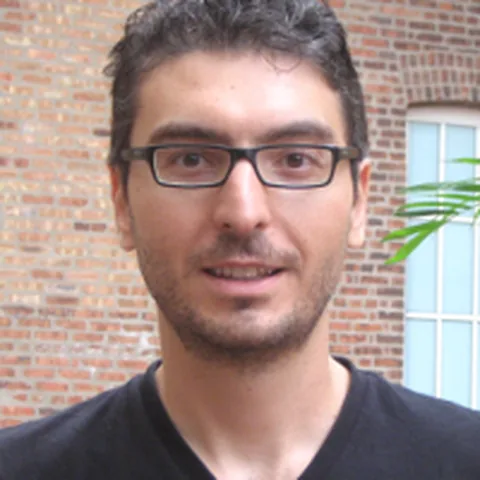
Photo: We have no published photo of Florian Schroff yet. Send us a free-licensed photo.
- Florian Schroff
- Florian Schroff - Publications
- FaceNet: A Unified Embedding for Face Recognition and Clustering
- CVPR 2015 Open Access Repository
- Encoder-Decoder with Atrous Separable Convolution for Semantic Image Segmentation
- FEELVOS: Fast End-to-End Embedding Learning for Video Object Segmentation
- Sixteen facial expressions occur in similar contexts worldwide | Nature
- VideoPrism: A Foundational Visual Encoder for Video Understanding
- Florian Schroff - Home