Anthony Fuller
Anthony Fuller is a computer vision researcher whose work applies self-supervised learning and vision transformers to remote sensing and adaptive image and video recognition. He earned a B.Eng. in Aerospace Engineering at Carleton in 2015, received the Vector Scholarship in Artificial Intelligence in 2022, and completed an M.A.Sc. in Systems and Computer Engineering there in 2023. In 2023, he coauthored CROMA, which combines contrastive and reconstruction objectives to learn representations from spatially aligned optical and radar data; his 2024 LookHere paper uses 2D attention masks to direct vision-transformer attention and improve extrapolation to higher-resolution images. LookWhere in 2025 divides image computation between a low-resolution selector and a high-resolution extractor, while LookWhen in 2026 uses a selector-extractor framework for video recognition. Since September 2026, he is a Vector Distinguished Postdoctoral Fellow in Graham Taylor's Machine Learning Research Group at the University of Guelph; he worked as a Vector intern in 2025 and completed a Ph.D. at Carleton and the Vector Institute in 2026.
- Now at
- Carleton University
- Works
- 20
- Citations
- 130
- h-index
- 3
Publication numbers from OpenAlex, as of 22 October 2026.
Timeline
-
2015
Aerospace engineering at Carleton
At Carleton University, he earns a B.Eng. in Aerospace Engineering in 2015.
-
2022–2023
The Vector scholarship and master's degree
He receives the Vector Scholarship in Artificial Intelligence in 2022 while studying for a master's at Carleton. He earns an M.A.Sc. in Systems and Computer Engineering there in 2023.
-
2023
CROMA for remote sensing
In 2023, he coauthors CROMA, which combines contrastive and reconstruction objectives to learn representations from spatially aligned optical and radar data.
-
2024
Directed attention in LookHere
In 2024, he coauthors LookHere, which uses 2D attention masks to direct vision-transformer attention and improve extrapolation to higher-resolution images.
-
2025
Vector internship and LookWhere
He works as a Vector intern in 2025 and coauthors LookWhere. The paper divides image computation between a low-resolution selector and a high-resolution extractor.
-
2026
A Carleton and Vector doctorate
In 2026, he completes a Ph.D. at Carleton University and the Vector Institute under Jim Green and Evan Shelhamer.
-
2026
LookWhen for video recognition
In 2026, he coauthors LookWhen, which uses a selector-extractor framework to factor video recognition into when, where, and what to compute.
-
September 2026
A Guelph postdoctoral fellowship
In September 2026, he joins Graham Taylor's Machine Learning Research Group at the University of Guelph as a Vector Distinguished Postdoctoral Fellow.
Career
- From 2026University of GuelphVector Distinguished Postdoctoral Fellow
- 2025Vector InstituteIntern
Education
- 2026Carleton UniversityPh.D.
- 2026Vector InstitutePh.D.
- 2023Carleton UniversityM.A.Sc.
- 2015Carleton UniversityB.Eng.
Colleagues
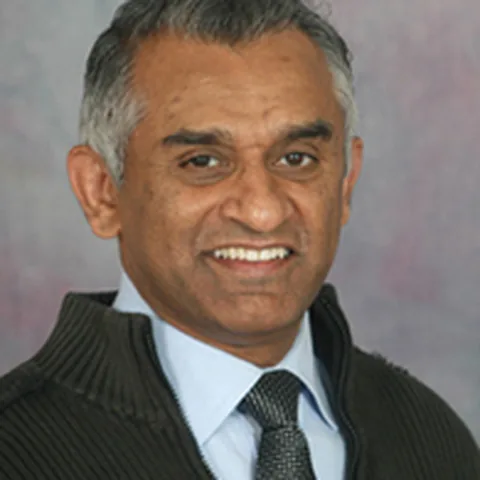
Sources and credits
Photo: We have no published photo of Anthony Fuller yet. Send us a free-licensed photo.
- Anthony Fuller — Academic Website
- Congratulations to the 2022-23 Vector Scholarship in Artificial Intelligence Recipients! - Systems and Computer Engineering
- [2311.00566] CROMA: Remote Sensing Representations with Contrastive Radar-Optical Masked Autoencoders
- [2405.13985] LookHere: Vision Transformers with Directed Attention Generalize and Extrapolate
- Evan Shelhamer
- [2505.18051] LookWhere? Efficient Visual Recognition by Learning Where to Look and What to See from Self-Supervision
- Anthony Fuller - Vector Institute for Artificial Intelligence
- [2605.06809] LookWhen? Fast Video Recognition by Learning When, Where, and What to Compute
- Graham Taylor — Machine Learning Research Group, University of Guelph