Wolfgang Huber
Wolfgang Huber is a researcher whose group applies statistical methods and machine learning to biological data, including single-cell analysis. After earning a PhD in theoretical physics and conducting postdoctoral work in cheminformatics and cancer transcriptomics, he joined EMBL. He is a founding member of Bioconductor, coauthored DESeq2 for RNA-sequencing analysis, and wrote a statistics book with Susan Holmes. He became an ISCB Fellow in 2021 and was an ELLIS Fellow at EMBL Heidelberg in 2024. A 2025 study he coauthored tested deep-learning models for gene-perturbation effects, and as of October 2026 he is a Group Leader and Senior Scientist at EMBL.
- Badges
Timeline
-
1998–2004
Physics and bioinformatics training
He earns a PhD in theoretical physics at the University of Freiburg in 1998. He conducts postdoctoral research in cheminformatics at IBM’s Almaden Research Center in San Jose in 1998–1999 and in bioinformatics and cancer transcriptomics at DKFZ Heidelberg in 2000–2004.
-
2004–2009
Group leader at EMBL-EBI
He leads a group at EMBL-EBI from 2004 to 2009. In 2009, he joins EMBL Heidelberg’s new Genome Biology unit.
-
2014
DESeq2 for RNA-seq
In 2014, he coauthors DESeq2 with Michael Love and Simon Anders for differential analysis of RNA-sequencing count data. The method uses shrinkage estimation for dispersions and fold changes to improve stability and interpretability.
-
2019
A statistics textbook
He coauthors Modern Statistics for Modern Biology with Susan Holmes in 2019.
-
2021
An ISCB Fellowship
He becomes a Fellow of the International Society for Computational Biology in 2021.
-
2024
An ELLIS Fellowship
He is an ELLIS Fellow at EMBL Heidelberg in 2024.
-
August 2025
Benchmarking gene perturbations
In August 2025, he coauthors a Nature Methods study comparing five foundation models and two other deep-learning models with simple baselines for predicting transcriptome changes after gene perturbations. The study reports that none outperforms the baselines.
-
Since 2009
Group leader at EMBL Heidelberg
Since 2009, he leads the Huber Group at EMBL Heidelberg, and he becomes a Senior Scientist in 2011. As of October 2026, the group applies statistics and machine learning to single-cell and spatial omics. He is a founding member of Bioconductor, an open-source project for biological data analysis.
Career
- Since 2004European Molecular Biology LaboratoryGroup Leader, Senior Scientist
- 2000–2004Helmholtz Association of German Research CentresPostdoctoral Researcher
- 1998–1999IBMPostdoctoral Researcher
Education
- 1998University of FreiburgPhD
Colleagues
- Oliver StegleEuropean Molecular Biology Laboratory, 2011–2026
- Anna KreshukEuropean Molecular Biology Laboratory, 2018–2026
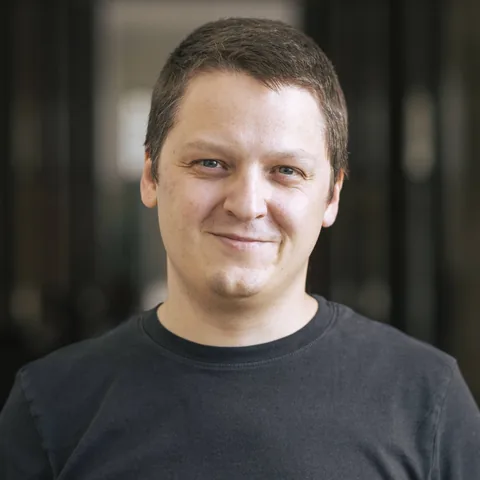 Emanuel GonçalvesEuropean Molecular Biology Laboratory, 2012–2017
- Martin VingronHelmholtz Association of German Research Centres, 2000–2003
 Patrick van der SmagtHelmholtz Association of German Research Centres, 2000–2004
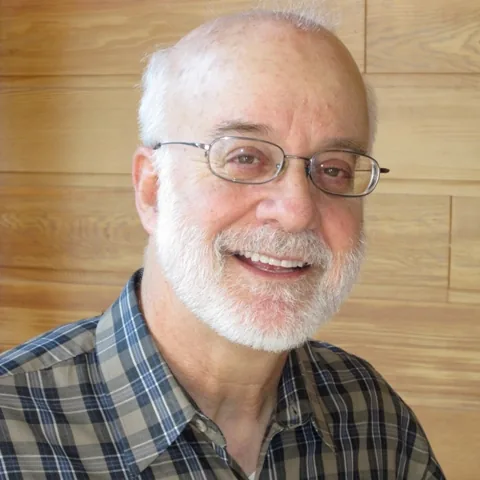 Ronald FaginIBM, 1998–1999
Sources and credits
Photo: We have no published photo of Wolfgang Huber yet. Send us a free-licensed photo.
- Wolfgang Huber – Huber Group @ EMBL
- Wolfgang Huber, Group Leader and Senior Scientist | People | EMBL
- Moderated estimation of fold change and dispersion for RNA-seq data with DESeq2
- Modern Statistics for Modern Biology
- Wolfgang Huber becomes ISCB Fellow | EMBL
- ELLIS Shines Globally: 16 Members Named Highly Cited Researchers 2024 Across 8 Countries
- Deep-learning-based gene perturbation effect prediction does not yet outperform simple linear baselines
- Huber Group – Quantitative Biology and Statistics