Martin Vingron
Martin Vingron is a bioinformatician whose work applies mathematics and computation to gene expression and gene regulation. He studied mathematics in Vienna and earned a doctorate in applied mathematics at Heidelberg in 1991, then held postdoctoral roles at USC and GMD in Germany. He led theoretical bioinformatics at DKFZ, became a director at the Max Planck Institute for Molecular Genetics and an honorary professor at Freie Universität Berlin, and shared the 2004 Max Planck Research Prize with Eugene W. Myers. As of October 2026, he is Managing Director of the institute, and his bioinformatics group has developed Corgi, an AI tool that predicts how the genome behaves across cell types.
- Now at
- Max Planck Society and Freie Universität Berlin
- Born
- 1961
- Works
- 471
- Citations
- 39,311
- h-index
- 81
Years link to their sources. Publication numbers from OpenAlex, as of 22 October 2026.
Timeline
-
1987–1991
A doctorate in applied mathematics
Born in Vienna in 1961, he studies mathematics and completes a doctorate in applied mathematics at Heidelberg in 1991, after doctoral work at EMBL in Heidelberg.
-
1991–1993
Postdoc in USC's Mathematical Biology Laboratory
From 1991 to 1993, he is a postdoc in the Mathematical Biology Laboratory within USC's Department of Mathematics.
-
1993–1995
Postdoc at Fraunhofer SCAI
He joins the GMD Research Center in St. Augustin near Bonn as a postdoc at the Fraunhofer Institute for Algorithms and Scientific Computing (SCAI) from 1993 to 1995.
-
1995–2000
Theoretical bioinformatics at DKFZ
From 1995 to 2000, he heads the Theoretical Bioinformatics Division at the German Cancer Research Center in Heidelberg and turns to the processing and mathematical analysis of gene-expression data.
-
2000–2001
Max Planck director and FU professor
In 2000, he becomes a scientific member and Director of the Bioinformatics Department at the Max Planck Institute for Molecular Genetics. Freie Universität Berlin appoints him honorary professor of mathematics and computer science in 2001.
-
2004–2012
Max Planck Prize and ISCB Fellow
In 2004, he shares the Max Planck Research Prize with Eugene W. Myers for international cooperation in bioinformatics. In 2012, the International Society for Computational Biology elects him a Fellow.
-
2006–2015
Shanghai director and school speaker
From 2006 to 2015, he serves as interim director of the CAS-MPG Partner Institute for Computational Biology in Shanghai. In 2011, he is speaker of the International Max Planck Research School for Computational Biology and Scientific Computing, a joint program of the MPIMG and Freie Universität Berlin.
-
As of October 2026
Corgi and managing director
In July 2026, his bioinformatics group develops Corgi, an AI tool for gene regulation that predicts how the genome behaves across different cell types. Corgi+ can infer epigenetic information from RNA sequencing data. He is the Managing Director and a scientific member of the Max Planck Institute for Molecular Genetics.
Career
- Since 2000Max Planck SocietyDirector
- 2010–2014Chinese Academy of Sciences
- 2006–2015CAS-MPG Partner Institute for Computational BiologyInterim Director
- 2001–2013Freie Universität BerlinHonorary Professor of Mathematics and Computer Science
- 1995–2000Helmholtz Association of German Research CentresHead
- 1993–1995German National Research Center for Information TechnologyPostdoc
- 1991–1993University of Southern CaliforniaPostdoc
- 1989–1992European Molecular Biology Laboratory
Education
- 1991Heidelberg UniversityDoctorate in applied mathematics
Most-cited works
- Minimum information about a microarray experiment (MIAME)—toward standards for microarray data
- TREE-PUZZLE: maximum likelihood phylogenetic analysis using quartets and parallel computing
- A gene expression map of Arabidopsis thaliana developmentWith Bernhard Schölkopf
- Variance stabilization applied to microarray data calibration and to the quantification of differential expression
- Comprehensive genomic profiles of small cell lung cancer
Colleagues
Sources and credits
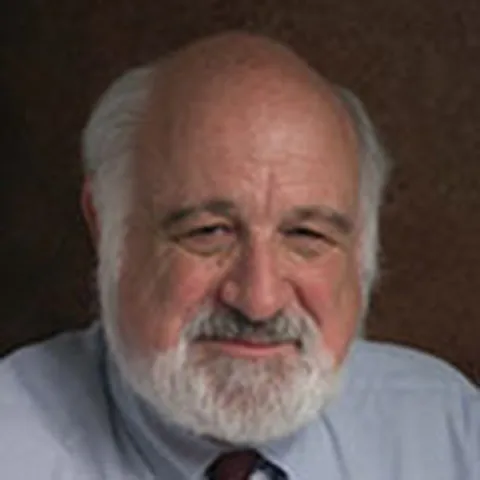
Photo: We have no published photo of Martin Vingron yet. Send us a free-licensed photo.
- Vingron, Martin | Max-Planck-Gesellschaft
- Martin Vingron | Max-Planck-Institut für molekulare Genetik
- 2004 Max Planck Research Prize for Martin Vingron and Eugene W. Myers | Max-Planck-Gesellschaft
- The International Society for Computational Biology names seven members as the ISCB Fellows Class of 2012
- Die Gen-Fahnder • Informationen für Medien und Journalist*innen • Freie Universität Berlin
- Learning the grammar of gene regulation | Max Planck Institute for Molecular Genetics
- Leitung | Max-Planck-Institut für molekulare Genetik