Oliver Stegle
Oliver Stegle is a physicist turned computational biologist who builds machine learning methods for deciphering molecular variation across individuals, space and time. After a physics PhD at Cambridge in 2009 and a postdoc at the Max Planck Institute in Tübingen, they led a group at EMBL-EBI from 2012 to 2018. MOFA in 2018, cell2location in 2022 and DeepRVAT in 2024 added methods for multi-omics, spatial and rare-variant data. Stegle became Division Head at DKFZ in 2018, began co-directing the ELLIS Health program in 2019 and was elected to EMBO in 2023. They are Acting Head of AI at EMBL and head the Computational Genomics and Systems Genetics division at DKFZ.
- Now at
- Helmholtz Association of German Research Centres, European Molecular Biology Laboratory and European Laboratory for Learning and Intelligent Systems
- Works
- 461
- Citations
- 85,561
- h-index
- 109
- Rankings
- #44 by h-index since 2021 and #71 by citations since 2021
Publication numbers from OpenAlex, as of 22 October 2026.
Timeline
-
2009–2012
Physics PhD and Tübingen postdoc
Stegle earns a PhD in physics at the University of Cambridge in 2009, then works as a postdoctoral fellow at the Max Planck Institute in Tübingen from 2009 to 2012. The path runs from physics to machine learning and then to the life sciences.
-
2012–2018
Group leader at EMBL-EBI
From 2012 to 2018, they lead a research group at EMBL-EBI.
-
June 2018
The MOFA multi-omics method
In June 2018, Molecular Systems Biology publishes Multi-Omics Factor Analysis (MOFA), coauthored with Ricard Argelaguet, Britta Velten and others. The method infers hidden factors that capture biological and technical sources of variability, and it separates axes of variation shared across data types from those specific to one type.
-
2018–2019
Heidelberg division and ELLIS Health
Stegle becomes Division Head at DKFZ Heidelberg in 2018 and a group leader at EMBL Heidelberg in 2019. From 2019, they co-direct the Health program of ELLIS. The DKFZ division develops foundational methods in statistics and machine learning, including efficient parameter inference to probe genetic associations.
-
January 2022
The cell2location tool
In January 2022, Nature Biotechnology publishes cell2location, a tool from researchers at the Wellcome Sanger Institute, the German Cancer Research Centre and collaborators. It combines single-cell sequencing data with spatial transcriptomic data to place cell types within tissue, and it identifies rare mouse brain astrocyte subtypes never described before. Stegle says that detection demonstrates the remarkable sensitivity of the team's approach.
-
2023
Elected to EMBO membership
In July 2023, the European Molecular Biology Organization elects Stegle among 69 new members, recognising contributions to single-cell genomics and machine learning methods. Their group develops and applies machine learning methods for deciphering molecular variation across individuals, space and time.
-
2024
DeepRVAT for rare variants
In 2024, Nature Genetics publishes DeepRVAT, a machine learning tool for rare genetic variants developed by teams led by Stegle and Brian Clarke at DKFZ and EMBL and by Julien Gagneur at the Technical University of Munich. The model is first trained on exome sequences from 161,000 UK Biobank individuals, and combining it with polygenic risk scoring significantly improves prediction accuracy.
-
As of October 2026
Acting Head of AI at EMBL
In July 2025, EMBL receives over €40 million from the Hector Foundation for its AI strategy, and Stegle speaks for the effort as Acting Head of AI. They are group leader and acting head of the AI centre at EMBL in Heidelberg and Head of the Computational Genomics and Systems Genetics Division at DKFZ. In ELLIS, they are Unit Director of ELLIS Unit Heidelberg, Program Director of ELLIS Health, and Fellow.
Career
- Since 2018Helmholtz Association of German Research CentresHead
- Since 2012European Molecular Biology LaboratoryGroup leader, Acting Head of AI
- NowEuropean Laboratory for Learning and Intelligent SystemsCo-Director and Program Director
- 2022–2026Heidelberg University
- 2020–2023University of Toronto
- 2015–2017University of Cambridge
- 2013–2018Wellcome Trust
- 2009–2012Max Planck Institute for Intelligent SystemsPostdoctoral fellow
- 2009–2012Max Planck Society
Education
- 2009University of CambridgePhD
Most-cited works
- A global reference for human genetic variation
- The repertoire of mutational signatures in human cancer
- Pan-cancer analysis of whole genomes
- Large-scale cis- and trans-eQTL analyses identify thousands of genetic loci and polygenic scores that regulate blood gene expression
- An integrated map of structural variation in 2,504 human genomes
Colleagues
- Wolfgang HuberEuropean Molecular Biology Laboratory, 2011–2026
 Fabian TheisHelmholtz Association of German Research Centres, 2018–2026
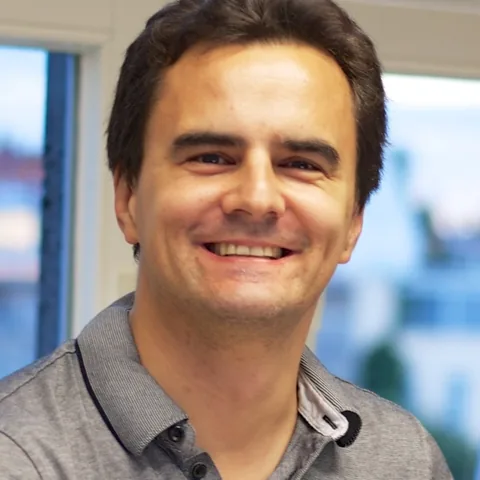 Jan PetersMax Planck Institute for Intelligent Systems, 2009–2020
- Anna KreshukEuropean Molecular Biology Laboratory, 2018–2026
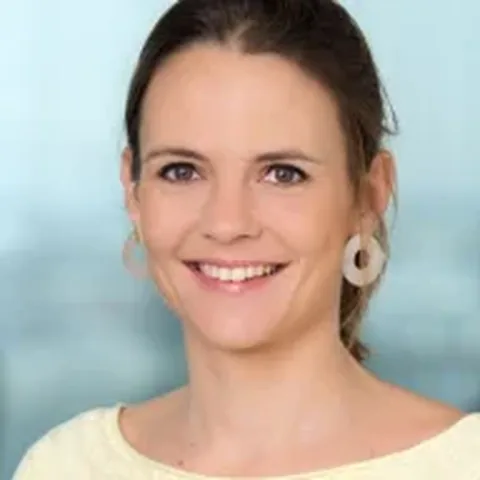 Lena Maier-HeinHelmholtz Association of German Research Centres, 2018–2026
- Eleftheria ZegginiWellcome Trust, 2013–2025
Sources and credits
Photo: We have no published photo of Oliver Stegle yet. Send us a free-licensed photo.
- Oliver Stegle, Acting Head of AI centre | People | EMBL
- How AI shapes the life sciences: an interview with Oliver Stegle | EMBL
- Multi-Omics Factor Analysis—a framework for unsupervised integration of multi-omics data sets - PMC
- Stegle, Oliver
- Stegle - Computational Genomics and Systems Genetics - German Cancer Research Center
- Unprecedented cellular maps of tissues enabled by new tool
- EMBL scientists elected to EMBO Membership | EMBL
- Sanger researchers honoured by EMBO
- How do rare genetic variants affect health? AI provides more accurate predictions - German Cancer Research Center
- AI in the life sciences: philanthropy fuels EMBL’s strategy | EMBL
- Prof. Dr. Oliver Stegle - Zuse School ELIZA
- Oliver Stegle | European Laboratory for Learning and Intelligent Systems