Richard Dawkins
Richard Dawkins is an evolutionary biologist whose Biomorphs and weasel programs simulate evolution on a computer, and whose 2026 conversations with Claude brought him into the debate on AI consciousness. After studying zoology at Balliol College, Oxford, and earning a doctorate under Nikolaas Tinbergen, he was an assistant professor at Berkeley from 1967 to 1969 and returned to Oxford in 1970. The Selfish Gene (1976) set out the gene-centred view of evolution and coined the word meme, and The Blind Watchmaker (1986) described Biomorphs and the weasel program. He became the first Simonyi Professor for the Public Understanding of Science at Oxford in 1995 and a Fellow of the Royal Society in 2001. In 2026, he wrote an UnHerd essay about his talks with Claude and spoke on AI at the World Knowledge Forum in Seoul, and he is an emeritus fellow of New College, Oxford.
- Now at
- University of Oxford and University of Austin
- Born
- 1941
- Works
- 112
Years link to their sources. Publication numbers from OpenAlex, as of 22 October 2026. Citations and h-index are hidden because this OpenAlex record may be incomplete or mix in other authors.
Timeline
-
1962–1966
Zoology and a Tinbergen doctorate
Born in Nairobi in 1941, he studies zoology at Balliol College, Oxford, and graduates in 1962, tutored there by Nikolaas Tinbergen, a Nobel Prize-winning ethologist. He continues as a research student under Tinbergen and receives his D.Phil. by 1966.
-
1967–1970
Berkeley, then Oxford lecturer
From 1967 to 1969, he is an assistant professor of zoology at the University of California, Berkeley. He returns to the University of Oxford in 1970 as a lecturer and a fellow of New College.
-
1976
The Selfish Gene and memes
In The Selfish Gene (1976), he sets out the gene-centred view of evolution and coins the word meme.
-
1986
Biomorphs and the weasel program
In The Blind Watchmaker (1986), he explains how cumulative natural selection, coupled with random variation, creates complexity, and he illustrates the idea with his weasel program, in which cumulative selection reaches a target phrase in far fewer steps. The book also describes Biomorphs, a program he wrote on an Apple Macintosh in which a human user selects among forms controlled by nine genes, work in the research area that became known as Artificial Life. A program named The Blind Watchmaker is sold separately as a teaching aid.
-
1995–2008
First Simonyi Professor at Oxford
In 1995, he is named the first Simonyi Professor for the Public Understanding of Science at Oxford, a chair endowed by Charles Simonyi. He holds it until he retires from the professorship in September 2008.
-
2001
Fellow of the Royal Society
He is elected a Fellow of the Royal Society in 2001, after his election as a Fellow of the Royal Society of Literature in 1997.
-
2026
UnHerd essay on Claude
In 2026, he writes an UnHerd essay describing three days of philosophical conversations with a Claude instance he names Claudia, and he exchanges letters between her and a second instance, Claudius. He points out that Claude's abilities are hard to make sense of without some kind of inner experience. Most scientists who study consciousness and artificial intelligence remain unconvinced.
-
As of October 2026
Emeritus fellow at New College
He is an emeritus fellow of New College, Oxford, and sits on the advisory board of the University of Austin. In September 2026, he joins a World Knowledge Forum session in Seoul on AI through the lens of evolution, where he describes the rapid development of AI as a major turning point in evolution.
Career
- Since 1970University of OxfordLecturer
- NowUniversity of AustinAdvisory Board Member
- 1967–1969University of California, BerkeleyAssistant Professor of Zoology
Education
- 1966University of OxfordD.Phil.
- 1962University of Oxford
Videos
 Richard Dawkins: Meaning of Life | AI Podcast ClipsLex Fridman · 12 April 2020 · 3 min
 Richard Dawkins: Memes | AI Podcast ClipsLex Fridman · 11 April 2020 · 11 min
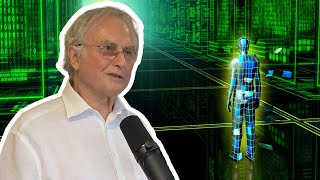 Richard Dawkins: The Programmer of the Simulation Came About Through Evolution | AI Podcast ClipsLex Fridman · 10 April 2020 · 8 min
 Richard Dawkins: Evolution, Intelligence, Simulation, and Memes | Lex Fridman Podcast #87Lex Fridman · 9 April 2020 · 1 h 7 min
Video data from YouTube API Services. By watching you agree to the YouTube Terms of Service. How we use YouTube data.
Colleagues
 Stephen RobertsUniversity of Oxford, 1999–2026
 David DeutschUniversity of Oxford, 1999–2026
 Ingmar PosnerUniversity of Oxford, 2005–2026
- Walter FreemanUniversity of California, Berkeley, 1967–1969
 John SearleUniversity of California, Berkeley, 1967–1969
 Lotfi A. ZadehUniversity of California, Berkeley, 1967–1969
Sources and credits
Photo: We have no published photo of Richard Dawkins yet. Send us a free-licensed photo.
- Richard Dawkins - Wikipedia
- The Blind Watchmaker - Wikipedia
- Richard Dawkins: Biomorphs 1986 - media+art+innovation
- Weasel program - Wikipedia
- Claude Delusion? Richard Dawkins Believes AI May Be Conscious - Decrypt
- Is AI Conscious? One Famous Scientist Says It Could Be - ScienceAlert
- AI may one day carry torch of human culture, says Richard Dawkins - Viet Nam News