Philipp Hennig
Philipp Hennig is a machine learning researcher at the University of Tübingen who helped establish probabilistic numerics, which treats numerical computation as a form of learning. After studying physics in Heidelberg and at Imperial College London, he earned a Cambridge PhD in 2011 and joined the Max Planck Institute for Intelligent Systems in Tübingen. He published Entropy Search in 2012, began leading a research group of his own in 2015, and became professor of Methods of Machine Learning at Tübingen in 2018. In 2021 he coauthored Laplace Redux, which introduced a PyTorch library for Bayesian deep learning, and in 2022 Cambridge University Press published his textbook Probabilistic Numerics. He is a director of the Tübingen AI Center, which he leads with Matthias Bethge and Co-Director Bernhard Schölkopf.
- Works
- 229
- Citations
- 4,286
- h-index
- 33
Publication numbers from OpenAlex, as of 22 October 2026.
Timeline
-
By 2011
Physics and a Cambridge PhD
He studies physics in Heidelberg and at Imperial College London. In 2011, he earns a PhD at the University of Cambridge on approximate inference in graphical models, in the group of Sir David J.C. MacKay.
-
2011
Max Planck Institute in Tübingen
He joins the Max Planck Institute for Intelligent Systems in Tübingen in 2011, working first in the Empirical Inference department of Bernhard Schölkopf.
-
2012
The Entropy Search algorithm
In 2012, he and Christian J. Schuler publish Entropy Search for Information-Efficient Global Optimization in the Journal of Machine Learning Research. The paper presents an algorithm for probabilistic global optimization that explicitly addresses the decision problem of maximizing the information gained from each evaluation.
-
2015
A call for probabilistic numerics
In 2015, he begins leading a research group of his own, with which he establishes the concept of probabilistic numerics, a mathematical theory of uncertainty in computer calculations. He, Michael A. Osborne and Mark Girolami post Probabilistic Numerics and Uncertainty in Computations on arXiv in June 2015, a call for numerical algorithms that return uncertainties in their calculations.
-
2018
Professor at Tübingen
In May 2018, he becomes professor of Methods of Machine Learning in the computer science department of the University of Tübingen. His project PANAMA, funded by the European Research Council and running from 2018 to 2023, develops a software framework for building numerical methods for AI in an increasingly automated way.
-
2021
Laplace Redux and a PyTorch library
In 2021, he coauthors Laplace Redux with Erik Daxberger, Agustinus Kristiadi, Alexander Immer, Runa Eschenhagen and Matthias Bauer. The NeurIPS 2021 paper introduces laplace, an easy-to-use PyTorch library for Laplace approximations in Bayesian deep learning.
-
2022
The Probabilistic Numerics textbook
Cambridge University Press publishes Probabilistic Numerics: Computation as Machine Learning in 2022, which he writes with Michael A. Osborne and Hans P. Kersting. The book shows that computational routines can be treated as learning machines that use Bayesian inference to build more flexible and efficient algorithms.
-
As of October 2026
Director of the Tübingen AI Center
He is a director of the Tübingen AI Center, which he leads with Matthias Bethge and Co-Director Bernhard Schölkopf. He is also a founding Fellow and Co-Director of the ELLIS Program on Theory, Algorithms and Computations of Modern Learning Systems, with Francis Bach and Lorenzo Rosasco.
Career
- Since 2022Tübingen AI CenterDirector
- Since 2018University of TübingenProfessor of Methods of Machine Learning
- 2011–2018Max Planck Institute for Intelligent SystemsResearch Group Leader
- 2009–2018Max Planck Society
Education
- 2011University of CambridgePhD
- Heidelberg UniversityPhysics
- Imperial College LondonPhysics
Most-cited works
- Entropy search for information-efficient global optimization
- Fast Bayesian Optimization of Machine Learning Hyperparameters on Large Datasets
- Dense connectomic reconstruction in layer 4 of the somatosensory cortex
- Batch Bayesian Optimization via Local PenalizationWith Neil D. Lawrence
- Gaussian Processes and Kernel Methods: A Review on Connections and Equivalences
Colleagues
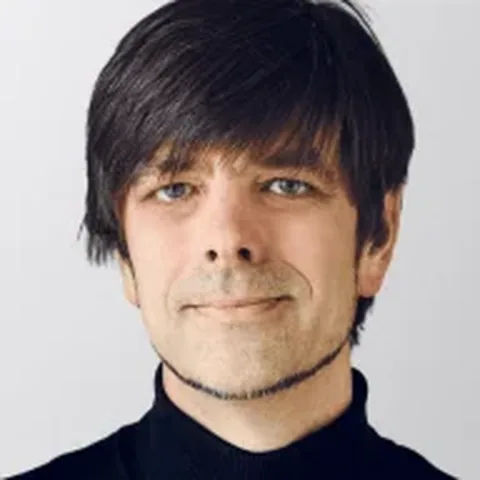 Matthias BethgeMax Planck Institute for Intelligent Systems, 2009–2022
- Agustinus KristiadiNamed in this biography
 Francis BachNamed in this biography
 Mark GirolamiNamed in this biography
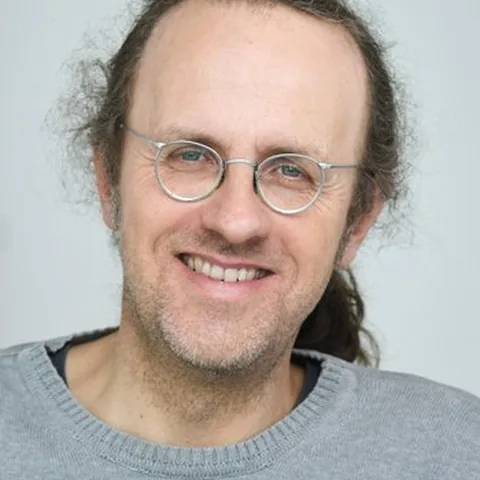 Bernhard SchölkopfMax Planck Institute for Intelligent Systems, 2009–2025
 Jakob MackeMax Planck Institute for Intelligent Systems, 2009–2025
Sources and credits
Photo: We have no published photo of Philipp Hennig yet. Send us a free-licensed photo.
- Neue Expertise zur Künstlichen Intelligenz | Universität Tübingen
- Philipp Hennig | University of Tübingen
- Entropy Search for Information-Efficient Global Optimization
- [1506.01326] Probabilistic Numerics and Uncertainty in Computations
- Philipp Hennig Appointed Director of the Tübingen AI Center - Tübingen AI Center
- New numerical software tools to give AI a boost | PANAMA Project | Results in Brief | H2020 | CORDIS | European Commission
- [2106.14806] Laplace Redux -- Effortless Bayesian Deep Learning
- Probabilistic Numerics