Omar Abudayyeh
Omar Abudayyeh is a gene-editing researcher at Harvard Medical School whose lab builds AI models of biological systems, including virtual cells. He earned a B.S. from MIT in 2012 and a PhD in 2018 in Feng Zhang's lab at the Broad Institute, where he helped identify RNA-guided RNA editing factors such as the Cas13 family, work that led to the REPAIR system. With Jonathan Gootenberg, he became a first McGovern Fellow at MIT in 2019, shared the inaugural 2022 Termeer Scholars Awards, and co-founded Tome Biosciences, which raised $213 million in December 2023. A 2024 Michelson Prize backed his work on programmable RNA sensors for cancer immunotherapy, and in May 2026 Google DeepMind described how his lab uses its Co-Scientist system to propose genetic factors for reversing cellular aging. He is an assistant professor at Harvard Medical School and directs the Abudayyeh-Gootenberg lab.
- Works
- 128
- Citations
- 38,905
- h-index
- 48
Publication numbers from OpenAlex, as of 22 October 2026.
Timeline
-
By 2012
An MIT engineering degree
He grows up in Kalamazoo, Michigan. In 2012, he graduates from MIT with a B.S. in mechanical engineering and biological engineering.
-
2013–2018
PhD in Feng Zhang's lab
He receives a Paul & Daisy Soros Fellowship in 2013 to pursue an MD at Harvard and a PhD in bioengineering at MIT. In 2018, he completes the PhD in Feng Zhang's lab at the Broad Institute, where he helps identify RNA-guided RNA editing factors such as the Cas13 family, work that leads to the REPAIR system for editing RNA.
-
2019
First McGovern Fellows at MIT
In January 2019, he and Jonathan Gootenberg become the first fellows of MIT's McGovern Institute Fellows Program, which supports selected postdocs ready to start their own research. They run a joint lab at the McGovern Institute for four years.
-
2022
Inaugural Termeer Scholar
The Termeer Foundation names him and Gootenberg the inaugural recipients of its 2022 Termeer Scholars Awards. Their tools have formed the basis for four companies they have co-founded.
-
December 2023
Co-founding Tome Biosciences
In December 2023, Tome Biosciences raises $213 million in Series A and B funding to commercialize programmable genomic integration technology licensed from MIT. The approach builds on the PASTE method of genome editing, first discovered at MIT by Tome's co-founders Abudayyeh and Gootenberg.
-
2024
A Michelson Prize
As an assistant professor at Harvard Medical School and an investigator at Brigham and Women's Hospital, he receives a 2024 Michelson Prize: Next Generation Grant, a $150,000 award from the Human Immunome Project and the Michelson Medical Research Foundation. His winning proposal covers programmable RNA sensors for next-generation cancer immunotherapies.
-
May 2026
Co-Scientist and cellular aging
In May 2026, Google DeepMind describes how he and Gootenberg use Co-Scientist, a multi-agent AI system built with Gemini, to speed up their lab's research on reversing cellular aging. The system proposes more than 20 novel genetic factors to test, and lab tests validate a couple of its hypotheses. He says that using it feels like having a team of 50 people at his disposal.
-
As of October 2026
Harvard professor and lab director
He is an Assistant Professor at Harvard Medical School, an Investigator at Brigham and Women's Hospital and Mass General Brigham's Gene and Cell Therapy Institute, and director of the Abudayyeh-Gootenberg lab. The lab develops gene editing, gene delivery and synthetic biology technologies with protein engineering and AI, and its projects include Virtual Cells and Virtual Tissues and reasoning models for health built in collaboration with Google.
Career
- Since 2024Mass General BrighamInvestigator
- NowHarvard Medical SchoolAssistant Professor
- 2024–2026Harvard University
- From 2023Tome BiosciencesCo-founder
- 2019–2026Massachusetts Institute of TechnologyMcGovern Fellow
- 2013–2018Broad Institute
Education
- 2018Massachusetts Institute of TechnologyPhD in bioengineering
- From 2013Harvard UniversityMD
- 2012Massachusetts Institute of TechnologyB.S.
Most-cited works
- Cpf1 Is a Single RNA-Guided Endonuclease of a Class 2 CRISPR-Cas System
- Nucleic acid detection with CRISPR-Cas13a/C2c2
- Genome-scale transcriptional activation by an engineered CRISPR-Cas9 complex
- Multiplexed and portable nucleic acid detection platform with Cas13, Cas12a, and Csm6
- C2c2 is a single-component programmable RNA-guided RNA-targeting CRISPR effector
Colleagues
- Jonathan GootenbergMassachusetts Institute of Technology, 2019–2023
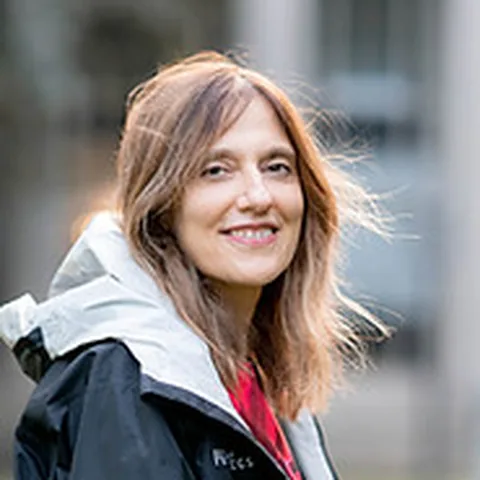 Regina BarzilayMassachusetts Institute of Technology, 2012–2026
 Peter SzolovitsMassachusetts Institute of Technology, 2012–2026
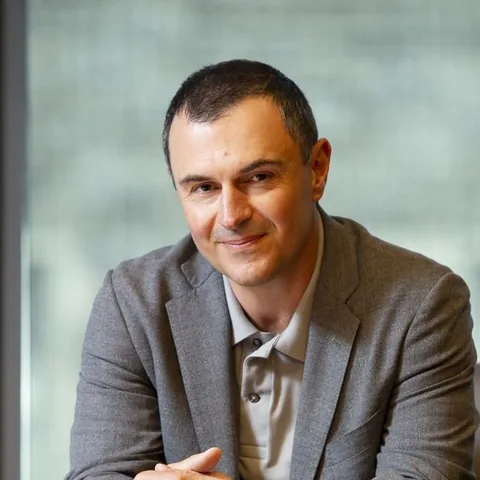 Edoardo M. AiroldiBroad Institute, 2013–2018
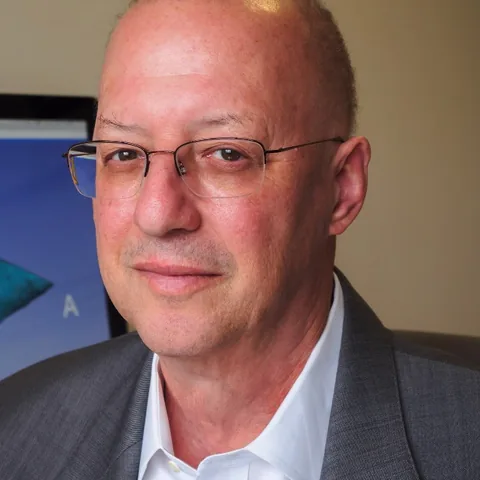 Ron KikinisHarvard University, 2014–2019
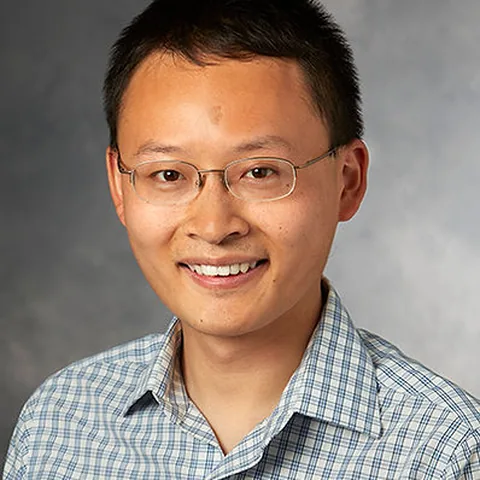 James ZouBroad Institute, 2013–2016
Sources and credits
Photo: We have no published photo of Omar Abudayyeh yet. Send us a free-licensed photo.
- A Jewish American and a Palestinian American are tackling science’s toughest challenges | Institute for Medical Engineering & Science
- Omar Abudayyeh – Paul & Daisy Soros Fellowships for New Americans
- Welcoming the first McGovern Fellows - MIT McGovern Institute
- McGovern Fellows recognized with life sciences innovation award - MIT McGovern Institute
- Tome Biosciences Raises $213M to Commercialize MIT Developed Genome Editing Tech
- Human Immunome Project and Michelson Medical Research Foundation Award $150,000 Grants to Three Early-Career Scientists Researching Immunology and Vaccines
- Co-Scientist: A multi-agent AI partner to accelerate research — Google DeepMind
- Co-Scientist: Accelerating research on cellular aging — Google DeepMind
- Omar Abudayyeh, PhD, - 2025 World Medical Innovation Forum
- Research Opportunites: Abudayyeh - Lotter | Harvard-MIT Health Sciences and Technology