Mohamed Elhoseiny
Mohamed Elhoseiny is a computer scientist whose research covers computer vision, vision-language models and AI that generates art and fashion. After studying computer systems at Ain Shams University in Egypt, he finished a Ph.D. at Rutgers University under Ahmed Elgammal in 2016 and spent December 2016 to January 2019 as a postdoctoral researcher at Facebook AI Research. During those years, he coauthored CAN: Creative Adversarial Networks in 2017 and DesIGN: Design Inspiration from Generative Networks, which won the Best Paper Award at the 2018 ECCV Workshop on Fashion, Art, and Design. He joined KAUST in 2019, became a senior member of AAAI in February 2023, and coauthored the vision-language models MiniGPT-4 and MiniGPT-v2 in 2023. Today he is an associate professor of computer science at KAUST and principal investigator of its Vision-CAIR research group.
Timeline
-
2006–2016
Ain Shams and a Rutgers doctorate
He earns a B.Sc. in 2006 and an M.S. in 2010, both in computer systems, at Ain Shams University in Egypt. During his Rutgers University doctorate, he receives an NSF Fellowship in 2014 for his Write-a-Classifier project and the Doctoral Consortium Award at CVPR in 2016. He completes the Ph.D. under Ahmed Elgammal in October 2016.
-
2016–2019
Postdoc at Facebook AI Research
He is a postdoctoral researcher at Facebook AI Research from December 2016 to January 2019. In 2017, he coauthors CAN: Creative Adversarial Networks with Ahmed Elgammal, Bingchen Liu and Marian Mazzone, a modified generative adversarial network that makes art by deviating from learned styles. In tests, human subjects cannot distinguish its images from art by contemporary artists shown in top art fairs.
-
2018
Best paper for DesIGN
In 2018, he coauthors DesIGN: Design Inspiration from Generative Networks with Othman Sbai, Antoine Bordes, Yann LeCun and Camille Couprie, which tests GAN models and loss functions that boost novelty in fashion generation. The paper wins the Best Paper Award at the ECCV 2018 Workshop on Fashion, Art, and Design. He also presents his zero-shot learning research on AI for biodiversity at the 2018 United Nations Biodiversity Conference in Sharm El Sheikh, Egypt.
-
2019
Assistant professor at KAUST
In 2019, he joins KAUST's CEMSE Division as an assistant professor of computer science in the Visual Computing Center and becomes principal investigator of the Vision-CAIR research group. He also works as an AI research consultant for Baidu Research's Silicon Valley AI Lab and as a visiting faculty member in Stanford's Computer Science department from 2019 to 2020.
-
February 2023
A senior member of AAAI
In February 2023, he is inducted as a senior member of the Association for the Advancement of Artificial Intelligence at the AAAI-23 awards ceremony in Washington, D.C. He is recognized for his longstanding contributions to AI and long-term AAAI membership.
-
2023
MiniGPT-4 and MiniGPT-v2
In April 2023, he coauthors MiniGPT-4 with Deyao Zhu, Jun Chen, Xiaoqian Shen and Xiang Li, which aligns a frozen visual encoder with the frozen language model Vicuna through one projection layer; the code, pretrained model and dataset are released. In October 2023, he coauthors MiniGPT-v2, a unified interface for vision-language tasks such as image description, visual question answering and visual grounding.
-
2024
IEEE senior member and SAAI
He becomes an IEEE Senior Member in 2024 and serves as program chair and co-founder of the SAAI Initiative, an Art & AI symposium and multi-stage hackathon. In May 2024, his multimodal LLM hack HomeGPT takes third place at the Data+AI Summit hackathon in San Francisco.
-
As of October 2026
Associate professor at KAUST
He is an associate professor in the Computer Science Program at KAUST and principal investigator of the KAUST Vision-CAIR Research Group. His research focuses on affective AI that understands and generates novel visual content such as art and fashion, with computer vision, efficient multimodal learning with limited data, and vision and language as primary interests.
Career
- Since 2019King Abdullah University of Science and TechnologyAssistant Professor
- From 2019BaiduAI research consultant
- 2019–2020Stanford UniversityVisiting faculty member
- 2016–2019FAIR (Meta)Postdoctoral researcher
Education
- 2016Rutgers UniversityPh.D.
- 2010Ain Shams UniversityM.S.
- 2006Ain Shams UniversityB.Sc.
Colleagues
- Antoine BordesFAIR (Meta), 2016–2017
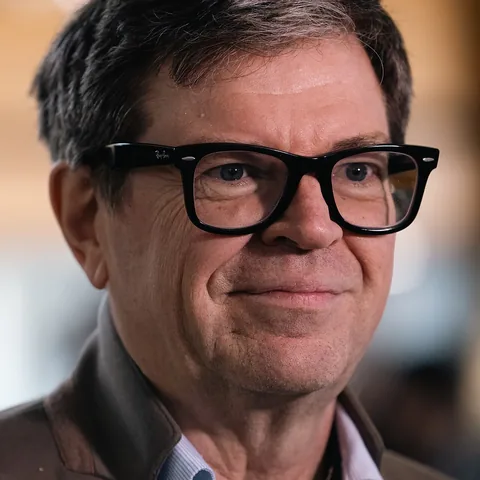 Yann LeCunFAIR (Meta), 2016–2017
- Bernard GhanemKing Abdullah University of Science and Technology, 2019–2026
- Di WangKing Abdullah University of Science and Technology, 2019–2026
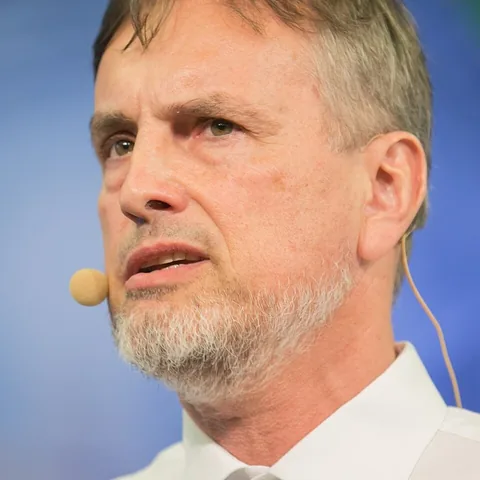 Jürgen SchmidhuberKing Abdullah University of Science and Technology, 2020–2026
- Marc'Aurelio RanzatoFAIR (Meta), 2016–2018
Sources and credits
Photo: We have no published photo of Mohamed Elhoseiny yet. Send us a free-licensed photo.
- Mohamed Elhoseiny | Associate Professor, Computer Science | Computer, Electrical and Mathematical Sciences and Engineering
- Bio and Education - Mohamed H. Elhoseiny
- CAN: Creative Adversarial Networks, Generating "Art" by Learning About Styles and Deviating from Style Norms
- DesIGN: Design Inspiration from Generative Networks (ECCV 2018 Workshops open access)
- CEMSE New Faculty: Mohamed Elhoseiny, Assistant Professor of Computer Science
- Professor Elhoseiny elected as a Senior Member of the Association for the Advancement of Artificial Intelligence
- MiniGPT-4: Enhancing Vision-Language Understanding with Advanced Large Language Models
- MiniGPT-v2: large language model as a unified interface for vision-language multi-task learning