Juan Pavón
Also known as Juan Pavón Mestras
Juan Pavón is an AI researcher whose work applies software engineering to AI applications based on multi-agent systems. He earned a computer science PhD in 1988, worked at Alcatel R&D centers and Bellcore through 1997, and joined Complutense as an associate professor. He coauthored a 2005 INGENIAS chapter, a 2020 guide to AI for legal professionals, and a 2023 paper on inclusion in smart cities. In September 2025, he spoke about AI for sustainable communities, and a UPM project for 2025–2026 named him to teach about generative AI ethics in university teaching. As of October 2026, he is a full professor at UCM and directs GRASIA and the Institute of Knowledge Technology.
Timeline
-
1987–1997
R&D at Alcatel and Bellcore
He earns a computer science PhD at the Polytechnical University of Madrid in 1988. From 1987 to 1997, he works in Alcatel R&D centers in Spain, France and Belgium and at Bellcore in the United States, developing component-based architectures for distributed systems and applying them to multimedia services.
-
1997
Joining Complutense
In 1997, he joins Complutense University of Madrid as an associate professor in the Computer Languages and Systems area.
-
2005
The INGENIAS methodology
He applies software engineering methods and tools to AI applications based on multi-agent systems. In 2005, he coauthors the chapter The INGENIAS Methodology and Tools with Jorge Gómez-Sanz and Rubén Fuentes.
-
2020
An AI guide for legal professionals
In 2020, he coauthors An Introductory Guide to Artificial Intelligence for Legal Professionals with María Jesús González-Espejo, published by Kluwer Law International.
-
2023
A smart-city inclusion paper
In 2023, he coauthors Monitoring system for detecting non-inclusive situations in smart cities with Sebastián Lopez Florez, Alfonso González-Briones, Rubén Fuentes-Fernandez and Juan M. Corchado.
-
September 2025
AI for sustainable communities
In September 2025, he gives a talk titled “Inteligencia Artificial al Servicio de Comunidades Sostenibles” at UNED’s Social Problems conference and describes AI as a tool for collective decision-making.
-
2025–2026
Ethical AI in university teaching
A 2025–2026 UPM educational project names him to give a session on the ethical and methodological implications of generative AI in university teaching and to lead a workshop on responsible AI use for educators.
-
As of October 2026
Professor and research director
Since 2010, he is a full professor in UCM’s Department of Software Engineering and Artificial Intelligence and directs GRASIA, the group he founded for agent-based social and interdisciplinary applications. In 2019, he becomes director of UCM’s Institute of Knowledge Technology, a role he holds as of October 2026.
Career
- Since 1997Complutense University of MadridAssociate Professor, Full Professor
- 1987–1997Alcatel
- 1987–1997Bell Communications Research
Education
Most-cited works
- Systematic review and meta-analysis of augmented reality in educational settings
- How do pedagogical approaches affect the impact of augmented reality on education? A meta-analysis and research synthesis
- Agent Oriented Software Engineering with INGENIAS
- Agent Oriented Analysis Using Message/UML
- The INGENIAS Methodology and Tools
Colleagues
- Miguel Ángel Martín-DelgadoComplutense University of Madrid, 1999–2025
- Samer HassanComplutense University of Madrid, 2006–2025
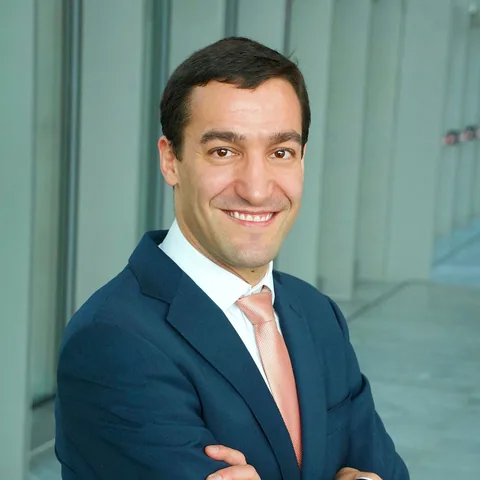 David AtienzaComplutense University of Madrid, 2003–2011
- Susan T DumaisBell Communications Research, 1987–1997
- Michael E LeskBell Communications Research, 1987–1995
- Subhash SuriBell Communications Research, 1987–1994
Sources and credits
Photo: We have no published photo of Juan Pavón yet. Send us a free-licensed photo.
- Juan Pavón | UCM-GRASIA
- Juan Pavón Mestras | UCM-GRASIA | Publicaciones
- Women, Disability, and Inclusion – Scientific Excellence in Bulgaria | MILIEU | Project | Results | H2020 | CORDIS | European Commission
- Juan Pavón participa en las Jornadas de Problemas Sociales de la UNED
- Ficha Proyecto I.E. 2025-2026 | Portal de INNOVACIÓN EDUCATIVA