John M. Hollerbach
John M. Hollerbach is a roboticist and professor emeritus at the University of Utah's Kahlert School of Computing whose robotics career began in the MIT Artificial Intelligence Laboratory. Trained first as a chemist, he completed a 1978 MIT PhD under David Marr that modeled human handwriting and had a robot write like the model. In 1981, he co-founded MIT's Year of the Robot program, which produced the Utah/MIT Dexterous Hand and helped launch the International Journal of Robotics Research, a journal he edited from 2000. After faculty posts at MIT and McGill, he moved to Utah in 1994, worked on the Treadport, a walking interface for virtual reality and rehabilitation, and received the IEEE RAS George Saridis Leadership Award in 2020.
- Now at
- University of Utah
Timeline
-
1968–1978
A PhD under David Marr
Born in Marktheidenfeld, Germany, to Hungarian refugees, he earns a BS in chemistry at the University of Michigan in 1968 and works as an IBM chemist from 1969 to 1971 while taking AI courses through Syracuse University. At the MIT Artificial Intelligence Laboratory, he works with Patrick Winston and earns an SM in computer vision in 1975. His 1978 MIT PhD, advised by David Marr, studies human motor control through handwriting, and he gets a robot to write like his model.
-
1981–1987
The Year of the Robot
In 1981, he co-founds the Year of the Robot program at the MIT Artificial Intelligence Laboratory to jump-start serious robotics research, and he coauthors its sourcebook, Robot Motion: Planning and Control, with Michael Brady, Matthew Mason, Tomás Lozano-Pérez and Timothy Johnson. In 1983, he helps start the International Journal of Robotics Research and the International Symposium of Robotics Research. From 1981 to 1987, he works with Stephen Jacobsen and John Wood of the University of Utah on the Utah/MIT Dexterous Hand, a 16-joint, four-finger hand driven by 32 artificial tendons.
-
1982–1989
Professor at MIT
He joins the MIT faculty in 1982 as an assistant professor in the Department of Psychology and becomes an associate professor in the Department of Brain and Cognitive Sciences in 1985. The National Science Foundation gives him a Presidential Young Investigator Award in 1984, and he becomes a Fellow of the Canadian Institute for Advanced Research in 1988.
-
1989–1994
A robotics chair at McGill
In 1989, he leaves MIT for McGill University, where he holds the NSERC/CIAR Industrial Chair in Robotics in mechanical and biomedical engineering until 1994. He hires Martin Buehler as junior chair and forms a joint laboratory with Ian Hunter that works on new actuator materials and motor designs.
-
1994–2012
The Treadport at Utah
He joins the University of Utah in 1994 as a professor in the School of Computing and research professor of mechanical engineering, and he becomes an IEEE Fellow in 1996. In 2002, he is a lead researcher on Utah's Treadport, a virtual reality cave where users walk on a treadmill while a tether at the lower back measures their position, and his team is in the first year of a five-year, $4 million National Science Foundation grant. By 2012, he tests the TreadPort in a pilot study with patients who have partial spinal cord injuries.
-
2000–2012
Editor of IJRR
In 2000, he succeeds Mike Brady as editor of the International Journal of Robotics Research and expands it to 14 issues a year. He receives a Distinguished Service Award from the IEEE Robotics and Automation Society in 2012.
-
2020
The Saridis Leadership Award
At the 2020 IEEE ICRA awards ceremony, he receives the IEEE RAS George Saridis Leadership Award in Robotics and Automation for foundational research on robot calibration and for leadership and service in publications, conferences and society management.
-
As of October 2026
Professor emeritus at Utah
He is a professor emeritus in the University of Utah's Kahlert School of Computing and a member of the University of Utah Robotics Center. His research covers robotics, virtual environments and human motor control.
Career
- Since 1994University of UtahProfessor in the School of Computing; Research Professor of Mechanical Engineering
- 1989–1994McGill UniversityNSERC/CIAR Industrial Chair in Robotics
- 1982–1989Massachusetts Institute of TechnologyAssistant Professor, Associate Professor
- 1969–1971IBMChemist
Education
- 1978Massachusetts Institute of TechnologySM, PhD
- 1968University of MichiganBS in chemistry
Colleagues
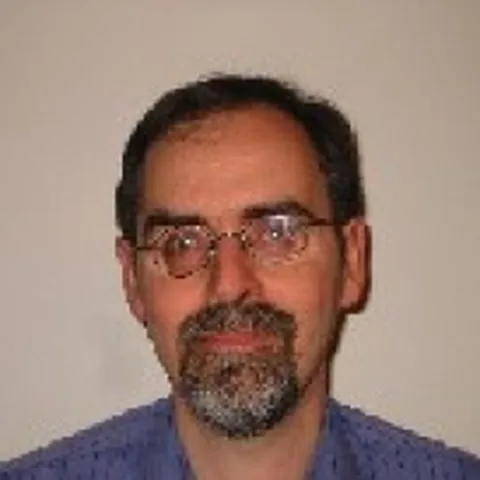 Tomas Lozano-PerezMassachusetts Institute of Technology, 1985–1989
- Stephen JacobsenUniversity of Utah, 1994–1997
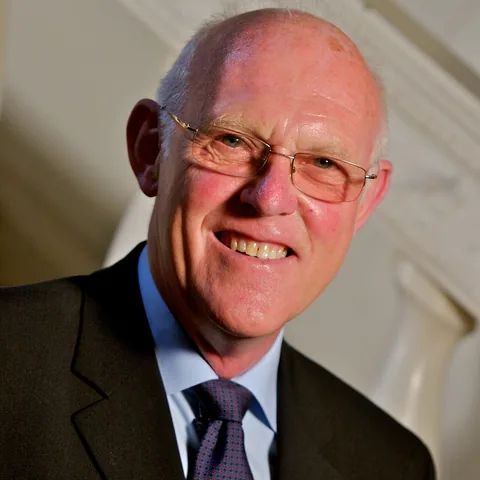 Michael BradyMassachusetts Institute of Technology, 1982–1985
- David MarrMassachusetts Institute of Technology, 1982
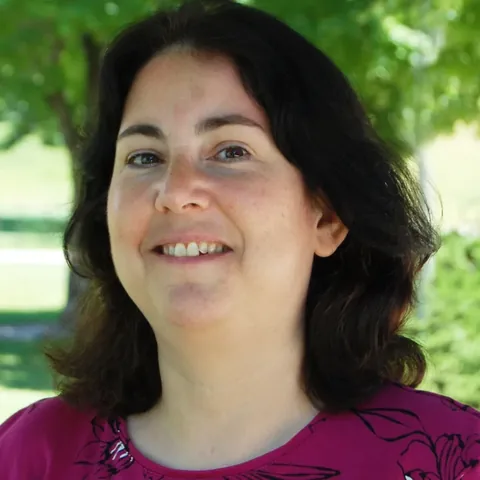 Ellen RiloffUniversity of Utah, 1995–2023
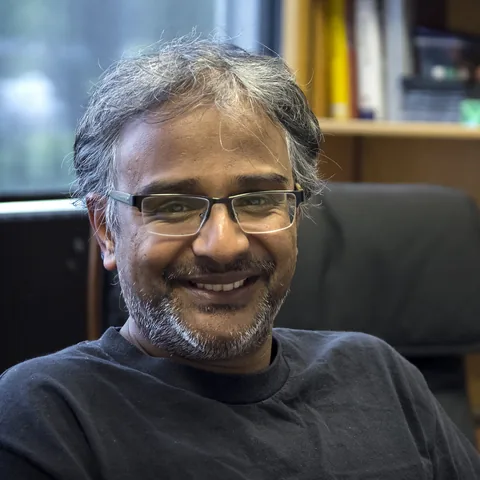 Suresh VenkatasubramanianUniversity of Utah, 2007–2021
Sources and credits
Photo: We have no published photo of John M. Hollerbach yet. Send us a free-licensed photo.
- John M. Hollerbach - Wikipedia
- Oral-History:John Hollerbach - Engineering and Technology History Wiki
- John Hollerbach - The Mathematics Genealogy Project
- Keeping It Real | MIT Technology Review
- Congratulations to Profs. John Hollerbach and Jake Abbott for receiving awards at 2020 IEEE ICRA – Robotics Center
- John M. Hollerbach
- Robotics Faculty & Research Labs – Robotics Center