Jakob Zscheischler
Jakob Zscheischler is an Earth system scientist who applies machine learning to compound weather and climate events, the combinations of climatic drivers that create environmental and societal risk. After a mathematics diploma at Humboldt University Berlin in 2010, he did his PhD work at two Max Planck institutes and received his ETH Zurich doctorate in 2014. He was first author of the 2018 Nature Climate Change Perspective "Future climate risk from compound events", chaired the European COST Action DAMOCLES from 2018 to 2023, and led the 2020 typology of compound events in Nature Reviews Earth & Environment. A UFZ group leader from 2020 and a TU Dresden professor from 2023, he co-authored a 2024 study that uses generative deep learning to find weather patterns behind forest biomass loss. Since January 2024, he heads the Department of Compound Environmental Risks at UFZ, where researchers use machine learning to identify the climate drivers behind floods, vegetation mortality and crop failure.
Timeline
-
2010–2014
Mathematics and a Max Planck PhD
He earns a mathematics diploma at Humboldt University Berlin in 2010. From 2010 he is a PhD student in the Department Biogeochemical Integration at the Max Planck Institute for Biogeochemistry in Jena and the Department Empirical Inference at the Max Planck Institute for Intelligent Systems in Tübingen, and he receives his PhD in Environmental System Science from ETH Zurich in 2014.
-
2015–2018
Postdoc at ETH Zurich
He is a postdoc at the Institute for Atmospheric and Climate Science at ETH Zurich from 2015 to 2018. In May 2018, he is first author of the Nature Climate Change Perspective "Future climate risk from compound events", written with Seth Westra, Bart van den Hurk, Sonia Seneviratne and others, which describes how assessing one driver or hazard at a time may underestimate risk.
-
November 2018–June 2021
Ambizione Fellow and DAMOCLES chair
He is an Ambizione Fellow in Climate and Environmental Physics at the University of Bern from November 2018 to June 2021, with a Swiss National Science Foundation Ambizione grant that starts in 2018. From 2018 to 2023, he also chairs the European COST Action DAMOCLES on understanding and modeling compound climate and weather events, which builds a community of climate scientists, engineers, social scientists, impact modellers and decision-makers.
-
2020
A typology of compound events
In June 2020, he is first author of the review "A typology of compound weather and climate events" in Nature Reviews Earth & Environment, written with Olivia Martius, Seth Westra and others. It organizes compound events into preconditioned, multivariate, temporally compounding and spatially compounding types.
-
October 2020–December 2023
Group leader at UFZ
He leads a group in the Department of Computational Hydrosystems at the Helmholtz Centre for Environmental Research (UFZ) from October 2020 to December 2023. He is principal investigator of the Helmholtz Young Investigator Grant COMPOUNDX, which runs from 2020 to 2026.
-
March 2023
Professor at TU Dresden
In March 2023, he becomes Professor (W3) for Data Analytics in Hydro Sciences at the Faculty of Environmental Sciences of TU Dresden.
-
February 2024
Deep learning for forest loss
In February 2024, he co-authors "Identifying compound weather drivers of forest biomass loss with generative deep learning" in Environmental Data Science, with Mohit Anand, Gustau Camps-Valls and others. A modified variational autoencoder, trained on 160,000 simulated years of forest dynamics, learns weather representations that the authors link to years of high biomass loss.
-
Since January 2024
Heading compound environmental risks
Since January 2024, he heads the Department of Compound Environmental Risks (CER) at UFZ, where researchers use machine learning to identify compounding meteorological drivers of floods, vegetation mortality and crop failure. He is also a work package leader in the XAIDA project on artificial intelligence for extreme-event detection and attribution, and an ELLIS Scholar at UFZ.
Career
- Since 2020Helmholtz Association of German Research CentresGroup leader, Head of Department
- From 2023Technische Universität DresdenProfessor (W3) for Data Analytics in Hydro Sciences
- 2018–2021University of BernAmbizione Fellow
- 2015–2018ETH ZurichPostdoc
Education
- 2014Max Planck SocietyPhD student
- 2014Max Planck Institute for Intelligent SystemsPhD student
- 2014ETH ZurichPhD
- 2010Humboldt-Universität zu BerlinMathematics diploma
Colleagues
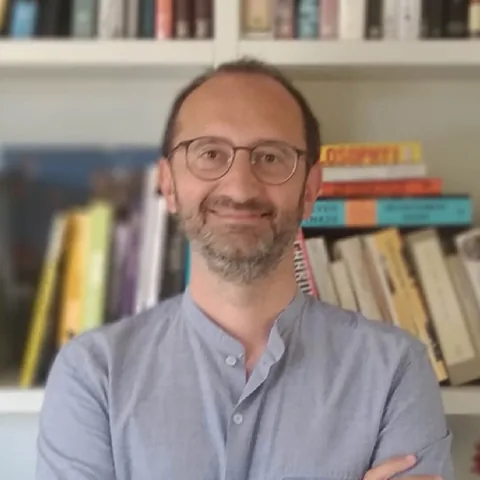 Gustau Camps-VallsNamed in this biography
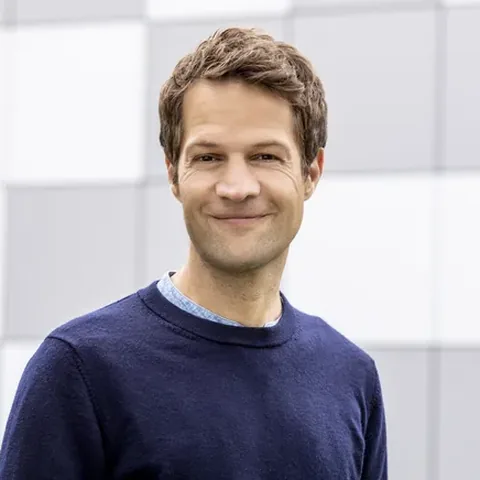 Fabian TheisHelmholtz Association of German Research Centres, 2020–2023
 Lena Maier-HeinHelmholtz Association of German Research Centres, 2020–2023
- Oliver StegleHelmholtz Association of German Research Centres, 2020–2023
 Joachim M. BuhmannETH Zurich, 2015–2018
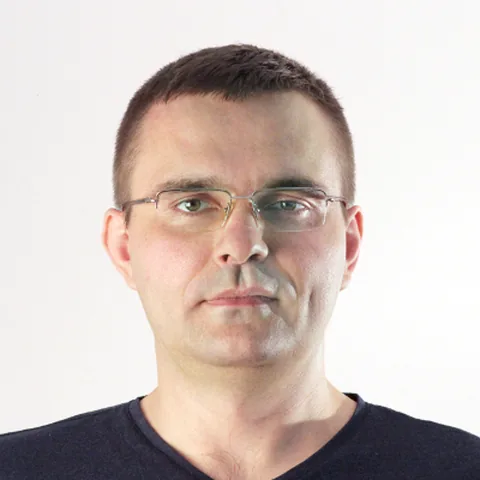 Radu TimofteETH Zurich, 2015–2018
Sources and credits
Photo: We have no published photo of Jakob Zscheischler yet. Send us a free-licensed photo.
- Jakob Zscheischler - Helmholtz-Centre for Environmental Research
- Future climate risk from compound events | Nature Climate Change
- A typology of compound weather and climate events | Nature Reviews Earth & Environment
- Identifying compound weather drivers of forest biomass loss with generative deep learning | Environmental Data Science | Cambridge Core
- Jakob Zscheischler | European Laboratory for Learning and Intelligent Systems