Fabian Isensee
Fabian Isensee is a medical AI researcher who develops deep-learning methods for biomedical image analysis. His work includes nnU-Net, a self-adapting segmentation framework, and HD-BET, a tool for brain extraction from MRI. At DKFZ, he works with Klaus Maier-Hein's team on nnU-Net and extends it for CT and MRI segmentation challenges; in 2024, he coauthors a benchmark of 3D methods. He receives the Leopoldina Prize for Young Scientists in 2025 and leads Helmholtz Imaging's Applied Computer Vision Lab at DKFZ. As of October 2026, he is a board member of DKFZ's Medical Image Computing division and continues his work there after stepping down from Helmholtz Imaging's Support Unit leadership in March 2026.
Years link to their sources. Publication numbers from OpenAlex, as of 22 October 2026.
Timeline
-
2018
Introducing nnU-Net
In 2018, he and his coauthors introduce nnU-Net, a self-adapting framework built on 2D and 3D U-Nets, and evaluate it on the Medical Segmentation Decathlon.
-
2019
The HD-BET tool
In 2019, he coauthors HD-BET, a neural-network tool for extracting brains from MRI. It handles varied MRI sequences and pathological or treatment-altered tissue.
-
2021
Training nnU-Net at DKFZ
In 2021, he works with Klaus Maier-Hein's team at DKFZ on nnU-Net, which identifies organs, tumors and other structures by labeling image pixels.
-
2022
nnU-Net at AMOS2022
In 2022, he and his coauthors adapt nnU-Net for the AMOS challenge's CT and combined CT/MRI tasks. Their ensemble achieves Dice scores of 90.13 and 89.06, respectively.
-
2024
Revisiting 3D segmentation
In 2024, he coauthors nnU-Net Revisited, a benchmark of CNN, Transformer and Mamba approaches to 3D medical image segmentation. The study calls for rigorous validation when comparing methods.
-
2025
A prize and lab leadership
In 2025, he receives the Leopoldina Prize for Young Scientists for work in AI-supported medical image analysis. At DKFZ, he leads Helmholtz Imaging's Applied Computer Vision Lab, which advances AI-based imaging and develops segmentation methods.
-
As of October 2026
A DKFZ board role
In March 2026, he steps down from leadership of Helmholtz Imaging's Support Unit at DKFZ. As of October 2026, he is a board member of DKFZ's Medical Image Computing division and continues his work there.
Career
- Since 2021Helmholtz Association of German Research CentresBoard member
- 2025–2026Helmholtz ImagingLab Lead, Leader
- 2024–2026Johannes Gutenberg University Mainz
- 2019–2021Heidelberg University
Colleagues
 Klaus Maier-HeinHelmholtz Association of German Research Centres, 2017–2026
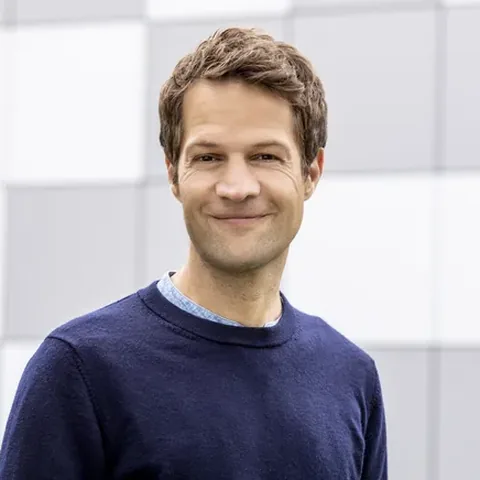 Fabian TheisHelmholtz Association of German Research Centres, 2017–2026
 Lena Maier-HeinHelmholtz Association of German Research Centres, 2017–2026
 Michael StrubeHeidelberg University, 2019–2026
 Anette FrankHeidelberg University, 2019–2026
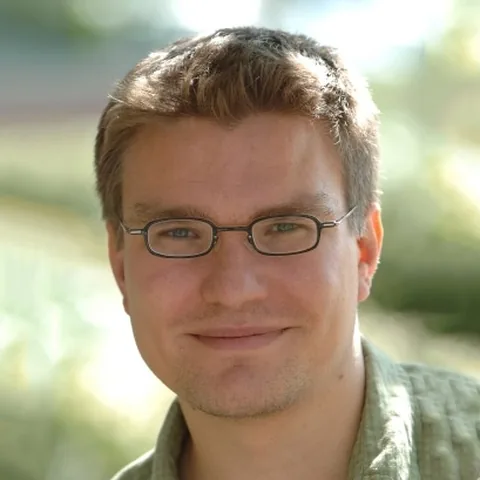 Carsten RotherHeidelberg University, 2019–2026
Sources and credits
Photo: We have no published photo of Fabian Isensee yet. Send us a free-licensed photo.
- nnU-Net: Self-adapting Framework for U-Net-Based Medical Image Segmentation
- Automated brain extraction of multi-sequence MRI using artificial neural networks
- How AI is revolutionizing image analysis
- Extending nnU-Net is all you need
- nnU-Net Revisited: A Call for Rigorous Validation in 3D Medical Image Segmentation
- Awards - German Cancer Research Center
- Fabian Isensee Wins Leopoldina Prize for Young Scientists
- Helmholtz Imaging Newsletter Issue No. 26
- Our team - German Cancer Research Center