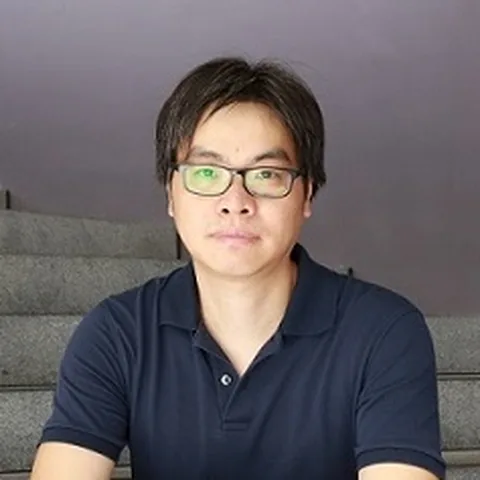
Dominique Makowski
Dominique Makowski is a psychologist at the University of Sussex whose research examines how people perceive reality, from COVID-19 fake news to AI-generated faces and affective responses to AI. After training in clinical neuropsychology in France, he earned a psychology PhD at the University of Paris on fictional reappraisal and created the NeuroKit physiological-signal toolbox in 2017. He went on to publish the psycho R package in 2018, initiate the easystats R collection with Daniel Lüdecke in 2019, release NeuroKit2 in 2021, and win Sussex's 2024 Openness in Research Award. At Sussex, he leads the Reality Bending Lab, where his 2025 work showed that attractive faces are less likely to be judged as artificially generated.
- Now at
- University of Sussex
- Born
- 1991
Years link to their sources.
Timeline
-
By 2017
A Paris PhD and NeuroKit
After training as a clinical neuropsychologist in France, he earns a psychology PhD at the University of Paris on the neurocognitive underpinnings of emotion regulation through fictional reappraisal. As a PhD side project in 2017, he creates the first version of the NeuroKit physiological-signal toolbox.
-
February 2018
The psycho R package
In February 2018, he publishes a paper in the Journal of Open Source Software presenting psycho, an R package for psychological science. The package converts the output of common statistical models into APA-formatted sentences for manuscripts.
-
2019
Starting the easystats project
In 2019, Makowski contacts software developer Daniel Lüdecke to collaborate on easystats, a collection of R packages that facilitates data science for users without a statistical or computer science background.
-
2020
COVID-19 fake news and a prize
In September 2020, he coauthors a Clinical Brain Lab paper with Lau Zen Juen, Tam Pham, and Annabel Chen on psychological determinants of susceptibility to COVID-19 fake news. In November 2020, his 2019 paper on the phenomenal, bodily, and brain correlates of fictional reappraisal wins a Psychonomic Society Best Article Award carrying a $1,000 prize.
-
2021
The NeuroKit2 Python toolbox
In 2021, he publishes NeuroKit2, a Python toolbox for neurophysiological signal processing that takes ECG, PPG, EDA, EMG, RSP, and EEG recordings from raw data to cleaned features through one interface.
-
2023–2024
SIPS and Sussex openness awards
The easystats collection of R packages wins a Mission Award from the Society for the Improvement of Psychological Science (SIPS) in 2023, and NeuroKit receives a SIPS Commendation Award in 2024. In June 2024, he wins the Openness in Research Award, carrying a £1,000 prize, at the University of Sussex's Research Culture Awards.
-
2025
Judging AI-generated faces
In 2025, his study finds that attractive faces are less likely to be judged as artificially generated. In July 2025, he gives a seminar at the Singapore University of Technology and Design on the anti-AI bias and its impact on emotions, perceived attractiveness, and sexual arousal.
-
As of October 2026
Leading the Reality Bending Lab
He is an assistant professor at the University of Sussex, where he leads the Reality Bending Lab to study the perception and experience of reality. In June 2026, he and Marco Sperduti of the University of Rome Tor Vergata organize the symposium Artificial Emotion: Affective Responses and Interaction with Artificial Intelligence at ESCAN 2026.
Career
- NowUniversity of SussexAssistant Professor of Psychology
- 2019–2020Nanyang Technological UniversityResearch Fellow
Education
- 2017University of ParisPhD in Psychology
Colleagues
Sources and credits
Photo: We have no published photo of Dominique Makowski yet. Send us a free-licensed photo.
- HASS Human-Centred AI Seminar - Singapore University of Technology and Design (SUTD)
- NeuroKit - Wikipedia
- Journal of Open Source Software: The psycho Package: an Efficient and Publishing-Oriented Workflow for Psychological Science
- The psycho Package: an Efficient and Publishing-Oriented Workflow for Psychological Science — Reality Bending Lab
- Easystats - Wikipedia
- Psychological Determinants of the Susceptibility to Fake News amidst the COVID-19 Pandemic | The Clinical Brain Lab
- Best Article Award, Psychonomic Society — Reality Bending Lab
- NeuroKit2: A Python toolbox for neurophysiological signal processing — Reality Bending Lab
- easystats wins a SIPS Mission Award — Reality Bending Lab
- Openness in Research Award, Sussex Research Culture Awards — Reality Bending Lab
- Too beautiful to be fake: Attractive faces are less likely to be judged as artificially generated — Reality Bending Lab
- Dominique Makowski — Reality Bending Lab
- Artificial Emotion: Our Symposium at ESCAN 2026 — Reality Bending Lab