Cal Newport
Also known as Calvin Newport
Cal Newport is a Georgetown computer scientist and author whose New Yorker essays explain how large language models such as ChatGPT work. After finishing at Dartmouth in 2004, he earned an MIT PhD in 2009 with Nancy Lynch and joined Georgetown in 2011 to study distributed algorithms. His books include So Good They Can't Ignore You (2012), Deep Work (2016), Digital Minimalism (2019) and Slow Productivity (2024). Beginning with "What Kind of Mind Does ChatGPT Have?" in April 2023, he wrote a run of AI essays for The New Yorker, and in August 2025 he argued that GPT-5 suggested progress on large language models had stalled. Today he is Provost's Distinguished Professor of Computer Science at Georgetown and a founding faculty member of its Center for Digital Ethics.
- Now at
- Georgetown University
- Born
- 1982
- Links
- Website and Google Scholar
Years link to their sources.
Timeline
-
2000–2005
Dartmouth and a first book deal
He grows up in Pennington, New Jersey, graduates from Hopewell Valley Central High School in 2000, and completes his undergraduate studies at Dartmouth College in 2004. While still a Dartmouth undergraduate, he signs his first book deal with Random House, and How to Win at College appears in 2005.
-
2009–2011
An MIT PhD and postdoc
He earns a PhD in computer science at MIT in 2009, working with Nancy Lynch in the Theory of Distributed Systems group. From 2009 to 2011, he is a postdoctoral associate at MIT, working with Hari Balakrishnan in the Networks and Mobile Systems group.
-
2011–2024
Distributed algorithms at Georgetown
He joins Georgetown University as an assistant professor of computer science in 2011, gains tenure in 2017 and becomes a full professor in 2024. His research centers on distributed algorithm theory and which problems can be solved in challenging network settings. A 2022 paper with Michael Dinitz, Jeremy Fineman and Seth Gilbert on information spreading in dynamic networks wins the Best Paper award at the International Symposium on Distributed Computing.
-
2012–2016
Career advice and Deep Work
In 2012, he turns to idea writing with So Good They Can't Ignore You, which challenges the career advice to "follow your passion." Deep Work: Rules for Focused Success in a Distracted World follows in 2016; in it, deep work means focused stretches of intellectually demanding work without distractions such as email and social media.
-
2019–2024
A trilogy and The New Yorker
Digital Minimalism (2019) and A World Without Email (2021) complete the technology and society trilogy that begins with Deep Work, and Slow Productivity follows in 2024. He becomes a contributing writer at The New Yorker in 2021. In March 2021, he talks about deep work, email, social media and neural networks on the Lex Fridman Podcast.
-
2023–2024
Explaining ChatGPT's mind
In April 2023, his New Yorker essay "What Kind of Mind Does ChatGPT Have?" looks closely at the technical operations of the large language model behind ChatGPT and concludes that it runs on pattern-matching pushed to a radically larger scale. He follows it with "Can an A.I. Make Plans?" in March 2024 and "What Kind of Writer Is ChatGPT?" in October 2024.
-
2025–2026
Open Questions columns on AI
In August 2025, filling in for Joshua Rothman's Open Questions column, he argues that OpenAI's GPT-5 is the latest sign that progress on large language models has stalled. His December 2025 essay finds that the tech industry overpromised and underdelivered on autonomous agents, and a June 2026 column likens AI at work to an intern.
-
As of October 2026
Distinguished professor at Georgetown
He is Provost's Distinguished Professor of Computer Science at Georgetown, a founding faculty member and faculty leader of its Center for Digital Ethics, and the inaugural director of the college's new Computer Science Ethics and Society major. He also hosts the Deep Questions podcast.
Career
- Since 2011Georgetown UniversityAssistant Professor of Computer Science, Provost’s Distinguished Professor of Computer Science
- 2009–2011Massachusetts Institute of TechnologyPostdoctoral Associate
Education
Videos
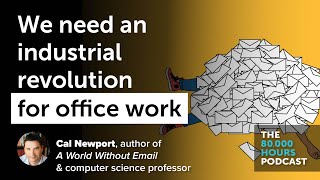 A world without email & revolutionising office work | Cal Newport (2021)80,000 Hours · 1 October 2024 · 1 h 53 min
 Cal Newport: Deep Work, Focus, Productivity, Email, and Social Media | Lex Fridman Podcast #166Lex Fridman · 5 March 2021 · 3 h 3 min
Video data from YouTube API Services. By watching you agree to the YouTube Terms of Service. How we use YouTube data.
Colleagues
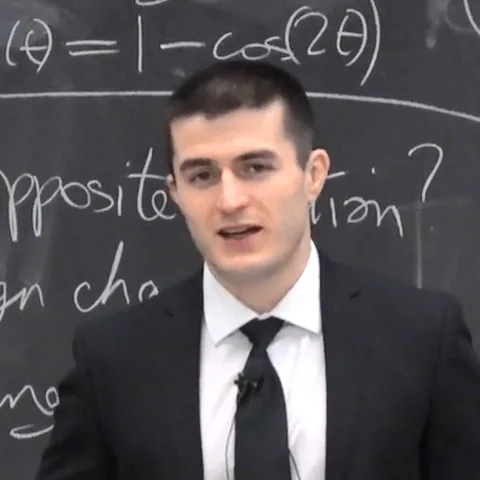 Lex FridmanNamed in this biography
- Lawrence SolumGeorgetown University, 2011–2017
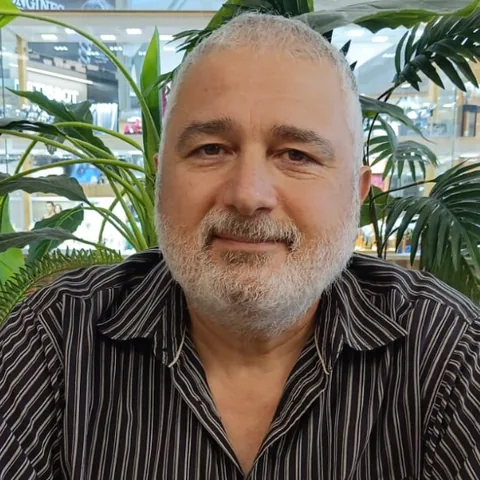 Kobbi NissimGeorgetown University, 2012–2017
- Nathan SchneiderGeorgetown University, 2024–2026
 Alan S. WillskyMassachusetts Institute of Technology, 2009–2011
 Jeffrey H. ShapiroMassachusetts Institute of Technology, 2009–2011
Sources and credits
Photo: We have no published photo of Cal Newport yet. Send us a free-licensed photo.
- Cal Newport - Wikipedia
- Cal Newport, New York Times Bestselling Author of Seven Books
- Cal Newport, Computer Science Professor | Scholarship
- #166 - Cal Newport: Deep Work, Focus, Productivity, Email, and Social Media | Lex Fridman Podcast
- What Kind of Mind Does ChatGPT Have? | The New Yorker
- Cal Newport Latest Articles | The New Yorker
- Author of Deep Work, Study Hacks Blog - Cal Newport
- What if A.I. Doesn’t Get Much Better Than This? | The New Yorker
- Instead of Taking Your Job, A.I. Might Transform It | The New Yorker
- People | Center for Digital Ethics | Georgetown University