Nathan Schneider
Nathan Schneider is a computational linguist whose work applies NLP to word meaning and studies syntactic bias in Transformer models. He earned a BA in Linguistics and Computer Science at UC Berkeley in 2008, completed a PhD at Carnegie Mellon in 2014, worked at Edinburgh, and joined Georgetown as an assistant professor. In 2018, he coauthored an annotation scheme, corpus, and task for English prepositions and possessives; a 2023 study tested syntactic inductive bias in Transformers. In March 2025, the Supreme Court cited an amicus brief he coauthored on firearm parts kits. Since 2022, he is a Provost's Distinguished Associate Professor at Georgetown, jointly appointed in Linguistics and Computer Science.
- Now at
- Georgetown University
- Works
- 187
- Citations
- 6,691
- h-index
- 28
Publication numbers from OpenAlex, as of 22 October 2026.
Timeline
-
2008
A Berkeley degree
He earns a BA in Linguistics and Computer Science at UC Berkeley in 2008.
-
2014
Lexical Semantic Analysis
He completes a PhD at Carnegie Mellon in 2014 with a dissertation titled Lexical Semantic Analysis in Natural Language Text. The dissertation develops a general-purpose framework for describing word groupings and meanings in context and includes an open-source NLP system that automates the analysis through statistical sequence tagging.
-
2014–2016
A postdoc at Edinburgh
He works as a postdoctoral researcher at the University of Edinburgh's ILCC in its School of Informatics from 2014 to 2016, with Mark Steedman as his supervisor.
-
2016–2022
Assistant professor at Georgetown
He joins Georgetown in 2016 as an assistant professor of Linguistics and Computer Science and holds the role through 2022.
-
2018
English supersense annotation
In 2018, he coauthors a paper that introduces an annotation scheme, corpus, and task for disambiguating English prepositions and possessives.
-
2023
Testing syntax in Transformer models
He coauthors a study of syntactic inductive bias in Transformer language models with Luke Gessler in 2023. Experiments on Uyghur, Wolof, Maltese, Coptic, and Ancient Greek find uneven results and little benefit in most low-resource settings.
-
March 2025
A Supreme Court amicus brief
In March 2025, he coauthors an amicus brief with Kevin Tobia and Brandon Waldon arguing that gun parts kits fall under the definition of a firearm. The Supreme Court cites the brief in its 7-to-2 majority opinion.
-
Since 2022
Associate professor at Georgetown
In 2022, he becomes a Provost's Distinguished Associate Professor at Georgetown, jointly appointed in Linguistics and Computer Science. His listed interests include computational linguistics and natural language processing. In May 2026, he says he may admit a PhD student in Computer Science or Computational Linguistics in the next admissions cycle.
Career
- Since 2016Georgetown UniversityAssistant professor of Linguistics and Computer Science
- 2017–2020Hebrew University of Jerusalem
- 2017–2026University of Colorado Boulder
- 2014–2016University of EdinburghPostdoctoral researcher
Education
Most-cited works
- Part-of-Speech Tagging for Twitter: Annotation, Features, and ExperimentsWith Dani Yogatama, Dipanjan Das and Noah Smith
- Improved Part-of-Speech Tagging for Online Conversational Text with Word ClustersWith Noah Smith
- Frame-Semantic ParsingWith Dipanjan Das and Noah Smith
- A Dependency Parser for TweetsWith Noah Smith
- Probabilistic Frame-Semantic ParsingWith Dipanjan Das and Noah Smith
Colleagues

Sources and credits
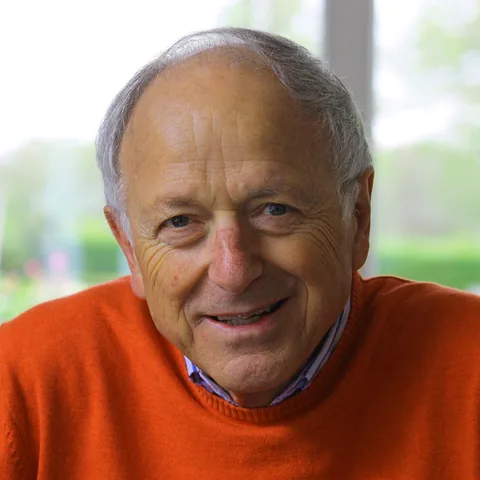
Photo: We have no published photo of Nathan Schneider yet. Send us a free-licensed photo.
- Nathan Schneider | Undergraduate Interdisciplinary Program in Cognitive Science | Georgetown University
- Nathan Schneider :: Thesis
- Nathan Schneider | About Me
- Comprehensive Supersense Disambiguation of English Prepositions and Possessives - ACL Anthology
- Syntactic Inductive Bias in Transformer Language Models: Especially Helpful for Low-Resource Languages? - ACL Anthology
- How These Hoyas Scored a Win in Supreme Court ‘Ghost Guns’ Case - Georgetown University
- Nathan Schneider | Advising
- Faculty - Department of Computer Science