Andreas Bulling
Computer scientist Andreas Bulling researches AI systems that can anticipate people’s intentions and adapt computer interaction. He studied computer science at KIT and earned a PhD in information technology and electrical engineering from ETH Zurich in 2010. His earlier work included eye-movement analysis for visual-memory recognition, Pupil’s open-source mobile eye-tracking platform, and ANTICIPATE; he received the ETRA Emerging Investigator Award in 2016, ETRA Best Paper and Best Presentation awards in 2018, and a €1.5 million ERC Starting Grant in 2018. At Stuttgart, he helped found ELLIS Unit Stuttgart in 2021, became a Henriette Herz Scout in 2024, and joined the IEEE TVCG editorial board in 2025. As of October 2026, he is Professor for Human-Computer Interaction and Cognitive Systems and Acting Director of VIS, and a Unit Director and Fellow of ELLIS Unit Stuttgart.
- Works
- 765
- Citations
- 17,015
- h-index
- 62
Publication numbers from OpenAlex, as of 18 October 2026.
Timeline
-
2010
An ETH Zurich doctorate
He studies computer science at the Karlsruhe Institute of Technology and earns a PhD in information technology and electrical engineering from ETH Zurich in 2010.
-
2011–2016
Visual memory, Pupil and ETRA
In 2011, he and Daniel Roggen show that eye-movement analysis can distinguish familiar from unfamiliar abstract pictures with an 84.3% top recognition rate. In 2014, he coauthors the Pupil paper on open-source mobile eye tracking and gaze-based interaction. He receives the ETRA Emerging Investigator Award in 2016.
-
2013–2018
Saarland research leadership
From 2013 through 2018, he leads an independent research group at Saarland University’s Cluster of Excellence on Multimodal Computing and Interaction and serves as a senior researcher at the Max Planck Institute for Informatics.
-
2018
ANTICIPATE and an ERC grant
He joins the University of Stuttgart as Professor for Human-Computer Interaction and Cognitive Systems in 2018. The ERC awards him a €1.5 million Starting Grant in 2018 for ANTICIPATE, which aims to establish foundations for interfaces that predict future input from users’ attention and intentions. In 2018, he receives ETRA’s Best Paper and Best Presentation awards.
-
2021
Founding the Stuttgart ELLIS unit
He becomes one of two founding directors of ELLIS Unit Stuttgart in 2021. The unit advances learning and intelligent systems research across interactive systems, natural and programming language processing, learning theory, and robot learning.
-
2024
A Henriette Herz Scout
The Alexander von Humboldt Foundation appoints him a Henriette Herz Scout in 2024. He aims to give intelligent assistance systems a Theory of Mind that can help them recognize people’s needs, goals, and intentions.
-
2025
TVCG Associate Editor
He joins the IEEE Transactions on Visualization and Computer Graphics editorial board as an Associate Editor in 2025.
-
As of October 2026
Professor and ELLIS director
He is Professor for Human-Computer Interaction and Cognitive Systems and Acting Director of VIS at the University of Stuttgart. He leads the Collaborative Artificial Intelligence group and serves as Unit Director and Fellow of ELLIS Unit Stuttgart; in September 2026, he and Ingo Steinwart discuss the unit’s future.
Career
- Since 2021European Laboratory for Learning and Intelligent SystemsFounding Director; Unit Director and Fellow
- Since 2018University of StuttgartProfessor for Human-Computer Interaction and Cognitive Systems
- 2013–2018Saarland UniversityLeader of an Independent Research Group
- 2013–2018Max Planck Institute for InformaticsSenior Researcher
- 2013–2018Max Planck Society
- 2010–2013University of Cambridge
- 2010–2015Lancaster University
Education
- 2010ETH ZurichPhD
- Karlsruhe Institute of TechnologyComputer Science
Most-cited works
Colleagues
 Jilles VreekenMax Planck Institute for Informatics, 2013–2019
- Andrés BruhnUniversity of Stuttgart, 2018–2026
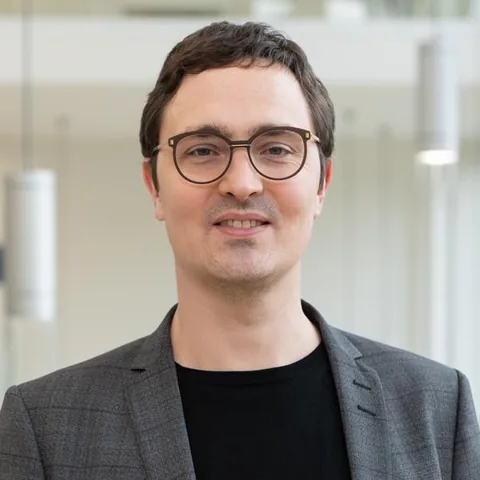 Mario FritzMax Planck Institute for Informatics, 2013–2019
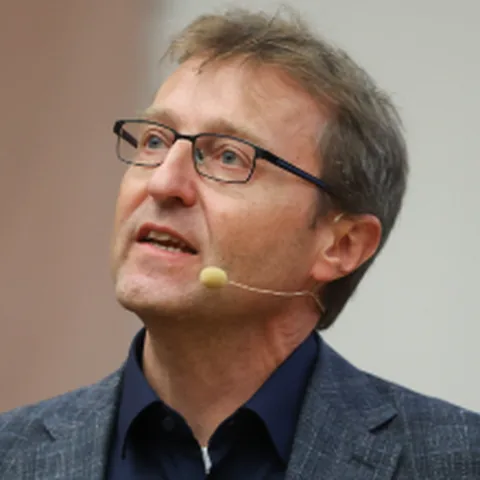 Steffen StaabUniversity of Stuttgart, 2020–2026
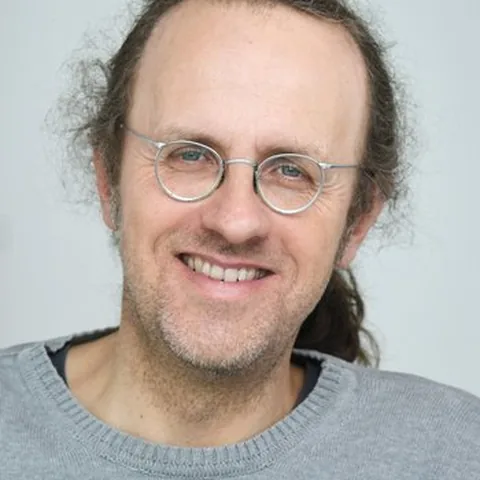 Bernhard SchölkopfEuropean Laboratory for Learning and Intelligent Systems, 2023–2026
 Zeynep AkataMax Planck Institute for Informatics, 2014–2019
Sources and credits
Photo: We have no published photo of Andreas Bulling yet. Send us a free-licensed photo.
- “Working towards anticipatory computers” | University of Stuttgart
- Recognition of Visual Memory Recall Processes Using Eye Movement Analysis | Collaborative Artificial Intelligence
- [1405.0006] Pupil: An Open Source Platform for Pervasive Eye Tracking and Mobile Gaze-based Interaction
- Prof. Dr. Andreas Bulling | Institute for Visualization and Interactive Systems | University of Stuttgart
- Prof. Andreas Bulling receives ERC Starting Grant | University of Stuttgart
- Artificial Intelligence Researchers at the University of Stuttgart Join European Laboratory for Learning and Intelligent Systems (ELLIS)
- Stuttgart | European Laboratory for Learning and Intelligent Systems
- A new level of human-machine interaction
- Andreas Bulling Joins Editorial Board of TVCG
- Five years of ELLIS Stuttgart: Shaping the next generation of intelligent systems