Vladimir Vovk
Vladimir Vovk is a computer science researcher whose work on conformal prediction helps machine-learning systems communicate the reliability of their predictions. He earned a PhD at Moscow State University in 1988, held a Stanford fellowship in 1995–1996, and published work on prediction in 1998 and probability in 2001. His 2005 book and 2008 tutorial explained how conformal prediction gives confidence information for machine-learning predictions. With Ruodu Wang, he developed e-value methods for hypothesis testing; their 2021 paper received the 2026 Frontiers of Science Award. As of October 2026, he is a Professor of Computer Science at Royal Holloway, University of London.
- Born
- 1960
Years link to their sources.
Timeline
-
1988
A Moscow State University PhD
He earns a PhD at Moscow State University in 1988 for a thesis on predicting algorithmically random sequences. Andrei Kolmogorov and Alexey Semenov supervise his thesis.
-
1995–1996
A Stanford fellowship
He holds a mathematics and statistics fellowship at Stanford's Center for Advanced Study in the Behavioral Sciences in 1995–1996.
-
1998
Learning by transduction
With Alex Gammerman and Vladimir Vapnik, he coauthors “Learning by transduction” in 1998.
-
2001
Probability and finance
He coauthors Probability and finance: it's only a game with Glenn Shafer in 2001.
-
2005–2008
A conformal prediction book
In 2005, he coauthors Algorithmic Learning in a Random World with Alex Gammerman and Glenn Shafer; the book centers on conformal prediction, a machine-learning method. In 2008, he and Glenn Shafer publish a JMLR tutorial that explains how past examples set confidence levels for new predictions.
-
2021
E-values for hypothesis tests
With Ruodu Wang, he publishes “E-values: Calibration, combination, and applications” in 2021. The paper shows that e-values can be merged simply by averaging when testing a single hypothesis, and develops efficient procedures for testing multiple hypotheses.
-
2026
A Frontiers of Science Award
He shares the 2026 Frontiers of Science Award with Ruodu Wang for their 2021 paper on e-values.
-
As of October 2026
Professor at Royal Holloway
As of October 2026, he is Professor of Computer Science at Royal Holloway, University of London, with affiliations in the Centre for Machine Learning, Centre for Intelligent Systems, Centre for Reliable Machine Learning and Centre for Robust Inference in a Digital Economy (RIDE). His 2026 paper shows that conformal predictors are universal, with only limited possible gains in predictive efficiency.
Career
- NowRoyal Holloway University of LondonProfessor of Computer Science
Education
Colleagues
Sources and credits
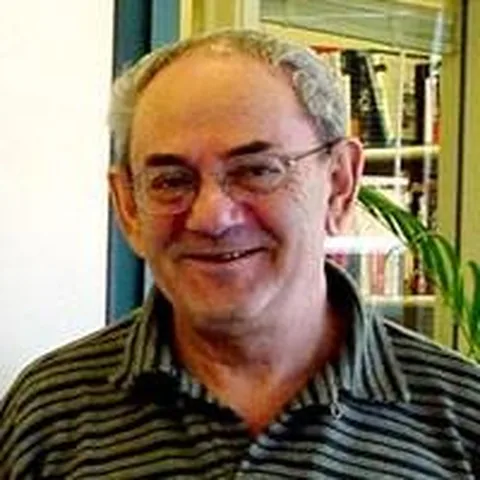
Photo: We have no published photo of Vladimir Vovk yet. Send us a free-licensed photo.
- Predictability of algorithmically random sequences
- Vladimir Vovk | Center for Advanced Study in the Behavioral Sciences
- Learning by transduction - Royal Holloway Research Portal
- Probability and Finance: It's Only a Game!
- Algorithmic learning in a random world
- A Tutorial on Conformal Prediction
- E-values: Calibration, combination, and applications
- Professor Ruodu Wang honoured with 2026 Frontiers of Science Award
- Vladimir Vovk - Royal Holloway Research Portal
- Universality of conformal prediction under the assumption of randomness