Sylvia Weir
Sylvia Weir was a South African-born paediatrician who became an artificial intelligence researcher, working on computers in the education of children with autism and other disabilities. She finished her medical studies at the University of the Witwatersrand in 1950, joined Edinburgh University as a researcher in 1974, and moved to MIT in 1978 after Seymour Papert recruited her. Her 1981 paper "LOGO as an Information Prosthetic for Communication and Control" appeared at the International Joint Conference on Artificial Intelligence, and her book Cultivating Minds: A Logo Casebook came out in 1987. After Nelson Mandela's release in 1990, Aaron Motsoaledi asked her to help with a new teachers' college in South Africa, and at 76 she saw its first class graduate. She died in 2018 at 93.
Timeline
-
1925–1950
Medicine at Witwatersrand
Born in Benoni, South Africa, in 1925, she enters the medical school at the University of Witwatersrand in Johannesburg in the mid-1940s, one of six women among several hundred men. She completes her studies in 1950.
-
1950s
Medical residencies in Britain
She emigrates to the UK in the 1950s and does her medical residencies, where she meets Donald Weir, a researcher in immunology. They marry in 1956 and raise three children in Scotland.
-
1974
AI researcher at Edinburgh
In 1974, she becomes a researcher at Edinburgh University in one of the first artificial intelligence departments.
-
1978–1979
Joining Papert at MIT
In 1978, Seymour Papert recruits her to MIT, and she leaves Scotland to collaborate with him. She settles in Cambridge, Massachusetts, to contribute to MIT projects that bring computers into children's education, with a focus on children with autism and disabilities. In 1979, she writes The Evaluation and Cultivation of Spatial and Linguistic Abilities in Individuals with Cerebral Palsy.
-
1981
LOGO as an information prosthetic
In 1981, she publishes "LOGO as an Information Prosthetic for Communication and Control" in the proceedings of the International Joint Conference on Artificial Intelligence. The paper describes how computer-based LOGO activities can serve diagnostic and therapeutic purposes for physically handicapped and learning disabled children.
-
1987–1989
The Cultivating Minds casebook
Her book Cultivating Minds: A Logo Casebook appears from Harper & Row in 1987 and focuses on using the Logo programming language to enhance learning, particularly for individuals with special needs. In April 1989, she publishes "The Computer in Schools: Machine as Humanizer" in the Harvard Educational Review.
-
1990s
Planning Mastec in South Africa
After Nelson Mandela's release from prison in 1990, Aaron Motsoaledi discusses with her a plan for the Mathematics, Science and Technology Education College (Mastec) for teachers, and asks her to support its planning and implementation. She moves to Pietersburg and, at 76, witnesses the graduation of Mastec's first class of new teachers.
-
2018
Charity work and death at 93
She retires to Brighton, East Sussex, and helps establish the charity Friends of Mponegele Aids Orphans for HIV/Aids orphans in South Africa. She dies in 2018, aged 93.
Career
- From 1978Massachusetts Institute of TechnologyAI researcher
- From 1974University of EdinburghResearcher
- Friends of Mponegele Aids OrphansCo-founder
Education
- 1950University of the WitwatersrandMedical studies
Colleagues
 Seymour PapertMassachusetts Institute of Technology, 1978
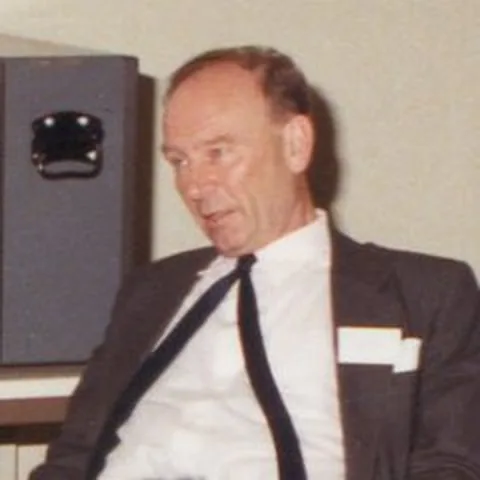 Donald MichieUniversity of Edinburgh, 1974–1978
- Jim HoweUniversity of Edinburgh, 1974–1977
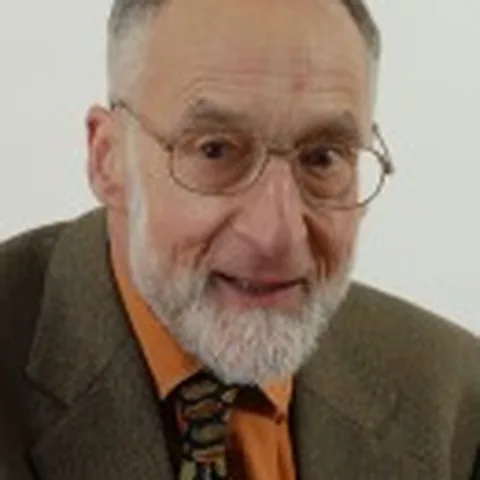 Robin MilnerUniversity of Edinburgh, 1975–1978
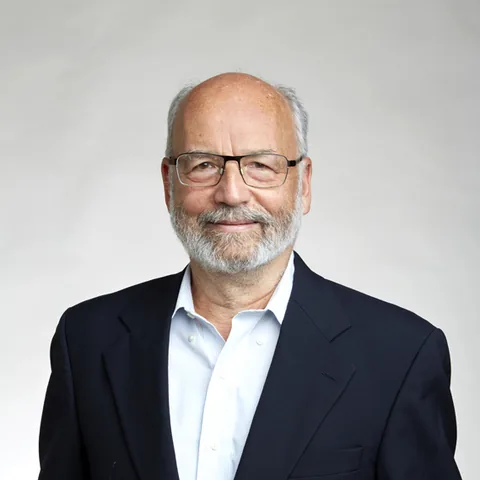 Adi ShamirMassachusetts Institute of Technology, 1978
 Alan S. WillskyMassachusetts Institute of Technology, 1978
Sources and credits
Photo: We have no published photo of Sylvia Weir yet. Send us a free-licensed photo.