Sam Harris
Also known as Samuel Benjamin Harris
Sam Harris is an American neuroscientist, author and podcast host whose essays, talks and interviews warn about the risks of superintelligent AI. After a philosophy degree from Stanford in 2000, he wrote The End of Faith (2004), which won the 2005 PEN Award for Nonfiction, and earned a PhD in cognitive neuroscience at UCLA in 2009 with fMRI studies of belief. In a 2015 Edge essay and a 2016 TED talk, Can we build AI without losing control over it?, he argued that machines with superhuman intelligence are likely and hard to control, and in January 2017 he joined Elon Musk, Demis Hassabis and Stuart Russell on a superintelligence panel at the Beneficial AI 2017 conference. His podcast began as Waking Up in September 2013, and in September 2018 he released the Waking Up meditation app. He received the 2026 Richard Dawkins Award, and he hosts Making Sense, where 2026 guests such as William MacAskill and Ryan Greenblatt discuss the intelligence explosion and AI misalignment.
- Links
- Website
Timeline
-
1967–2000
A philosophy degree at Stanford
Born in Los Angeles in 1967, he leaves Stanford in his second year and studies meditation with Buddhist and Hindu teachers in India and Nepal. He returns to Stanford in 1997 and completes a BA in philosophy in 2000.
-
2004–2005
The End of Faith
His first book, The End of Faith, comes out in 2004 and spends 33 weeks on The New York Times Best Seller list. It wins the 2005 PEN Award for Nonfiction, and he becomes known as one of the Four Horsemen of New Atheism.
-
2007–2011
A neuroscience PhD at UCLA
In December 2007, as a graduate student in the lab of Mark Cohen at the UCLA Center for Cognitive Neuroscience, he reports with Sameer Sheth that fMRI shows clear differences in the brain areas involved in belief, disbelief and uncertainty. He earns a PhD in cognitive neuroscience at UCLA in 2009, and in 2011 he coauthors a NeuroImage paper comparing machine learning algorithms for fMRI decoding of belief versus disbelief.
-
2013–2018
Making Sense and Waking Up
In September 2013, he starts the Waking Up podcast, later renamed Making Sense, whose topics range from meditation and free will to artificial intelligence. In September 2018, he releases the Waking Up meditation app, which teaches secular mindfulness practice.
-
2015–2016
Warnings about superintelligent AI
In a 2015 Edge essay, Can We Avoid a Digital Apocalypse?, he writes that machines with superhuman intelligence seem increasingly likely and that the control problem appears quite difficult to solve. His 2016 TED talk, Can we build AI without losing control over it?, argues that superintelligent AI follows from three basic assumptions and calls it one of the greatest challenges our species will ever face.
-
January 2017
The Beneficial AI 2017 panel
In January 2017, he joins Elon Musk, Demis Hassabis, Stuart Russell, Nick Bostrom and Ray Kurzweil on the superintelligence panel at the Future of Life Institute's Beneficial AI 2017 conference. The panel asks what outcomes would follow if humans succeed in building human-level AGI, and the conference produces the Asilomar AI Principles.
-
2026
The Richard Dawkins Award
In February 2026, the Center for Inquiry names him the twenty-fourth recipient of the Richard Dawkins Award. Dawkins presents the 2026 award at a Center for Inquiry event, and the two discuss consciousness, AI and the Turing test, and the scientific basis of morality.
-
As of October 2026
Host of Making Sense
He hosts Making Sense, and his 2026 episodes on AI include talks with William MacAskill about the intelligence explosion in March 2026 and with Cameron Berg about whether AI systems are conscious in July 2026. In September 2026, he speaks with Ryan Greenblatt about AI misalignment and the risk of losing control of increasingly capable systems.
Career
Education
- 2009University of California, Los AngelesPhD in cognitive neuroscience
- 2000Stanford UniversityBA in philosophy
Videos
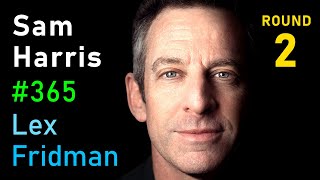 Sam Harris: Trump, Pandemic, Twitter, Elon, Bret, IDW, Kanye, AI & UFOs | Lex Fridman Podcast #365Lex Fridman · 14 March 2023 · 4 h 28 min
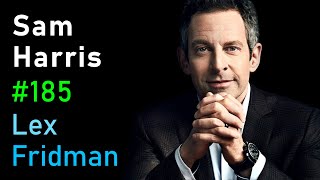 Sam Harris: Consciousness, Free Will, Psychedelics, AI, UFOs, and Meaning | Lex Fridman Podcast #185Lex Fridman · 20 May 2021 · 3 h 17 min
Video data from YouTube API Services. By watching you agree to the YouTube Terms of Service. How we use YouTube data.
Colleagues
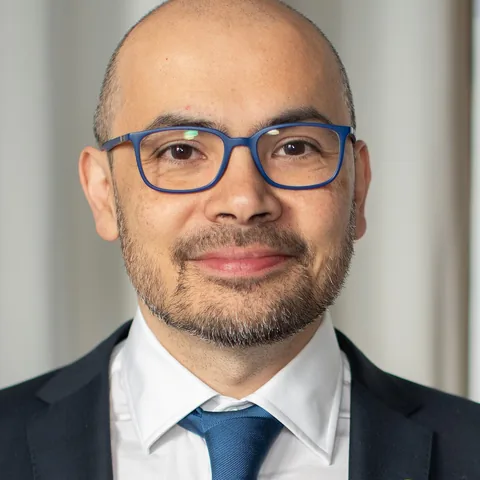
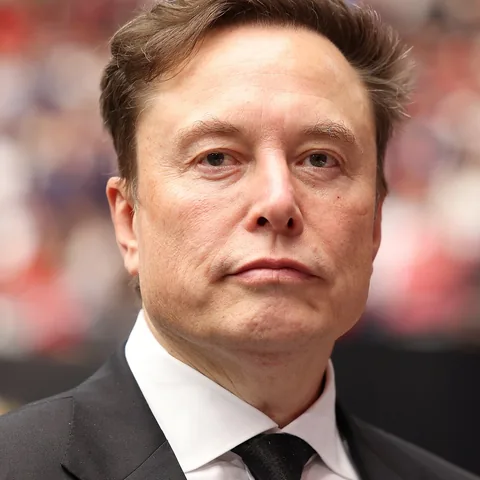
Sources and credits
Photo: We have no published photo of Sam Harris yet. Send us a free-licensed photo.
- Sam Harris - Wikipedia
- Sam Harris | Home of the Making Sense Podcast
- Different areas of the brain respond to belief, uncertainty | UCLA Health
- Can We Avoid a Digital Apocalypse? | Edge.org
- Sam Harris TED Talk: Can We Build AI Without Losing Control Over It? - Future of Life Institute
- Beneficial AI 2017 - Future of Life Institute
- Sam Harris to Receive CFI’s 2026 Richard Dawkins Award on April 18 | Center for Inquiry
- Sam Harris | #481 - Sam Harris Receives the 2026 Richard Dawkins Award
- Sam Harris | #467 - EA, AI, and the End of Work
- Sam Harris | #487 - Is AI Already Conscious?
- Sam Harris | #494 - A Coin Toss for the Future