Ross Goroshin
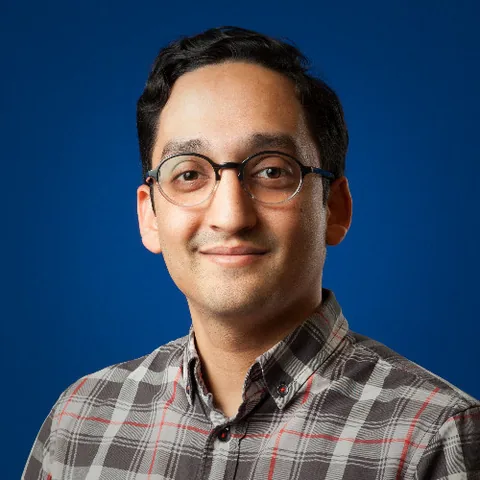
Ross Goroshin is a machine learning researcher whose work spans unsupervised learning from video, navigation agents trained with reinforcement learning, and tracking any point in video. After a B.Eng. at Concordia University and an M.S. at Georgia Tech, he completed a PhD at New York University in 2015 under Yann LeCun, with a dissertation on unsupervised feature learning in computer vision. At DeepMind he worked on navigation, co-authoring Learning to Navigate in Complex Environments in 2016 and a 2018 Nature paper on grid-like representations in artificial agents. At Google Brain in Montreal he co-authored the Meta-Dataset few-shot benchmark in 2019, developed models for Google's Solar API, and co-authored TAPNext, an ICCV 2025 paper on point tracking. He is a Research Scientist at Google DeepMind in Montreal, a Core Industry Member at Mila and an adjunct professor at Université de Montréal.
- Now at
- Google DeepMind, Mila and Université de Montréal
- Badges
Timeline
-
By 2008
A Georgia Tech master's thesis
He earns a B.Eng. in electrical engineering from Concordia University and an M.S. in electrical engineering from Georgia Tech. His 2008 master's thesis, Obstacle Detection using a Monocular Camera, develops an obstacle segmentation algorithm for a ground-based vehicle equipped with a single camera.
-
2015
Locating body joints with ConvNets
In 2015, he coauthors Efficient Object Localization Using Convolutional Networks at CVPR with Jonathan Tompson, Arjun Jain, Yann LeCun and Christoph Bregler. The paper adds a position-refinement model, trained in cascade with a ConvNet, that estimates joint offsets within a small image region, and it outperforms all existing approaches on the MPII human pose dataset.
-
2015
A PhD on learning from video
He completes his NYU PhD dissertation, Unsupervised Feature Learning in Computer Vision, in 2015 under Yann LeCun, using the temporal coherence of video to develop several new models. His ICCV 2015 paper with Joan Bruna, Jonathan Tompson, David Eigen and LeCun trains a convolutional pooling auto-encoder regularized by slowness and sparsity on unlabeled video.
-
By 2018
Navigation agents at DeepMind
At DeepMind in London, he works on navigation problems using reinforcement learning. He coauthors Learning to Navigate in Complex Environments, submitted in November 2016, which adds depth-prediction and loop-closure tasks so that an agent learns to navigate complicated 3D mazes from raw sensory input. He also coauthors the 2018 Nature paper on vector-based navigation using grid-like representations in artificial agents, whose grid-like agents surpass an expert human.
-
2019–2021
Few-shot benchmarks at Google Brain
At Google Brain in Montreal, he works on deep learning and on flexible, robust computer vision systems built with self-supervised and meta-learning ideas. He coauthors Meta-Dataset in 2019, a benchmark of diverse datasets for training and evaluating few-shot classifiers. In 2021, he coauthors an ICCV paper showing that non-trainable blur filters and smooth activation functions in ResNets reduce aliasing and improve out-of-distribution generalization.
-
2023–2024
Solar mapping and Koopman models
He develops models for Google's Solar API, which estimates the solar potential of buildings from aerial and satellite data; a 2024 paper extends the API to satellite imagery for global coverage. In 2023, he coauthors Block-State Transformers, a hybrid state-space and transformer architecture for long context. In 2024, he coauthors Course Correcting Koopman Representations at ICLR, which derives a re-encoding scheme that helps linearized representations of dynamical systems capture long-term dynamics.
-
2024–2025
Tracking any point in video
In 2024, he coauthors BootsTAP at ACCV with Carl Doersch, Andrew Zisserman and others, a self-supervised method that trains models to track any point in uncurated videos with bootstrapping. TAPNext, an ICCV 2025 paper he coauthors with Carl Doersch, Sarath Chandar and others, casts point tracking as sequential masked token decoding and reaches state-of-the-art tracking among both online and offline trackers.
-
As of October 2026
Google DeepMind and Mila in Montreal
He is a Research Scientist at Google DeepMind in Montreal, a Core Industry Member at Mila and an adjunct professor in the Department of Computer Science and Operations Research at Université de Montréal. His current students include Kanishk Jain (PhD) and Aidan Li (master's), whose principal supervisor is Sarath Chandar. In August 2026, he coauthors Sparse Koopman Autoencoders with Aidan Li, Sarath Chandar and others, which gives better forecasting than dense-latent Koopman autoencoders on procedurally generated multibasin systems and chaotic flows.
Career
- NowGoogle DeepMindResearch Scientist
- NowMilaCore Industry Member
- NowUniversité de MontréalAdjunct Professor
- 2019–2021Google Brain
Education
- 2015New York UniversityPhD
- 2008Georgia Institute of TechnologyM.S.
- Concordia UniversityB.Eng.
Colleagues
Sources and credits
Photo: We have no published photo of Ross Goroshin yet. Send us a free-licensed photo.
- Ross Goroshin | Mila
- Ross Goroshin
- Efficient Object Localization Using Convolutional Networks (CVPR 2015)
- Unsupervised Learning of Spatiotemporally Coherent Metrics (ICCV 2015)
- Ross Goroshin - Google Research
- Learning to Navigate in Complex Environments
- Vector-based navigation using grid-like representations in artificial agents | Nature
- Meta-Dataset: A Dataset of Datasets for Learning to Learn from Few Examples
- TAPNext: Tracking Any Point (TAP) as Next Token Prediction (ICCV 2025)
- Sparse Koopman Autoencoders Identify Local Dynamical Regimes in Multibasin Systems