Radhakrishna Achanta
Also known as Achanta Radhakrishna
Radhakrishna Achanta is a computer vision researcher who introduced the SLIC superpixel algorithm, which clusters pixels in a five-dimensional color and image plane space. He presented a frequency-tuned salient region detection method at CVPR in 2009, released SLIC as an EPFL technical report in 2010 and in IEEE TPAMI in 2012, defended his EPFL doctoral thesis under Sabine Süsstrunk in January 2011, and presented a non-iterative superpixel method at CVPR in 2017. At the Swiss Data Science Center, he was a principal data scientist and coauthored a NeurIPS paper on unboxing deep image classifiers in 2022; at EPFL, he co-directed doctorates and coauthored a 2023 paper on signal-leak bias in diffusion models. Since 2025, he is a deep learning tech lead at Cisco Systems.
- Now at
- Cisco Systems
- Badges
Timeline
-
2009
Frequency-tuned salient region detection
He and three coauthors, Sheila S. Hemami, Francisco J. Estrada and Sabine Süsstrunk, present a method for salient region detection at CVPR in 2009. It outputs full resolution saliency maps with well-defined boundaries of salient objects and keeps more frequency content from the original image than other existing techniques.
-
2010–2012
The SLIC superpixel algorithm
With Appu Shaji, Kevin Smith, Aurelien Lucchi, Pascal Fua and Sabine Süsstrunk, he introduces SLIC (Simple Linear Iterative Clustering), which clusters pixels in a five-dimensional color and image plane space to generate compact, nearly uniform superpixels. The work appears as an EPFL technical report in 2010 and in IEEE Transactions on Pattern Analysis and Machine Intelligence in 2012.
-
January 2011
PhD thesis at EPFL
He defends his doctoral thesis on finding objects of interest in images using saliency and superpixels at EPFL in January 2011, with Sabine Süsstrunk as thesis director. His degrees are a PhD in computer science from EPFL, an MSc in computer science from NUS Singapore and a BEng in electrical engineering from JEC India.
-
2017
Non-iterative superpixels and polygons
At CVPR in 2017, he and Sabine Süsstrunk present superpixels and polygons using Simple Non-Iterative Clustering, an improved version of SLIC that is non-iterative, enforces connectivity from the start, requires less memory and is faster. The paper also presents a polygonal partitioning algorithm built on the superpixel boundaries.
-
By 2022
Principal data scientist at SDSC
He is a principal data scientist at the Swiss Data Science Center, where his projects include TAPEDA on post-earthquake damage assessment and DeepMICROIA on deep learning for TOMCAT imaging. In 2022, he coauthors the NeurIPS paper What You See is What You Classify: Black Box Attributions, on unboxing deep learning models for image classification, with Steven Stalder, Nathanaël Perraudin, Fernando Perez-Cruz and Michele Volpi.
-
2023–2026
Diffusion models at EPFL
In 2023, he coauthors Exploiting the Signal-Leak Bias in Diffusion Models with Martin Nicolas Everaert, Athanasios Fitsios, Marco Bocchio, Sami Arpa and Sabine Süsstrunk, which exploits a signal-leak bias in existing diffusion models to give more control over generated images. At EPFL's Image and Visual Representation Laboratory, he co-directs the doctorates of Nikolaos Arvanitopoulos Darginis (2017), Bryan German Pantoja Rosero (2023) and Martin Nicolas Everaert (2026).
-
Since 2025
Deep learning tech lead at Cisco
From 2025, he works as a deep learning tech lead at Cisco Systems. In June 2026, he and Will Reed post TallyTrain, a federated distillation protocol that matches or beats soft-label distillation with up to three orders of magnitude less communication. In July 2026, they follow with FLITE (Federated Low-rank Iterative Training Engine), a federated fine-tuning method that sends 1,280 floats, about 5 KB, per client per round on CIFAR-100.
Career
- Since 2025Cisco SystemsDeep learning tech lead
- Swiss Data Science CenterPrincipal data scientist
Education
- 2011EPFLPhD in computer science
- National University of SingaporeMSc in computer science
- JEC IndiaBEng in electrical engineering
Colleagues

Sources and credits
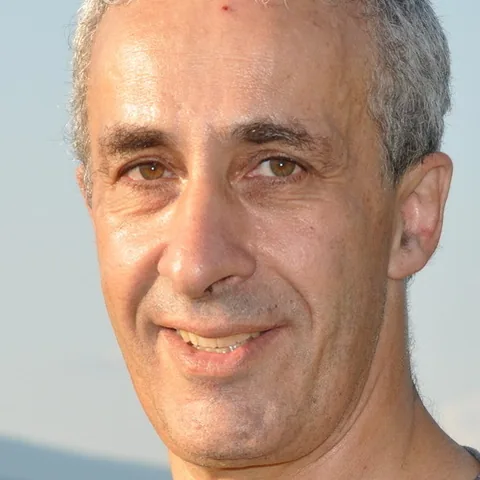
Photo: We have no published photo of Radhakrishna Achanta yet. Send us a free-licensed photo.
- Frequency-Tuned Salient Region Detection | ML Anthology
- SLIC Superpixels - IVRL - EPFL
- Finding Objects of Interest in Images using Saliency and Superpixels - EPFL
- Radhakrishna Achanta - Principal Data Scientist - SDSC
- Superpixels and Polygons Using Simple Non-Iterative Clustering | ML Anthology
- [2309.15842] Exploiting the Signal-Leak Bias in Diffusion Models
- EPFL - Radhakrishna Achanta
- Radhakrishna Achanta | alphaXiv
- [2607.00173] TallyTrain: Communication-Efficient Federated Distillation
- [2607.18343] Federated Lightweight Fine-Tuning