Michael Carbin
Michael Carbin is a computer scientist whose work connects programming systems, unreliable hardware, and neural networks. He earned degrees at Stanford and MIT, worked on deep learning systems at Microsoft Research, and coauthored a framework for programming with unreliable hardware. With Jonathan Frankle, he coauthored the Lottery Ticket Hypothesis, which won ICLR’s 2019 Best Paper Award; he received the 2025 Presidential Early Career Award for programming systems research. As of October 2026, he is an associate professor in MIT’s EECS department.
Years link to their sources.
Timeline
-
2006–2015
Degrees at Stanford and MIT
He earns a B.S. in computer science at Stanford in 2006, then an S.M. in 2009 and a Ph.D. in 2015 in electrical engineering and computer science at MIT.
-
2013
An OOPSLA best paper
With Sasa Misailovic and Martin Rinard, he wins OOPSLA’s 2013 Best Paper Award for “Verifying Quantitative Reliability for Programs That Execute on Unreliable Hardware.” The paper presents a framework for specifying tolerable computation errors and calculating the chance that software will perform as intended.
-
2014–2018
Deep learning at Microsoft
He works as a researcher at Microsoft Research on Deep Learning Systems from 2014 to 2018.
-
2015–2021
Joining MIT EECS
He joins MIT as a visiting scientist in March 2015 and becomes an assistant professor in EECS in January 2016. MIT promotes him to associate professor with tenure in December 2021.
-
2018–2020
An NSF CAREER award
In 2018, he receives the NSF CAREER Award; the Alfred P. Sloan Foundation names him a Sloan Research Fellow in computer science in 2020.
-
2019
The Lottery Ticket Hypothesis
He and Jonathan Frankle win ICLR’s 2019 Best Paper Award for “The Lottery Ticket Hypothesis: Finding Sparse, Trainable Neural Networks.” Their paper shows that pruning identifies subnetworks whose original weights let them train alone to accuracy close to the full network.
-
2025
A Presidential Early Career Award
In January 2025, he receives the Presidential Early Career Award for Scientists and Engineers for his research on programming systems.
-
As of October 2026
Associate professor at MIT
As of October 2026, he is an associate professor in MIT’s EECS department, with research in programming languages and software engineering. In 2025, he leads CSAIL’s Programming Systems Group, which develops systems that manipulate uncertainty to improve performance, energy consumption, and resilience.
Career
- Since 2015Massachusetts Institute of TechnologyVisiting Scientist, Assistant Professor
- 2025MIT CSAILLead
- 2014–2018Microsoft ResearchResearcher
Education
- 2015Massachusetts Institute of TechnologyPh.D.
- 2009Massachusetts Institute of TechnologyS.M.
- 2006Stanford UniversityB.S.
Colleagues
- Jonathan FrankleNamed in this biography
- Martin RinardNamed in this biography
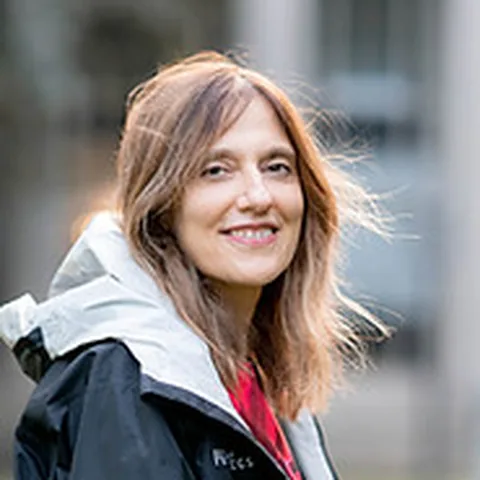 Regina BarzilayMassachusetts Institute of Technology, 2016–2021
 John V. GuttagMassachusetts Institute of Technology, 2016–2021
- Ronald L. RivestMassachusetts Institute of Technology, 2016–2021
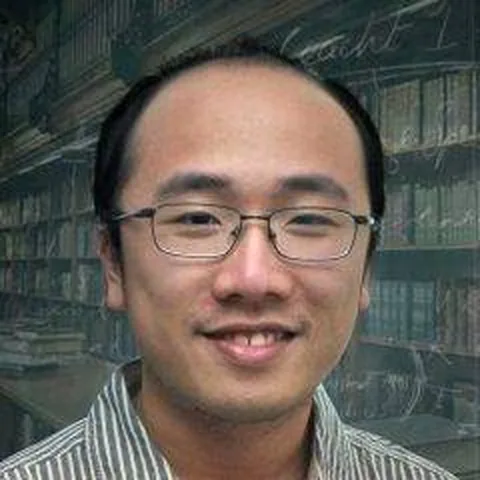 Yin Tat LeeMicrosoft Research, 2016–2018
Sources and credits
Photo: We have no published photo of Michael Carbin yet. Send us a free-licensed photo.
- Programming Uncertain Computations by Michael Carbin | NSF
- Researchers Win OOPSLA Best Paper Award | MIT CSAIL
- Department of EECS announces 2022 promotions - MIT EECS
- Carbin and Mueller named 2020 Sloan Research Fellows | MIT CSAIL
- Best Paper Award
- [1803.03635] The Lottery Ticket Hypothesis: Finding Sparse, Trainable Neural Networks
- CSAIL’s Broderick and Carbin earn Presidential Early Career Awards | MIT CSAIL
- Michael Carbin - MIT EECS