Massimo Fornasier
Massimo Fornasier is a mathematician who holds the Chair of Applied Numerical Analysis at the Technical University of Munich (TUM), and his work on sparse recovery, neural network identification and consensus-based optimization connects numerical analysis with machine learning. Born in Feltre, Italy, in 1975, he earned a doctorate in computational mathematics at the University of Padua in 2003 and worked there on the Mantegna Project, a virtual restoration of frescoes destroyed by bombing in 1944. Postdoctoral years in Vienna and Rome and a senior research post at Austria's RICAM institute preceded his appointment at TUM in 2011. With Ingrid Daubechies and coauthors, he analyzed iteratively re-weighted least squares for sparse recovery in 2008; from 2018 he published methods to identify shallow neural networks from few samples and proofs that consensus-based optimization reaches global minimizers. In 2025, he received an ERC Advanced Grant for NEITALG, a project on global nonconvex optimization with applications in drug development and AI safety, and he is a Core PI at the Munich Center for Machine Learning and an ELLIS Fellow.
Timeline
-
1975–2003
Padua and the Mantegna frescoes
Born in Feltre, Italy, in 1975, he earns a mathematics degree with 110/110 cum laude at the University of Padua in October 1999 and a doctorate in computational mathematics there in 2003. From September 1998, he works on the Mantegna Project at Padua's Department of Physics, led by Domenico Toniolo, which develops an algorithm to virtually restore Andrea Mantegna's frescoes in the Eremitani Church, destroyed by bombing in 1944 and left in about 80,000 pieces. In 2000 and 2001, he also makes repeated research visits to Hans Georg Feichtinger's Numerical Harmonic Analysis Group (NuHAG) in Vienna.
-
2003–2011
Senior scientist at RICAM
From 2003 to 2006, he is a postdoctoral research fellow at the University of Vienna and the University of Rome La Sapienza, and from 2006 to 2007 he is an associate researcher in Princeton University's Program in Applied and Computational Mathematics. He then joins the Johann Radon Institute for Computational and Applied Mathematics (RICAM) of the Austrian Academy of Sciences, where he serves as a senior research scientist until March 2011.
-
2008–2010
Reweighted least squares for sparse recovery
In July 2008, he posts a paper with Ingrid Daubechies, Ronald DeVore and C. Sinan Güntürk that analyzes an iteratively re-weighted least squares (IRLS) algorithm for sparse and compressible vector recovery, proving its convergence and estimating its local rate. The paper appears in Communications on Pure and Applied Mathematics in 2010.
-
2011–2016
Chair of Applied Numerical Analysis
In 2011, TUM appoints him Chair of Applied Numerical Analysis, and the Austrian Science Fund (FWF) gives him its START award. In 2012, he receives a European Research Council Starting Grant and the first Biennial Prize of the Società Italiana di Matematica Applicata ed Industriale (SIMAI). He speaks at the 7th European Congress of Mathematics in Berlin in 2016.
-
2018–2021
Identifying shallow neural networks
In April 2018, he, Jan Vybíral and Ingrid Daubechies post a paper on recovering the weights of a shallow feed-forward neural network from a small number of query samples; its May 2021 revision is titled "Robust and Resource Efficient Identification of Shallow Neural Networks by Fewest Samples". The work links neural network weight identification to tensor product decomposition.
-
2021–2024
Proofs for consensus-based optimization
In March 2021, he, Timo Klock and Konstantin Riedl post a proof that consensus-based optimization (CBO), a derivative-free multi-agent method, converges to the global minimizer in mean-field law for a rich class of nonconvex functions; it appears in the SIAM Journal on Optimization in 2024. A 2021 paper in the Journal of Machine Learning Research with Lorenzo Pareschi, Hui Huang and Philippe Sünnen adapts CBO to the sphere and performs essentially as well as state-of-the-art methods on phase retrieval and robust subspace detection. In a January 2022 seminar at CNR's IAC institute, he shows CBO performing as well as or better than ad hoc methods in training neural networks.
-
2025–2026
An ERC Advanced Grant
In June 2025, he wins a European Research Council Advanced Grant for NEITALG, a project on algorithms that reliably find global solutions to nonconvex optimization problems, with applications in drug development and AI safety. The five-year project, "Nonlinear Evolutions and Iterative Algorithms: Optimization and Control", starts at TUM in January 2026.
-
As of October 2026
Core PI at MCML
He holds the Chair of Applied Numerical Analysis at TUM, a post he has held since 2011. He is a Core PI of the Munich Center for Machine Learning (MCML) and an ELLIS Fellow in the ELLIS Unit Munich.
Career
- Since 2011Technical University of MunichChair of Applied Numerical Analysis
- NowMunich Center for Machine LearningCore PI
- 2007–2011Austrian Academy of SciencesSenior research scientist
- 2006–2007Princeton UniversityAssociate researcher
- 2003–2006University of ViennaPostdoctoral research fellow
- 2003–2006Sapienza University of RomePostdoctoral research fellow
- 2000–2001Numerical Harmonic Analysis Group
- From 1998University of Padua
Education
- 2003University of PaduaDoctorate in computational mathematics
- 1999University of PaduaMathematics degree
Colleagues
 Christoph LütgeTechnical University of Munich, 2011–2026
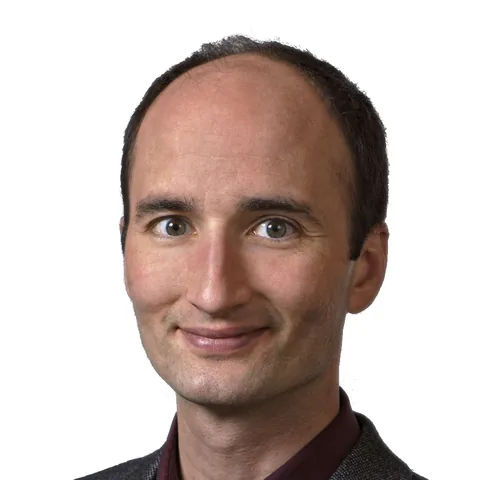 Daniel CremersTechnical University of Munich, 2011–2026
 Fabian TheisTechnical University of Munich, 2011–2026
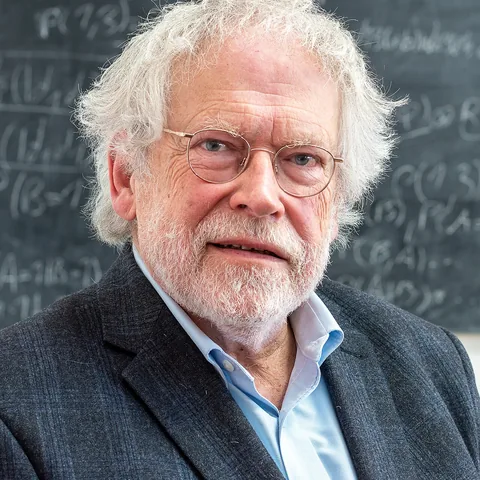 Anton ZeilingerAustrian Academy of Sciences, 2007–2011
 Wolfgang DürAustrian Academy of Sciences, 2007–2011
 Francesca RossiUniversity of Padua, 1998–2000
Sources and credits
Photo: We have no published photo of Massimo Fornasier yet. Send us a free-licensed photo.
- Curriculum Vitae – Massimo Fornasier
- Prof. Dr. Massimo Fornasier – TUM Professorial Faculty
- FAU MoD Lecture: Breaking Nonconvexity: Consensus-Based Optimization – FAU DCN-AvH
- [0807.0575] Iteratively re-weighted least squares minimization for sparse recovery
- [1804.01592] Robust and Resource Efficient Identification of Shallow Neural Networks by Fewest Samples
- [2103.15130] Consensus-Based Optimization Methods Converge Globally
- Consensus-Based Optimization on the Sphere: Convergence to Global Minimizers and Machine Learning
- Massimo Fornasier - Consensus-Based Optimization in Machine Learning | IAC
- MCML - ERC Advanced Grant for Massimo Fornasier
- cvgmt: Docs/PostDocs@ERC AdG "Nonlinear Evolutions and Iterative Algorithms: Optimization and Control" at the Technical University of Munich
- MCML - Research Group Massimo Fornasier
- Massimo Fornasier | European Laboratory for Learning and Intelligent Systems