Karin Verspoor
Also known as Cornelia Maria Verspoor, Karin M. Verspoor
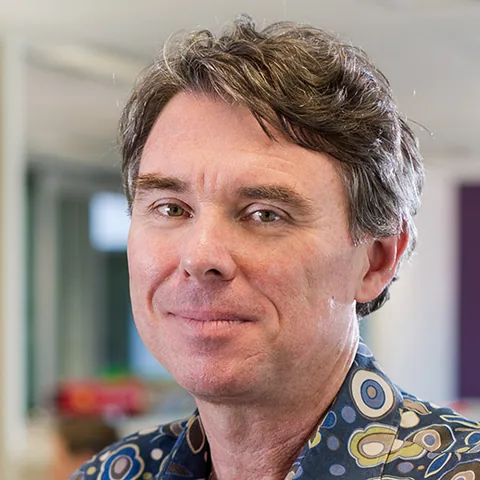
Karin Verspoor is an AI researcher at RMIT University who applies natural language processing to biological and clinical data. Trained at Rice University and the University of Edinburgh, where she earned a PhD in cognitive science and natural language, she helped design an early artificial intelligence system in US start-ups and spent five years at Los Alamos National Laboratory. After posts at the University of Colorado School of Medicine and NICTA, she was a professor at the University of Melbourne from 2017 to 2021. Her coauthored work includes the 2013 CAFA assessment of protein function prediction and the 2020 ChEMU lab on extracting chemical reactions from patents. She is Dean of RMIT's School of Computing Technologies, a post she took up in February 2021, and she became a Fellow of the Australian Academy of Technological Sciences and Engineering in 2024 and an RMIT Distinguished Professor in 2026.
- Now at
- RMIT University and Australian Alliance for Artificial Intelligence in Healthcare
Timeline
-
1989–1997
Degrees at Rice and Edinburgh
Born in West Africa to Dutch parents, she graduates in 1989 with the first class of Thomas Jefferson High School for Science and Technology. She earns a BA from Rice University with a double major in computer science and cognitive sciences, then an MSc and a PhD in cognitive science and natural language at the University of Edinburgh. Her 1997 PhD thesis, Contextually-Dependent Lexical Semantics, argues that semantic interpretation is lexically driven yet contextually dependent.
-
1997–1998
Macquarie and US start-ups
She moves to Australia as a Research Fellow at the Microsoft Research Institute at Macquarie University in Sydney in 1997–1998. She also spends nearly five years in US start-ups during the tech bubble and helps design an early artificial intelligence system; her industry experience includes Intelligenesis/Webmind Corporation in New York and Applied Semantics in Los Angeles.
-
By 2011
Los Alamos and Colorado
She spends five years at Los Alamos National Laboratory. At the University of Colorado School of Medicine, she becomes a Research Assistant Professor in the Center for Computational Pharmacology and a faculty member of the Computational Bioscience Program, and she leaves for Melbourne in December 2011.
-
2011–2014
Health and life sciences at NICTA
From 2011 to 2014, she is a Principal Researcher at NICTA's Victoria Research Lab, where she serves as Scientific Director for Health and Life Sciences and heads a biomedical informatics team. In January 2013, she is among the coauthors of the first large-scale community-based critical assessment of protein function annotation (CAFA), which evaluates 54 prediction methods on 866 proteins from 11 organisms.
-
2014–2021
Professor at Melbourne
She joins the University of Melbourne as an associate professor in 2014 and is a professor in its School of Computing and Information Systems from 2017 to 2021, also serving as Director of Health Technologies in the Melbourne School of Engineering and Deputy Director of the Centre for Digital Transformation of Health. In 2020, she coauthors the overview of the Cheminformatics Elsevier Melbourne University (ChEMU) evaluation lab at CLEF 2020, whose tasks target chemical compounds and reaction steps in patent texts. The lab draws 46 runs from 11 teams.
-
2021
Dean at RMIT
In February 2021, she becomes Dean of the School of Computing Technologies at RMIT University. In November 2021, she receives one of Telstra Health's inaugural Brilliant Women in Digital Health awards.
-
2024
An ATSE fellowship
In June 2024, she writes a Nature News & Views article, "Fighting fire with fire", on a method that curbs LLM errors by grouping outputs into semantically similar clusters, a task a second LLM can perform. In October 2024, she is among 32 innovators elected Fellows of the Australian Academy of Technological Sciences and Engineering, listed as an AI in healthcare leader.
-
Since 2026
Distinguished Professor at RMIT
RMIT awards her the title of Distinguished Professor in January 2026, for a term running to December 2030. In April 2026, she leads the School of Computing Technologies as Dean, and her research uses artificial intelligence to enable biological discovery and clinical decision support. She is also co-founder and Victoria node lead of the Australian Alliance for Artificial Intelligence in Healthcare.
Career
- Since 2021RMIT UniversityDean
- NowAustralian Alliance for Artificial Intelligence in HealthcareCo-founder and Victoria Node Lead
- 2014–2021University of MelbourneAssociate Professor, Professor
- Until 2011University of Colorado School of MedicineResearch Assistant Professor
- 2011–2014National ICT AustraliaPrincipal Researcher; Scientific Director for Health and Life Sciences
- 1997–1998MicrosoftResearch Fellow
Education
- 1997University of EdinburghMSc and PhD in Cognitive Science and Natural Language
- Rice UniversityBA in Computer Science and Cognitive Sciences
Colleagues


Sources and credits
Photo: We have no published photo of Karin Verspoor yet. Send us a free-licensed photo.
- Karin Verspoor - Wikipedia
- Karin Verspoor – The Conversation
- Contextually-Dependent Lexical Semantics
- Karin Verspoor - RMIT University
- Professor Karin Verspoor | ARC Training Centre in Cognitive Computing for Medical Technologies
- A large-scale evaluation of computational protein function prediction | Nature Methods
- Overview of ChEMU 2020: Named Entity Recognition and Event Extraction of Chemical Reactions from Patents
- Centre Deputy Director, Professor Karin Verspoor receives 2021 Brilliant Women in Digital Health award
- 'Fighting fire with fire' — using LLMs to combat LLM hallucinations | Nature
- Technology Academy announces global engineering and applied science innovators as 2024 Fellows
- Newly awarded Distinguished Professorships recognise excellence in research and leadership - RMIT University
- Academic excellence recognised by new Dean's List - RMIT University