Kaiqi Huang
Also known as 黄凯奇, Kai-Qi Huang
Kaiqi Huang is a computer vision researcher at the Institute of Automation, Chinese Academy of Sciences (CASIA), whose work spans visual surveillance, object tracking and game-playing AI. After a PhD at Southeast University, he joined CASIA's National Laboratory of Pattern Recognition in 2004 and became a full professor there in 2011. He won first prize in the PASCAL VOC object detection task in 2010 and 2011, and in 2018 he coauthored GOT-10k, a tracking benchmark of more than 10,000 video segments. The International Association for Pattern Recognition named him a fellow in 2022 for contributions to video analysis and human vision-inspired visual models. Today he directs CASIA's Center for Research on Intelligent System and Engineering, and in 2025 he coauthored WGSR-Bench, a wargame benchmark for strategic reasoning in large language models.
- Now at
- Institute of Automation, Chinese Academy of Sciences and University of Chinese Academy of Sciences
- Works
- 352
- Citations
- 16,227
- h-index
- 53
- Badges
Publication numbers from OpenAlex, as of 22 October 2026.
Timeline
-
By 2004
A PhD at Southeast University
He earns bachelor's and master's degrees at Nanjing University of Science and Technology and a PhD at Southeast University. His 2004 ICASSP paper presents a color image enhancement and evaluation algorithm based on the human visual system.
-
2004–2011
Postdoc to professor at NLPR
He joins the National Laboratory of Pattern Recognition (NLPR) at the Institute of Automation, Chinese Academy of Sciences (CASIA), as a postdoc in March 2004. He becomes an associate professor there in December 2005 and a full professor in 2011. From 2006 to 2008, he also serves as deputy general secretary of the IEEE Beijing Section.
-
2011
Biologically inspired surveillance features
His research covers visual surveillance, image understanding and biologically based vision. In 2011, he publishes "Biologically Inspired Features for Scene Classification in Video Surveillance" in IEEE Transactions on Systems, Man and Cybernetics, Part B.
-
2010–2014
PASCAL VOC and ImageNet prizes
He wins first prize in the PASCAL VOC object detection task in 2010 and 2011. In 2014, he takes a first prize at the ImageNet challenge in its additional-data track.
-
2013–2017
A CCF-IEEE CS Young Scientist Award
In 2013, he receives an Excellent Young Scholars award from the National Science Foundation of China. The China Computer Federation gives him the CCF-IEEE CS Young Scientist Award in 2016 for contributions to computer vision and its applications. In 2017, he receives the Chinese Academy of Sciences' Ten Outstanding Young Scientist Award.
-
2018
The GOT-10k tracking benchmark
In October 2018, with Lianghua Huang and Xin Zhao, he introduces GOT-10k, a tracking benchmark with more than 10,000 video segments and 1.5 million hand-labeled bounding boxes whose test classes do not overlap with its training classes. The team also releases evaluation toolkits, an online evaluation server and a leaderboard, and the paper is accepted by IEEE Transactions on Pattern Analysis and Machine Intelligence.
-
2021–2022
Game AI and an IAPR fellowship
In 2021, he coauthors "AI in Human-computer Gaming: Techniques, Challenges and Opportunities", a survey of board, card, first-person shooting and real-time strategy game AIs such as Libratus, OpenAI Five and AlphaStar. The International Association for Pattern Recognition names him a fellow in 2022 for contributions to video analysis and human vision-inspired visual models.
-
As of October 2026
Directing CRISE at CASIA
He is a professor with NLPR at CASIA and director of the institute's Center for Research on Intelligent System and Engineering. In June 2025, he coauthors WGSR-Bench, which tests strategic reasoning in large language models using wargames.
Career
- Since 2004Institute of Automation, Chinese Academy of SciencesPostdoc, Associate Professor
- 2016–2026University of Chinese Academy of Sciences
- 2015–2026Center for Excellence in Brain Science and Intelligence Technology
- 2009–2025Jiangxi University of Science and Technology
- 2006–2026Chinese Academy of Sciences
Education
- Southeast UniversityPhD
- Nanjing University of Science and TechnologyBachelor's and master's degrees
Most-cited works
- GOT-10k: A Large High-Diversity Benchmark for Generic Object Tracking in the Wild
- Beyond Triplet Loss: A Deep Quadruplet Network for Person Re-identification
- Learning Deep Context-Aware Features over Body and Latent Parts for Person Re-identification
- VisDrone-DET2019: The Vision Meets Drone Object Detection in Image Challenge ResultsWith Qinghua Hu
- Estimating the number of people in crowded scenes by MID based foreground segmentation and head-shoulder detectionWith Tieniu Tan
Colleagues
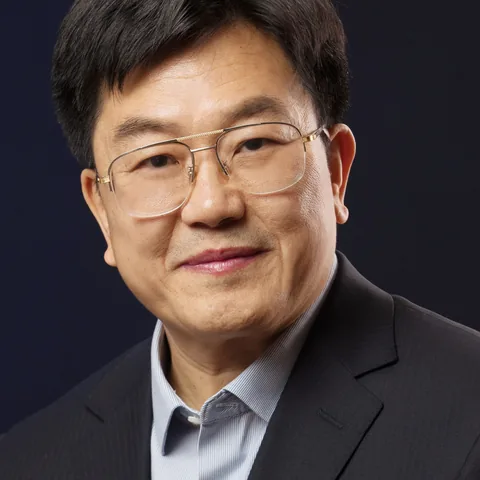 Chengqing ZongInstitute of Automation, Chinese Academy of Sciences, 2011–2026
 Zhenan SunInstitute of Automation, Chinese Academy of Sciences, 2011–2026
- Cheng-Lin LiuInstitute of Automation, Chinese Academy of Sciences, 2011–2026
 Ran HeChinese Academy of Sciences, 2006–2026
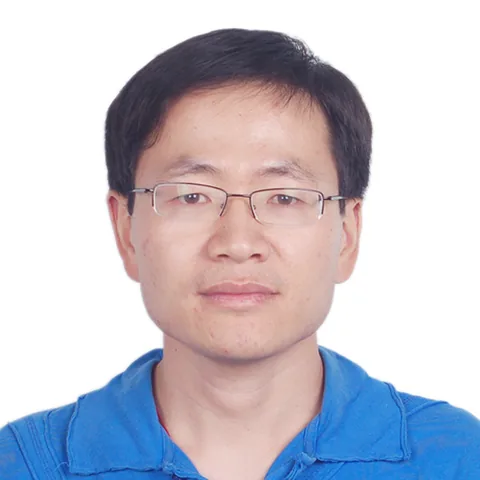 Liang WangChinese Academy of Sciences, 2006–2026
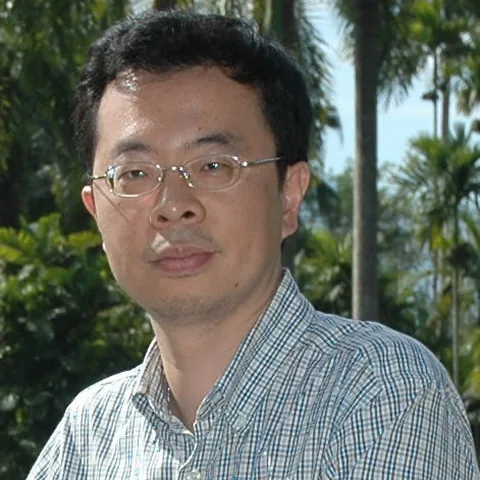 Changsheng XuChinese Academy of Sciences, 2008–2026
Sources and credits
Photo: We have no published photo of Kaiqi Huang yet. Send us a free-licensed photo.
- Xin Zhao, Kaiqi Huang, and Tieniu Tan – ICPR-2016
- 黄凯奇-中国科学院大学-UCAS
- 青年科学家奖-黄凯奇-青年科学家奖-中国计算机学会
- [1810.11981] GOT-10k: A Large High-Diversity Benchmark for Generic Object Tracking in the Wild
- [2111.07631] AI in Human-computer Gaming: Techniques, Challenges and Opportunities
- Chronological List of IAPR Fellows – International Association for Pattern Recognition
- International Academy of Artificial Intelligence Sciences
- [2506.10264] WGSR-Bench: Wargame-based Game-theoretic Strategic Reasoning Benchmark for Large Language Models