Jimena Sofia Viveros Alvarez
Also known as Jimena Sofía Viveros Álvarez, Jimena Viveros
Jimena Sofia Viveros Alvarez is a Mexican international lawyer whose work connects AI governance with peace, security and autonomous weapons. She grew up moving around the world, earned a law degree at Iberoamerican University and an LL.M. at Leiden, and published books on autonomous weapons and AI state responsibility from 2021 to 2023. In October 2023, while chief of staff and head legal adviser at Mexico’s Supreme Court, she joined the UN High-Level Advisory Body on AI and co-led its peace and security work; by July 2024, she was finalizing doctoral research at Cologne University on AI and autonomous weapons. Her later writing addressed drone swarms, military targeting and global AI governance; she now leads IQuilibriumAI and the HumAIne Foundation and supports broader participation in AI development across the Global South.
- Now at
- IQuilibriumAI and Global South Synergies and Resilience Platform
- Badges
Timeline
-
2021–2023
Law degrees and AI books
A Mexican, she grows up moving around the world, earns a law degree at Iberoamerican University in Mexico City, and completes an LL.M. in public international law at Leiden University. The Legal Research Institute of the National Autonomous University of Mexico publishes her Autonomous Weapons Systems: The Accountability Conundrum in English and Spanish in 2021 and AI and the International Responsibility of States in Spanish in 2022; Ethics Press publishes Autonomous Weapons Systems and the Use of Force in 2023. Wolters Kluwer publishes her The Ultimate and Perhaps the Last Paradigm Shift – Artificial Intelligence in English and Spanish in 2021.
-
October 2023
Joining the UN advisory body
UN Secretary-General António Guterres launches the High-Level Advisory Body on AI in October 2023, and Viveros joins it while serving as chief of staff and head legal adviser to Justice Loretta Ortiz at Mexico’s Supreme Court. She co-leads its work on peace and security. Her earlier career includes work at the International Criminal Court, the tribunals for the former Yugoslavia and Rwanda, and the OPCW. In Mexico, she serves as chief of staff at the Federal Judicial Council and holds director general rank at the Ministry of Security and Civilian Protection and the Federal Tax and Finance Prosecutor’s Office.
-
April 2024
Drone swarms and mass destruction
In April 2024, she argues in Opinio Juris that drone swarms scaled to thousands can amount to weapons of mass destruction. She says classifying them as WMDs could deter their development and deployment and help build consensus for a binding instrument to regulate or ban them.
-
July 2024
AI governance at UN University
In July 2024, at UNU headquarters in Tokyo, she joins UNU Chief of Staff Michael Baldock for a public conversation on binding norms for global AI governance. She is finalizing a doctorate at the University of Cologne, supervised by Claus Kreß, on AI and autonomous weapons in international peace and security law. She serves as a commissioner on the Global Commission on Responsible AI in the Military Domain, where she leads work on broader peace and security risks. She is also an OECD AI expert in working groups on risks, accountability and incidents.
-
September 2024–November 2024
Military targeting and AI governance
In September 2024, she warns on the ICRC’s Humanitarian Law and Policy Blog that AI decision support systems can produce unreliable military targeting recommendations, with risks in identifying, selecting and engaging targets. The UN Advisory Body releases Governing AI for Humanity, its final report with recommendations for global AI governance, in September 2024. In November 2024, she argues in Opinio Juris that international AI governance needs a specialized, universal and centralized authority.
-
June 2025
AI communities in the Global South
On Carnegie Council’s Values & Interests podcast in June 2025, she argues that bridging the digital divide between the Global South and North is a moral and economic imperative. She discusses the HumAIne Foundation, which she founded to build communities of AI developers and practitioners in the Global South.
-
November 2025
A Carnegie panel on AGI
In November 2025, she joins Michael Breen of Anthropic and Trisha Ray of the Atlantic Council’s GeoTech Center for a Carnegie Council panel on geopolitics in an era of AGI.
-
As of October 2026
Leading IQuilibriumAI and HumAIne
In July 2026, writing as CEO of IQuilibriumAI and a former member of the UN advisory body, she argues in Opinio Juris that siloed AI governance is untenable and calls for a specialized, universal and centralized international authority that can set norms, verify compliance and enforce them. In October 2026, she is listed as a panelist at AIES in Malmö for “Who Sets the Terms? AI Governance as Geopolitics.” As of October 2026, she is managing director and CEO of IQuilibriumAI, president of the HumAIne Foundation, and founder of the Global South Synergies and Resilience Platform.
Career
- NowHumAIne FoundationFounder, President
- NowIQuilibriumAICEO
- NowGlobal South Synergies and Resilience PlatformFounder
- From 2024Global Commission on Responsible AI in the Military DomainCommissioner
- From 2024Organisation for Economic Co-operation and DevelopmentAI Expert
- From 2023Supreme Court of Justice of the NationChief of Staff and Head Legal Adviser
- From 2023United Nations High-Level Advisory Body on Artificial IntelligenceMember and Co-lead, Peace and Security
- Federal Judicial Council of MexicoDirector General
- Ministry of Security and Civilian ProtectionDirector General
- Federal Tax and Finance Prosecutor’s OfficeDirector General
Education
- Ibero-American UniversityLaw degree
- Leiden UniversityLL.M. in public international law
- University of CologneDoctorate
Colleagues
 António GuterresNamed in this biography
 Anna ChristmannUnited Nations High-Level Advisory Body on Artificial Intelligence, 2023–2024
- Juan Antonio Rodriguez-AguilarOrganisation for Economic Co-operation and Development, 2024
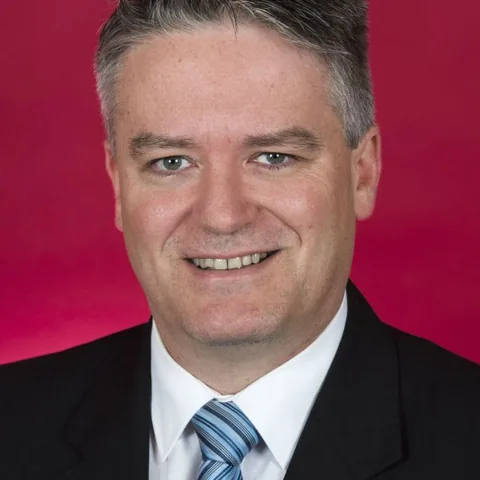 Mathias CormannOrganisation for Economic Co-operation and Development, 2024
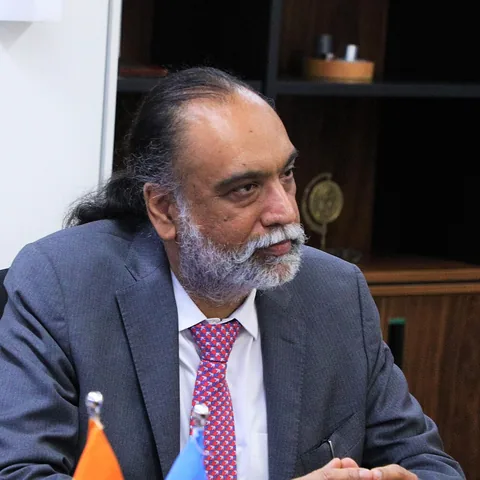 Amandeep Singh GillUnited Nations, 2023–2024
- Emma Ruttkamp-BloemUnited Nations, 2023–2024
Sources and credits
Photo: We have no published photo of Jimena Sofia Viveros Alvarez yet. Send us a free-licensed photo.
- Jimena Viveros
- Empowerment, Ownership, & Agency: Building an Inclusive AI Future, with Jimena Viveros | Carnegie Council on Ethics in International Affairs
- UN Secretary-General launches AI Advisory Body on risks, opportunities, and international governance of artificial intelligence | United Nations in India
- Symposium on Military AI and the Law of Armed Conflict: Drone Swarms as Weapons of Mass Destruction - Opinio Juris
- Global AI Governance: The Risks of Artificial Intelligence to International Peace and Security | United Nations University
- The risks and inefficacies of AI systems in military targeting support
- Why Should the UN “Govern AI for Humanity”: What is at Stake and What is the Urgency? - Opinio Juris
- Geopolitics in an Era of AGI | Carnegie Council on Ethics in International Affairs
- Symposium on Cyber, International Law and Artificial Intelligence in Armed Conflict: Piercing the Veil – Why Siloed AI Governance Is Untenable - Opinio Juris
- What’s on the programme at #AIES2026? - ΑΙhub
- Session 203— From Fragmentation to Coherence: The Role of the International Law Association… | WSIS Forum 2026
- About us | Iquilibriumai