J. D. Tygar
Also known as Doug Tygar, J. Doug Tygar, Justin Douglas Tygar
Doug Tygar was a UC Berkeley professor of computer science and of information whose security research reached machine learning. After a B.A. at Berkeley in 1982 and a Ph.D. at Harvard in 1986, he taught at Carnegie Mellon University from 1986 and returned to Berkeley in 1998. His 1999 paper with Alma Whitten, "Why Johnny Can't Encrypt," helped launch usable security and won the 2015 USENIX Security Test of Time Award, and in 2000 he coauthored the TESLA paper on authenticating broadcast streams. In 2004 he co-founded the Secure Machine Learning research group, whose study of how adversaries manipulate learning algorithms culminated in the 2019 book Adversarial Machine Learning, written with Anthony Joseph, Blaine Nelson and Benjamin Rubinstein. He died in 2020.
Timeline
-
1982–1986
Degrees from Berkeley and Harvard
He earns a B.A. in mathematics and computer science from UC Berkeley in 1982 and a Ph.D. in computer science from Harvard University in 1986.
-
1986–1998
Faculty at Carnegie Mellon
In 1986, he joins the faculty of Carnegie Mellon University, where he is tenured faculty in the Computer Science Department. He receives the National Science Foundation's Presidential Young Investigator Award in 1988.
-
1998–2020
Professor at Berkeley
He returns to Berkeley in 1998 with a joint appointment in the School of Information and the Department of Electrical Engineering and Computer Sciences. Over his career, he designs cryptographic postage standards for the US Postal Service and helps build systems including Strongbox, Dyad, Netbill and Micro-Tesla.
-
1999
Why Johnny Can't Encrypt
With Alma Whitten, he publishes a usability evaluation of PGP 5.0 at the 8th USENIX Security Symposium in 1999. When test participants have 90 minutes to sign and encrypt a message, the majority cannot do so, and the paper helps launch the field of usable security.
-
2000
The TESLA authentication system
In 2000, he coauthors "Efficient Authentication and Signing of Multicast Streams over Lossy Channels" with Adrian Perrig, Ran Canetti and Dawn Song. Its core contribution is TESLA, a system for authenticating broadcast messages, also called multicast streams.
-
2004–2019
Secure machine learning research
He co-founds the Secure Machine Learning research group in 2004, which studies how machine learning algorithms can be dishonestly manipulated and how to make them more robust. In 2006, he coauthors "Can machine learning be secure?" with Barreno, Nelson, Sears and Joseph. In 2019, Cambridge University Press publishes Adversarial Machine Learning, which he coauthors with Anthony D. Joseph, Blaine Nelson and Benjamin I. P. Rubinstein.
-
2015
USENIX Test of Time Award
He receives the 2015 USENIX Security Test of Time Award for "Why Johnny Can't Encrypt." The paper analyzes the importance of user interface and user experience design for the success of computer security applications.
-
2020
A TESLA award and his death
He dies unexpectedly on January 16, 2020, and the TESLA paper he coauthored wins a Test-of-Time award at the IEEE Symposium on Security and Privacy in 2020.
Career
- From 2004Secure Machine Learning Research GroupCo-founder
- 1998–2020University of California, BerkeleyProfessor
- 1986–1998Carnegie Mellon UniversityTenured faculty
Education
- 1986Harvard UniversityPh.D.
- 1982University of California, BerkeleyB.A.
Colleagues
- Anthony D. JosephUniversity of California, Berkeley, 1998–2020
- Blaine NelsonNamed in this biography
- Ran CanettiNamed in this biography
- Alice AgoginoUniversity of California, Berkeley, 1998–2020
 Alison GopnikUniversity of California, Berkeley, 1998–2020
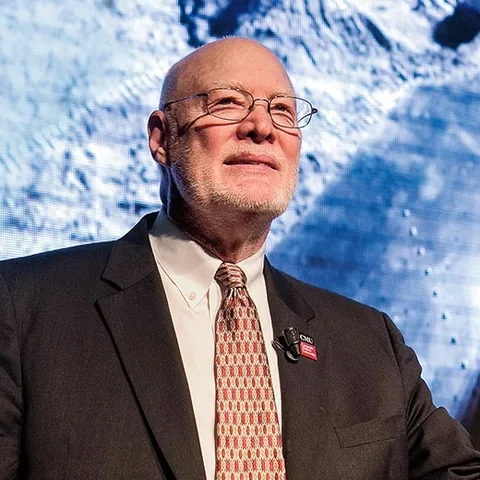 William L. WhittakerCarnegie Mellon University, 1986–1998
Sources and credits
Photo: We have no published photo of J. D. Tygar yet. Send us a free-licensed photo.
- Justin Douglas Tygar, In Memoriam, University of California Academic Senate
- Tygar: Biography
- Why Johnny Can't Encrypt: A Usability Evaluation of PGP 5.0 | USENIX
- Five CMU Security and Privacy Papers Receive IEEE's Test of Time Award
- Four papers authored by EECS faculty win Test-of-Time Awards at 2020 IEEE-SP - EECS at Berkeley
- Doug Tygar has passed away - EECS at Berkeley
- Tygar: publications
- Introduction (Chapter 1) - Adversarial Machine Learning
- Why Johnny Can't Encrypt: Doug Tygar's Landmark Paper Stands the Test of Time | UC Berkeley School of Information