Guanzhi Wang
Guanzhi Wang is a researcher in embodied AI whose work spans computer vision, game agents, and robotics. He coauthored LADN on facial makeup and MineDojo, which won a 2022 NeurIPS Outstanding Paper Award. VIMA addressed robot manipulation, Voyager explored Minecraft and acquired skills with a language model, and Eureka used a language model to design reward functions. His later work includes GR00T N1 for humanoid robots and NitroGen for generalist gaming agents; the NitroGen paper received a 2026 CVPR Best Paper Honorable Mention. As of October 2026, he is a Research Scientist at NVIDIA focused on robot foundation-model post-training and agentic robotics.
Timeline
-
2017–2018
Drowsiness detection at HKUST
In 2017–2018, he studies computer science and mathematics at HKUST and researches drowsiness detection from consumer video recordings under Professor Thomas Heldt.
-
2019
LADN for facial makeup
At ICCV 2019, he coauthors LADN, a local adversarial network for facial makeup and de-makeup that uses overlapping local discriminators to disentangle content and style.
-
2022
MineDojo's Outstanding Paper Award
In 2022, he coauthors MineDojo, a Minecraft framework for building open-ended embodied agents. The project receives an Outstanding Paper Award in NeurIPS's Datasets and Benchmarks Track.
-
2023
VIMA for robot manipulation
At ICML 2023, he coauthors VIMA, a transformer-based agent that uses multimodal prompts to handle robot manipulation tasks.
-
2024
Voyager and Eureka
In 2024, Voyager appears in TMLR as an LLM-powered embodied Minecraft agent that continually explores and acquires skills. At ICLR 2024, he coauthors Eureka, which uses an LLM to optimize reward code for reinforcement learning.
-
2025
GR00T N1 for humanoid robots
In 2025, he coauthors GR00T N1, an open Vision-Language-Action foundation model for generalist humanoid robots.
-
2026
A CVPR award for NitroGen
In 2026, he coauthors NitroGen, a vision-action foundation model trained on 40,000 hours of gameplay videos across more than 1,000 games. The NitroGen paper receives a Best Paper Honorable Mention at CVPR 2026.
-
As of October 2026
Research Scientist at NVIDIA
As of October 2026, he is a Research Scientist at NVIDIA, focused on post-training robot foundation models and agentic robotics. His research areas include artificial intelligence and machine learning, generative AI, and robotics.
Career
- NowNVIDIAResearch Scientist
- 2022–2026California Institute of Technology
- 2019–2021Hong Kong University of Science and Technology
- 2019–2021Stanford University
Education
Colleagues
- John PreskillCalifornia Institute of Technology, 2022–2026
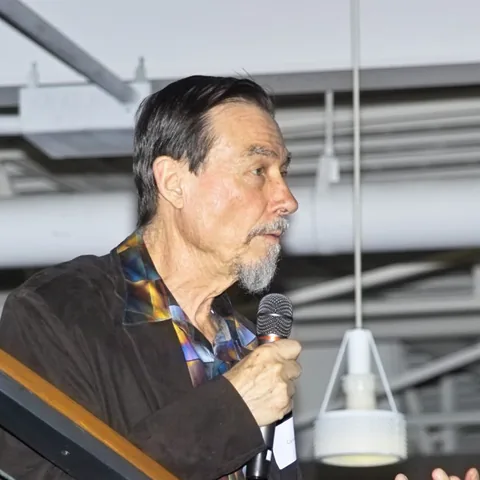 Carver MeadCalifornia Institute of Technology, 2022–2026
 Georgia GkioxariCalifornia Institute of Technology, 2023–2026
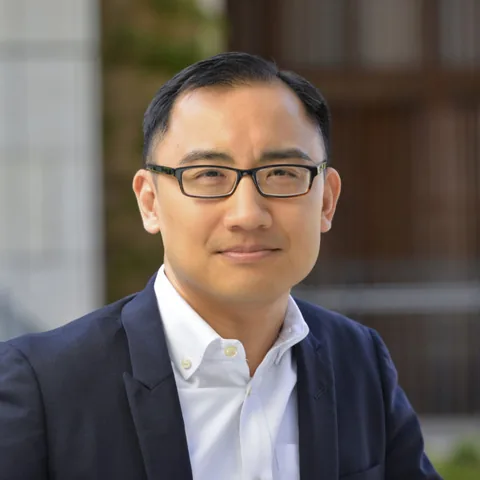 Daniel E. HoStanford University, 2019–2021
- Daniel L. RubinStanford University, 2019–2021
- Albert Chi-Shing ChungHong Kong University of Science and Technology, 2019–2021
Sources and credits
Photo: We have no published photo of Guanzhi Wang yet. Send us a free-licensed photo.
- Page 139 — Undergraduate Research Opportunities Program Proceedings 2017-18
- Guanzhi Wang
- NeurIPS 2022 Awards
- VIMA: General Robot Manipulation with Multimodal Prompts
- Eureka: Human-Level Reward Design via Coding Large Language Models
- NitroGen: A Foundation Model for Generalist Gaming Agents
- Guanzhi Wang | Research