John Preskill
Also known as John P. Preskill
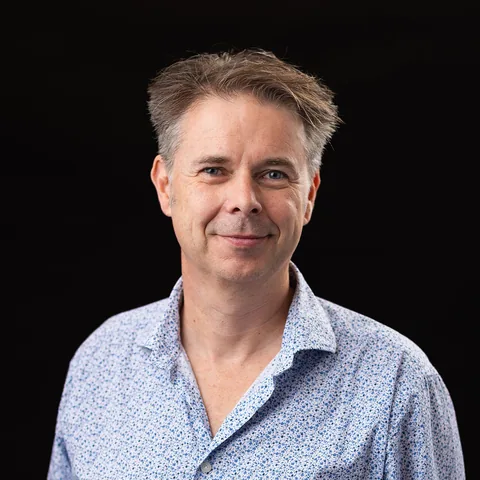
John Preskill is a theoretical physicist at Caltech whose work on quantum information connects quantum computing with machine learning. After a Harvard Ph.D. under Steven Weinberg in 1980, he joined the Caltech faculty in 1983 and turned from particle physics and cosmology to quantum computation in the mid-1990s. He founded Caltech's Institute for Quantum Information in 2000, coined the term quantum supremacy in a 2012 paper, and described the NISQ era in a 2018 paper. With Hsin-Yuan Huang and Richard Kueng, he introduced classical shadows in 2020, and a 2022 Science paper he coauthored proved that classical machine learning algorithms can efficiently predict ground state properties of gapped Hamiltonians. He received the 2024 John Stewart Bell Prize and the 2025 Academic Pioneer in Quantum Award, and he is the Feynman Professor of Theoretical Physics at Caltech and director of its Institute for Quantum Information and Matter.
- Born
- 1953
Timeline
-
1953–1983
A Harvard PhD under Weinberg
He is born in 1953 in Highland Park, Illinois, earns an A.B. in physics at Princeton in 1975, and completes a Ph.D. in physics at Harvard in 1980 as a student of Steven Weinberg. After serving as a Junior Fellow in the Harvard Society of Fellows, he joins the Caltech faculty in 1983 as an associate professor.
-
1990s
Fault-tolerant quantum computing theory
He becomes a full professor at Caltech in 1990. From the mid-1990s, his research turns from particle physics, cosmology and gravitation to quantum computation, and with Daniel Gottesman and others he develops the theory of fault-tolerant quantum computing and proves the quantum accuracy threshold theorem. Lecture notes from his Caltech course on quantum computation are available online from 1997.
-
2000–2014
Founding Caltech's quantum institute
He founds the Institute for Quantum Information at Caltech in 2000 and directs it until 2014. In 2011 it becomes part of the Institute for Quantum Information and Matter (IQIM), an NSF Physics Frontiers Center. The National Academy of Sciences elects him a member in 2014.
-
2012–2018
Quantum supremacy and NISQ
In a 2012 paper he coins the term quantum supremacy. His 2018 paper "Quantum Computing in the NISQ era and beyond", published in Quantum, describes noisy intermediate-scale quantum devices with 50 to 100 qubits that may surpass classical digital computers on some tasks while gate noise limits the size of the circuits they can run.
-
2020–2022
Machine learning for quantum systems
With Hsin-Yuan Huang and Richard Kueng, he introduces classical shadows in a 2020 Nature Physics paper: compact classical descriptions of a quantum state from which order log M measurements predict M different properties. A 2022 Science paper he coauthors, "Provably efficient machine learning for quantum many-body problems", proves that classical machine learning algorithms can efficiently predict ground state properties of gapped Hamiltonians. He is also a coauthor of "Quantum advantage in learning from experiments", published in Science in 2022, which proves that quantum machines can learn from exponentially fewer experiments than conventional experiments require and demonstrates the advantage with up to 40 superconducting qubits.
-
2020–2026
Amazon Scholar at AWS
In June 2020, Amazon Web Services announces that he is joining its quantum computing research effort as an Amazon Scholar at the AWS Center for Quantum Computing, which is on the Caltech campus. The appointment runs from 2020 to 2026.
-
2024–2025
Bell Prize and Academic Pioneer
He receives the 2024 John Stewart Bell Prize for Research on Fundamental Issues in Quantum Mechanics and Their Applications, announced by the Centre for Quantum Information and Quantum Control for developments at the interface of efficient learning and processing of quantum information in quantum computation. In 2025 the Quantum World Congress gives him its Academic Pioneer in Quantum Award.
-
As of October 2026
Feynman Professor and IQIM director
He holds the Richard P. Feynman Professorship of Theoretical Physics at Caltech from 2010, the Allen V. C. Davis and Lenabelle Davis Leadership Chair from 2017, and the directorship of the Institute for Quantum Information and Matter from 2014. In March 2026, he is a senior author of a Caltech and Oratomic report whose new error-correction architecture indicates that a fully realized quantum computer could be built with as few as 10,000 to 20,000 qubits.
Career
- Since 1983California Institute of TechnologyAssociate Professor, Full Professor
- 2020–2026AmazonAmazon Scholar
- Harvard UniversityJunior Fellow
Education
- 1980Harvard UniversityPh.D. in physics
- 1975Princeton UniversityA.B. in physics
Colleagues
Sources and credits
Photo: We have no published photo of John Preskill yet. Send us a free-licensed photo.
- John Preskill — Biographical Sketch
- John Preskill - Wikipedia
- John P. Preskill - Division of Physics, Mathematics and Astronomy
- Caltech's Pioneering Quantum Hub Celebrates 25 Years
- Quantum Computing in the NISQ era and beyond (arXiv:1801.00862)
- Predicting Many Properties of a Quantum System from Very Few Measurements (arXiv:2002.08953)
- Provably efficient machine learning for quantum many-body problems (arXiv:2106.12627)
- Quantum advantage in learning from experiments (arXiv:2112.00778)
- Amazon Scholar John Preskill on the AWS quantum computing effort
- John Preskill announced as 2024 Bell Prize Winner
- John Preskill Honored by Quantum World Congress
- Caltech Team Finds Useful Quantum Computers Could Be Built with as Few as 10,000 Qubits