Gaurav Singhal
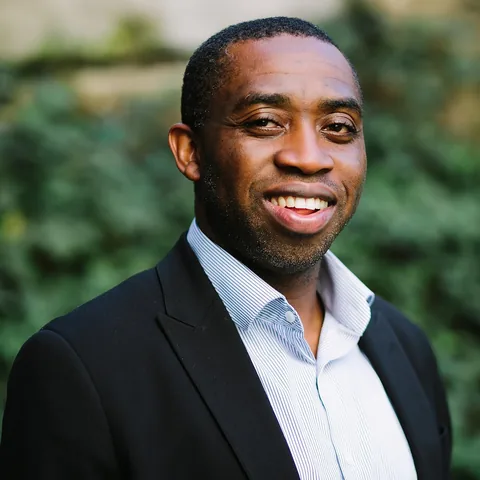
Gaurav Singhal is a data scientist and researcher who applies machine learning to food security, supply chains, credit and markets. After studying mechanical engineering at Purdue and building machine-learning tools at Accenture, he pursued a joint PhD track in information science and economics at the University of Michigan. As Lead Data Scientist at the UN World Food Programme from 2014 to 2018, he founded a data-science team that produced near real-time food-security information from mobile surveys, call-detail records and satellite imagery. He co-founded the Amsterdam company Arboreum in 2019, and in 2025 he coauthored a Bayesian food-security study for Zimbabwe. By 2026 he was a PhD student in the Vollmer research group at DFKI, and he is now an alumnus of the group.
Timeline
-
2002–2011
From Purdue to Accenture Labs
Between 2002 and 2007 he studies mechanical engineering at Purdue University, with minors in electrical engineering, economics and philosophy. He then works as an analyst in Accenture's Health & Public Service practice in Chicago and, from 2010 to 2011, as an analytics consultant and developer at Accenture Technology Labs, where he builds a machine-learning tool that prioritizes manual claim rework for health payers. In 2009, he coauthors the IJCNN paper Piecewise Multi-Class Support Vector Machines with Oladunni.
-
2011–2014
Michigan and the Davidson Institute
From 2011 to 2014 he is a joint PhD candidate in information science and economics at the University of Michigan, finishing all PhD course requirements and earning master's degrees in economics and information science, supported by an NSF IGERT fellowship in the STIET Lab. In 2013, he becomes a junior fellow at the William Davidson Institute, modeling vaccine and essential-medicine supply chains for rural public health clinics under a Bill & Melinda Gates Foundation grant. One project builds a model and recommendation system for minimizing stockouts at public health clinics in Tanzania.
-
2014–2018
Lead data scientist at WFP
From 2014 to 2018 he is Lead Data Scientist in the Policy & Program Division (VAM) of the UN World Food Programme in Rome. He founds a data-science team that gathers and shares food-security information for nations in wartime, climate shocks and other extreme events. The team produces near real-time information on food prices, food security and scarcity of essentials from mobile-based surveys, call-detail records, satellite imagery and crowd-sourcing.
-
2016
Best paper on mVAM
In 2016, he coauthors "mVAM: A New Contribution to the Information Ecology of Humanitarian Work", published in Procedia Engineering. The Humanitarian Tech Conference gives the paper its Best Paper award in 2016.
-
January 2019
Phone surveys in rural Kenya
In January 2019, PLOS ONE publishes "Strengths and limitations of computer assisted telephone interviews (CATI) for nutrition data collection in rural Kenya", to which he contributes formal analysis and methodology from the World Food Programme's Vulnerability, Analysis, and Mapping Unit in Rome. The one-week test-retest study covers 1,821 households and reaches 75% of participants by phone.
-
March 2019
Co-founding Arboreum
In March 2019, he co-founds Arboreum in Amsterdam as its co-founder and CEO. The company, an AI-enabled last-mile supply-chain finance startup, uses machine learning, network science and blockchain to build decentralized credit systems. Informal credit systems in Africa and the resilience they bring to local communities and businesses inspire him to start it.
-
May 2025
Food security estimates for Zimbabwe
In May 2025, he is a coauthor of an arXiv paper on real-time food security estimates for Zimbabwe, with Arboreum.dev as his affiliation and coauthors from the University of Oxford, the University of Adelaide and the World Food Programme. The paper proposes a joint multilevel regression and poststratification method, fitted in a fully Bayesian way, that combines high-frequency mobile-phone surveys with an annual face-to-face survey to produce estimates at finer spatial and temporal scales.
-
By 2026
PhD research at DFKI
By 2026, he is a PhD student and research associate in the Vollmer research group at the German Research Center for Artificial Intelligence (DFKI), where he applies machine learning to dynamical spatio-temporal phenomena including capital markets, supply chains and human population surveys. The Data Science and its Applications group at DFKI now counts him among its alumni.
Career
- Until 2026DFKIResearch associate
- From 2019ArboreumCo-founder and CEO
- 2014–2018United Nations World Food ProgrammeLead Data Scientist
- From 2013William Davidson InstituteJunior fellow
- 2007–2011AccentureAnalyst, Analytics consultant and developer
Education
- 2026DFKIPhD student
- 2014University of MichiganJoint PhD candidate; master's degrees in economics and information science
- 2007Purdue UniversityMechanical engineering
Colleagues



Sources and credits
Photo: We have no published photo of Gaurav Singhal yet. Send us a free-licensed photo.
- GSinghal
- Strengths and limitations of computer assisted telephone interviews (CATI) for nutrition data collection in rural Kenya | PLOS One
- Gaurav Singhal — Data Science and its Applications
- Real-time small area estimation of food security in Zimbabwe: integrating mobile-phone and face-to-face surveys using joint multilevel regression and poststratification
- Gaurav Singhal | Data Science and its Applications